
A 12% decline in average London new build prices over the last year might suggest a cooling market, but for the discerning investor, it signals a...

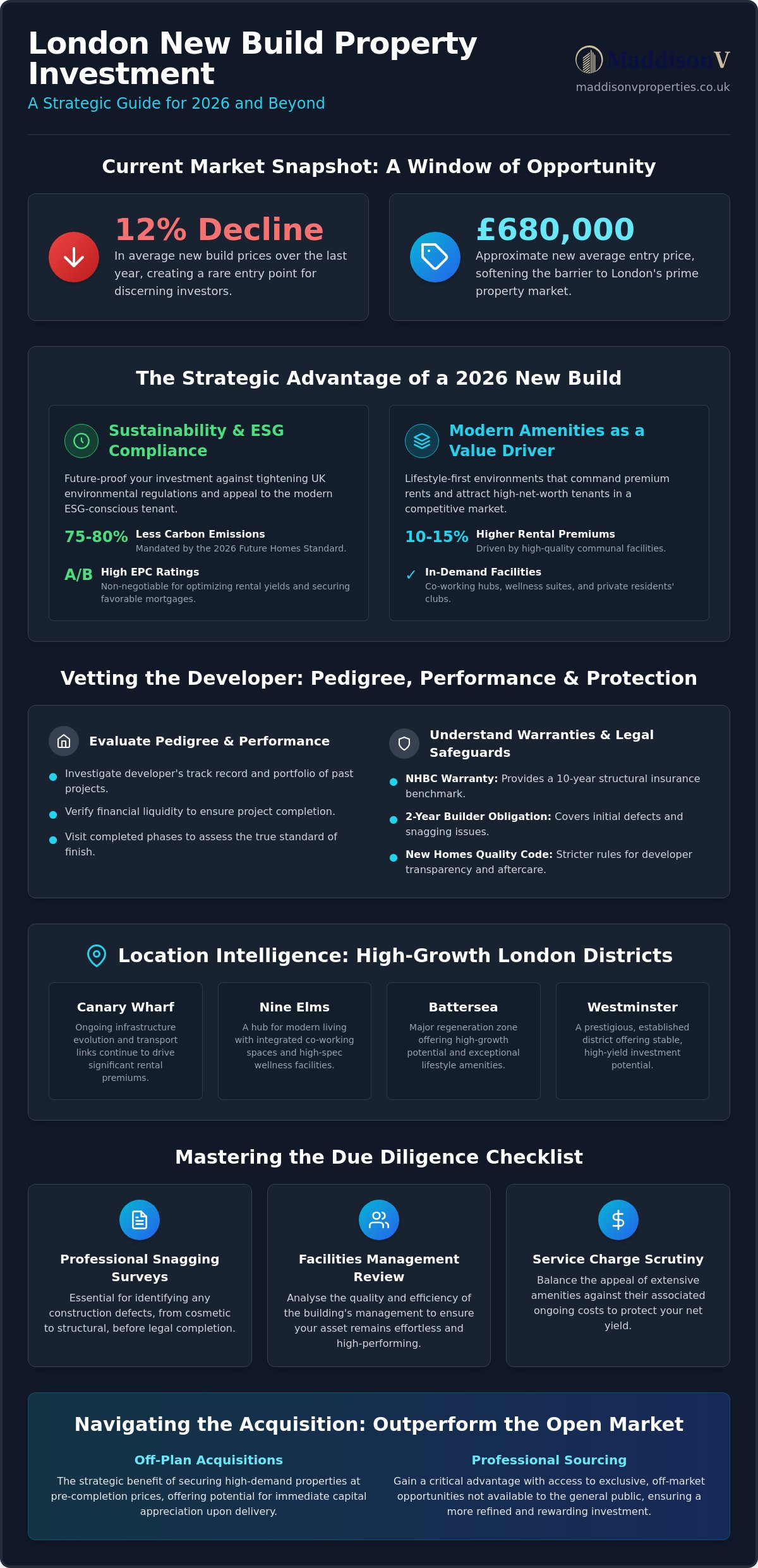
A 12% decline in average London new build prices over the last year might suggest a cooling market, but for the discerning investor, it signals a rare window of opportunity. While the entry point has softened to approximately £680,000, the challenge remains distinguishing a fleeting aesthetic from a lasting asset. You likely share the common anxiety that beneath a polished exterior lies a history of snagging issues or a developer with a questionable reputation. Understanding exactly what to look for in a new build property is no longer just about floor plans; it’s about navigating the complexities of the 2026 New Homes Quality Code and rising service charges with absolute clarity.
This guide provides a sophisticated framework to help you master the art of due diligence in London’s most prestigious districts. We’ll examine why areas like Canary Wharf, Nine Elms, and Westminster continue to offer high-yield potential despite broader market shifts. You’ll gain a clear roadmap for evaluating developer pedigree, identifying high-growth postcodes, and securing the financial peace of mind that comes with professional sourcing. By the end, you’ll possess the tools to transform a complex search into a refined, resilient, and rewarding investment strategy.
Key Takeaways
- Discover how the 2026 sustainability standards and smart technology integration create a resilient foundation for long-term capital appreciation in London’s prime districts.
- Learn exactly what to look for in a new build property by evaluating developer pedigree and understanding the critical protections offered by UK building warranties.
- Identify high-growth opportunities in districts like Canary Wharf and Nine Elms, where infrastructure evolution continues to drive significant rental premiums.
- Master the due diligence process through professional snagging surveys and meticulous facilities management to ensure your asset remains effortless and high-performing.
- Explore the strategic benefits of off-plan acquisitions and how professional sourcing provides access to exclusive, off-market opportunities.
The Strategic Advantage of London New Build Property in 2026
The 2026 London new build represents a sophisticated intersection of architectural integrity, technological foresight, and environmental responsibility. It’s no longer sufficient for a property to be merely ‘new’; it must be a high-performing asset designed for a discerning global demographic. When identifying what to look for in a new build property, investors must look beyond the initial polish to evaluate how the development integrates into the city’s evolving infrastructure. A nuanced perspective on understanding residential development reveals that the most resilient assets are those that balance immediate lifestyle appeal with long-term functional standards. While the ‘New Build Premium’ remains a factor, the potential for capital appreciation in prime central locations is increasingly tied to a building’s ability to meet the demands of a modern, tech-enabled workforce.
Sustainability and the ESG Investor
In 2026, energy efficiency is a core pillar of financial security rather than a secondary consideration. With the Future Homes Standard regulations becoming law in December 2026, properties that produce 75 to 80 percent less carbon emissions are the new benchmark for excellence. High EPC ratings, specifically A or high B, are non-negotiable for investors seeking to optimize rental yields and secure favorable mortgage terms. These standards are achieved through low-carbon heating systems like air source heat pumps and advanced insulation materials. Choosing a property with these features ensures your investment remains compliant with tightening UK environmental regulations, effectively future-proofing your portfolio against future retrofitting requirements. It’s a strategy that prioritizes ethical, efficient, and enduring value.
Modern Amenities as a Value Driver
The modern tenant prioritizes a lifestyle-first environment where the lines between work, wellness, and home are fluid. When determining what to look for in a new build property, the quality of communal facilities often dictates the rental premium, which can reach 10 to 15 percent in high-growth districts. Developments in areas like Nine Elms or Canary Wharf now feature integrated co-working hubs, private residents’ clubs, and high-specification wellness suites. These amenities drive demand and foster a sense of community, yet they must be balanced against the associated service charges. This demand for aesthetic excellence is often mirrored in the high-tier services residents seek out; for example, the precision styling and luxury treatments offered by Ross Adams Hair & Beauty represent the caliber of care that complements a high-end lifestyle. A well-managed development offers a concierge economy that provides genuine value, ensuring the property remains an aspirational choice for high-net-worth end-users. These environments offer a sense of stability, order, and prestige that traditional conversions often struggle to replicate.
Vetting the Developer: Pedigree, Performance, and Protection
A developer’s reputation is built on more than marketing brochures; it’s forged in the precision of their joints, the reliability of their aftercare, and the resilience of their financial standing. When you’re determining what to look for in a new build property, the developer’s track record is your most reliable barometer for future security. Investigating past projects allows you to see how their buildings age and whether they maintain the high-tier standards promised at the point of sale. In a market where the average new build price sits around £680,000, ensuring the entity behind the project has the liquidity to complete construction is a fundamental step in your due diligence process. If a development is being delivered in phases, visiting an earlier, completed stage provides an unfiltered view of the actual standard of finish you can expect in your own unit.
Warranties and Legal Safeguards
The NHBC warranty provides a decade of structural insurance and a two-year builder’s obligation period, acting as the primary benchmark for construction quality in the UK residential market. While these frameworks offer significant peace of mind, it’s vital to understand that a structural warranty isn’t an all-encompassing insurance policy; it typically covers major defects in the load-bearing parts of the home rather than minor cosmetic issues. The updated New Homes Quality Code (Version 2), which came into effect on March 2, 2026, has introduced stricter obligations for transparency and aftercare. This code empowers buyers with the right to conduct pre-completion inspections, ensuring that the developer remains accountable for the functional and aesthetic integrity of the property before you take possession.
Developer Reputation and Aftercare
The distinction between major national housebuilders and boutique luxury developers often lies in their approach to aftercare and the personalization of the experience. National builders offer the security of scale, while boutique firms frequently provide more customized solutions and a meticulous eye for high-end aesthetics. Regardless of the developer’s size, you should evaluate their speed and efficiency in resolving snagging issues post-completion. Professional property management starts with this initial developer due diligence; a building that is constructed well and managed responsibly from day one will always be a more effortless asset to own. For those seeking a curated selection of vetted developments, our property sourcing agents in London provide an additional layer of expert oversight to ensure your investment meets our uncompromising standards of quality.
Location Intelligence: High-Growth London Districts for 2026
Location remains the ultimate arbiter of value in the London market, where the right postcode acts as a catalyst for both capital appreciation and rental resilience. Identifying high-growth districts requires an understanding of “regeneration ripples,” where substantial infrastructure investment precedes a shift in neighborhood status. When scouting for your next acquisition, understanding what to look for in a new build property requires a deep dive into district-specific infrastructure and the profile of the incoming tenant base. While the broader London market saw a 1.6 percent increase in the second quarter of 2026, specific districts like Nine Elms and Canary Wharf continue to outperform, often commanding rental premiums of 10 to 15 percent over existing stock.
The strategic investor looks for areas where the narrative is changing. Canary Wharf has successfully transitioned from a clinical financial hub into a vibrant, residential lifestyle destination. The Elizabeth Line has redefined E14’s connectivity, making it an aspirational choice for the modern professional who values efficiency, security, and high-end aesthetics. This evolution has driven a shift toward amenity-rich developments that cater to a sophisticated demographic, ensuring that your asset remains in high demand regardless of broader economic fluctuations.
The Battersea and Nine Elms Transformation
The transformation of Nine Elms and Battersea represents one of the most significant urban renewals in Europe. The Northern Line extension has anchored the SW8 and SW11 postcodes, providing seamless access to the City and West End. Rental demand in the shadow of the Battersea Power Station is exceptionally robust, bolstered by the presence of the US Embassy and major corporate headquarters. These institutions attract a high-tier tenant profile seeking stability, prestige, and a fluid lifestyle. This localized insight is a key component of what to look for in a new build property to ensure your portfolio benefits from the long-term capital growth projections inherent in such high-value regeneration zones.
For these affluent families and international professionals, the appeal of a prime residence is often complemented by specialized lifestyle services. Many such residents utilize expert consultancies like royalfamilyconcierge.com to secure high-tier domestic and educational support, ensuring their household operations match the prestige of their new home.
Canary Wharf and the East London Tech Corridor
In East London, the Elizabeth Line effect continues to drive value, particularly in the tech corridor stretching toward Stratford. While the rise of build-to-rent (BTR) models in E14 has increased competition, it has also set a high benchmark for facilities and management that private investors must match to stay competitive. Conversely, districts like Westminster and Marylebone offer the enduring resilience of Prime Central London. Here, new build opportunities are rare and highly coveted, often involving luxury developments integrated within historic contexts. These properties offer a unique blend of heritage and modern performance, providing a level of financial security and mental tranquility that is synonymous with the world’s most prestigious real estate.
The Professional Snagging Checklist and Facilities Management
The acquisition of a London new build doesn’t conclude at the exchange of contracts; it moves into a critical phase of technical validation. While many investors focus on cosmetic perfection, understanding what to look for in a new build property requires a forensic approach to the building’s underlying systems. A professional snagging survey, typically costing between £300 and £600 in London, is an essential investment to hold developers accountable before legal completion. Under the New Homes Quality Code (Version 2) effective from March 2, 2026, buyers now have the explicit right to carry out these inspections. This ensures every functional detail aligns with the high-tier standards, reliability, and prestige you were promised during the sales process.
Technical Snagging vs. Cosmetic Finishes
A truly effective snagging report looks beyond surface-level aesthetics like paint scuffs or floor scratches. It prioritizes mechanical and electrical (M&E) systems, ensuring that heating, ventilation, and integrated smart home technologies operate with fluid precision. In high-density London developments, acoustic insulation and thermal bridging are common technical snags that can significantly impact a tenant’s lifestyle experience. By identifying these structural issues early, you protect your asset’s long-term performance and prevent costly disruptions during the initial 12-month defect liability period. This period is your primary window for developer accountability, where they’re legally obligated to rectify any failures in workmanship or materials without additional cost to you.
The Role of Professional Facilities Management
The long-term value of your investment is inextricably linked to the quality of the management company appointed to maintain the building. When evaluating a potential purchase, you must audit the service charge budget for transparency and ensure a robust ‘sinking fund’ is in place for future major works. High-quality facilities management residential services preserve the building’s prestige, keeping communal areas, private clubs, and wellness suites in pristine condition. This level of meticulous oversight provides mental tranquility for the owner and ensures an aspirational environment for the end-user. If you’re looking to secure an asset that delivers effortless oversight and financial security, our expert team can help you navigate the complexities of property management to ensure your London portfolio remains a high-performing legacy.
Navigating the Acquisition: Why Sourcing Outperforms the Open Market
For the sophisticated investor, the open market often represents the leftovers of what has already been vetted by industry insiders. Navigating the London landscape requires more than just a search engine; it demands access to off-market allocations and pre-launch opportunities that never reach public portals. When you understand what to look for in a new build property, you realize that the most lucrative opportunities are often secured during the quiet phases of a project’s lifecycle. Off-plan acquisitions allow you to lock in today’s market value for an asset that will complete in a future cycle, effectively leveraging time as a primary tool for capital appreciation. This strategy transforms property ownership from a stressful, manual task into a refined vehicle for passive growth, supported by a framework of expert oversight.
Mitigating Off-Plan Risks
Securing an asset during the construction phase requires a meticulous approach to risk management. Protecting your deposit and ensuring developer compliance are paramount concerns that a retail buyer might easily overlook. Our specialized property sourcing agents in London perform deep-tier due diligence on developer liquidity and project timelines to mitigate these variables. For a comprehensive exploration of this strategy, our off-plan property investment guide offers a detailed framework for navigating these high-growth opportunities with absolute confidence. By identifying developments with robust exit strategies and proven rental demand, we ensure your capital is positioned for maximum resilience in a fluctuating market.
Financing the New Build
Financing a new build involves unique complexities, particularly regarding mortgage offer expiry dates and lender-specific requirements for high-rise developments. A standard mortgage offer typically lasts six months, which often fails to align with construction timelines, requiring a more agile and proactive approach to mortgage consultations. Our buy-to-let mortgage guide provides essential insights for both domestic and international buyers looking to navigate these waters. Whether you’re an overseas investor seeking entry into Westminster or a local professional expanding a portfolio in Nine Elms, securing the right terms is vital for protecting your long-term yield. To ensure your next acquisition is handled with the precision and care it deserves, we invite you to book a consultation with MaddisonV Properties and experience a partnership defined by integrity, expertise, and a commitment to your financial security.
Defining Your Future in London’s Prime Residential Landscape
The transition toward high-performance, sustainability-focused assets in 2026 demands a more nuanced approach than previous cycles. Success in this market is found at the intersection of developer integrity, district-specific growth, and meticulous management. By mastering what to look for in a new build property, you move beyond the uncertainty of the open market and toward a portfolio defined by resilience, prestige, and long-term appreciation. Whether you’re targeting the tech-driven corridors of Canary Wharf or the established elegance of Westminster, the right framework ensures your capital is protected and your lifestyle benefits are maximized.
MaddisonV Properties offers the sophisticated expertise required to navigate these complexities with absolute ease. We provide bespoke property sourcing for private clients, leveraging our deep experience in Canary Wharf and Nine Elms developments to secure exclusive, off-market opportunities. Our commitment to your financial security continues long after the keys are handed over through comprehensive facilities and portfolio management that ensures your asset remains effortless. Secure your prime London investment with MaddisonV Properties today and step into a partnership built on trust, excellence, and quiet confidence. Your journey toward a high-yield London legacy starts here.
Frequently Asked Questions
Is it worth buying a new build property in London in 2026?
Yes, purchasing a new build remains a strategic choice for investors prioritizing high energy efficiency and chain-free transactions. With the Future Homes Standard coming into law in late 2026, properties with high EPC ratings are better positioned for long-term capital appreciation. The London market saw a 1.6 percent price increase in the second quarter of 2026, suggesting resilience for assets that meet modern sustainability benchmarks.
What are the hidden costs of buying a new build in the UK?
Beyond the headline price, you must budget for professional snagging surveys, which typically cost between £300 and £600 in London. Buyers should also account for service charges and the 5 percent Stamp Duty Land Tax surcharge if the property is an additional residence. Understanding these financial nuances is a vital part of what to look for in a new build property to ensure your net yields remain robust.
How do I check the reputation of a property developer?
You can assess a developer’s pedigree by reviewing their historical project performance and checking their registration with the New Homes Quality Board. It’s helpful to visit earlier phases of their developments to inspect the aging of communal areas and the standard of finish. A developer’s willingness to engage with the New Homes Ombudsman serves as a reliable indicator of their commitment to long-term accountability and aftercare.
Do new build properties in London have good resale value?
New builds in high-growth districts like Nine Elms and Canary Wharf maintain strong resale value because they offer amenities that traditional stock cannot replicate. These developments often command rental premiums of 10 to 15 percent, which attracts future investors. Resale success is closely tied to the quality of the building’s facilities management and its proximity to major infrastructure like the Elizabeth Line or Northern Line extension.
What is a snagging list and when should I complete it?
A snagging list is a formal record of defects or unfinished work that the developer is obligated to rectify. Under the 2026 New Homes Quality Code, you have the right to conduct a pre-completion inspection before you move in. Completing this process early is a critical component of what to look for in a new build property, as it ensures all technical and cosmetic issues are resolved before legal completion.
Can I negotiate the price of a new build property?
Developers often prefer to keep headline prices stable to protect the valuation of the entire development, but they frequently offer significant incentives. These can include contributions toward Stamp Duty, service charge holidays, or high-specification furniture packages. Negotiating these “soft” incentives can provide immediate financial relief and improve your initial return on investment without affecting the recorded sale price of the asset.
What happens if my new build completion is delayed?
Most purchase contracts include a “long-stop date” that provides a legal exit strategy if construction delays become excessive. If the developer fails to complete the property by this date, you typically have the right to rescind the contract and recover your deposit. It is important to monitor these timelines closely, as mortgage offers in 2026 often expire after six months, potentially requiring a new application if delays persist.
Are service charges higher in new build developments?
Service charges in modern developments reflect the cost of maintaining high-tier amenities such as 24-hour concierges, residents’ gyms, and private wellness suites. While these costs may be higher than in older conversions, they are essential for preserving the building’s prestige and attracting high-quality tenants. You should always audit the service charge budget during the due diligence phase to ensure costs are transparent and provide genuine lifestyle value.

Sign Up Now
Want to read more great articles and blogs subscribe to our newsletter