
For the discerning global investor, a London postcode is far more than a simple residence; it's a sophisticated financial asset that demands...

For the discerning global investor, a London postcode is far more than a simple residence; it’s a sophisticated financial asset that demands meticulous, on-the-ground expertise to de-risk. You likely recognize that while the capital offers unparalleled prestige, stability, and growth, the path to ownership is often obscured by layers of complexity. From the 2% non-resident Stamp Duty surcharge to the nuances of leasehold transactions, the barriers can feel intentionally opaque. This expat guide to buying property in London acknowledges your ambition while addressing the legitimate anxieties of managing a high-value acquisition from across the globe.
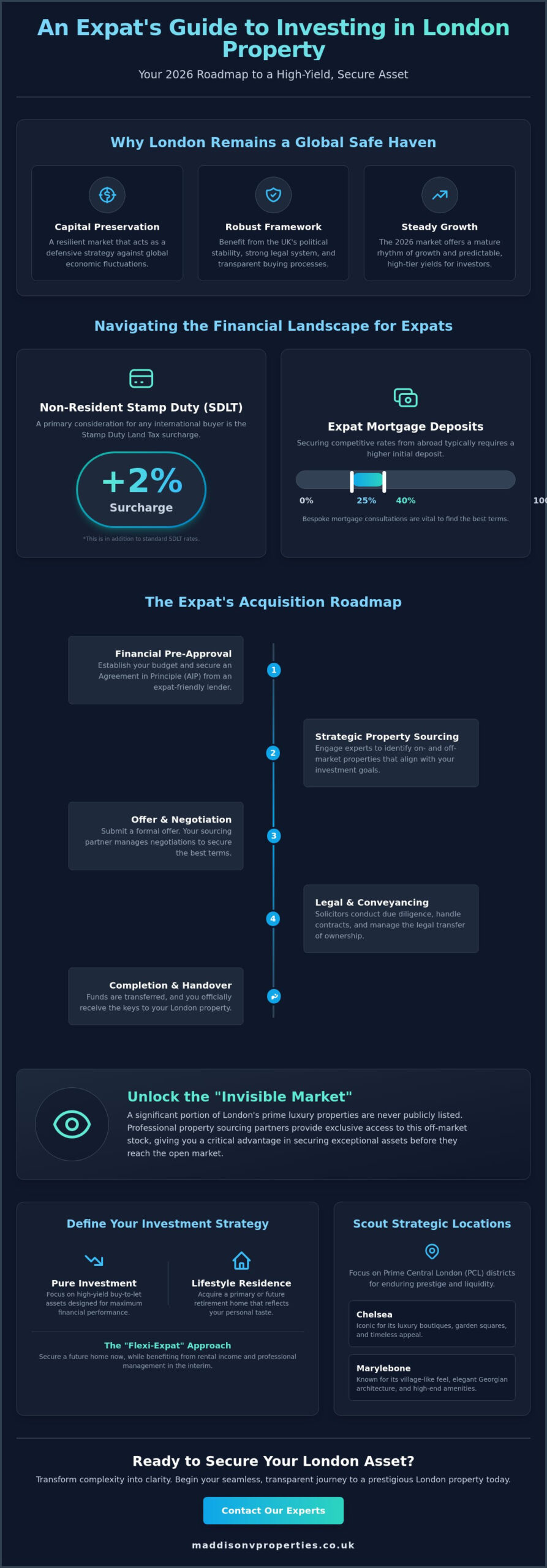
We promise to transform this intricate process into a seamless, transparent journey toward securing a high-yield asset. You’ll gain absolute clarity on the 2026 tax landscape, including Capital Gains obligations and the specific requirements for securing competitive expat mortgages with deposits typically ranging from 25% to 40%. This roadmap provides an expert-led overview of current market yields, essential sourcing strategies, and the professional management structures necessary to ensure your investment remains effortless, secure, and prestigious. By the end of this guide, the complexities of the London market will be replaced by a clear, actionable plan for your portfolio.
Key Takeaways
- Identify why London remains the premier global cornerstone for capital preservation and how the 2026 market provides a stable, high-quality environment for your assets.
- Navigate the complexities of the 2% non-resident Stamp Duty surcharge and discover the vital role of bespoke mortgage consultations in securing competitive rates from abroad.
- Explore strategic location scouting that moves beyond landmarks to uncover emerging luxury tech hubs and the enduring prestige of Chelsea and Marylebone.
- Master every step of the acquisition roadmap with this expat guide to buying property in London, ensuring you move from financial pre-approval to completion with absolute confidence.
- Learn how to access the “Invisible Market” through professional property sourcing, allowing you to secure exceptional off-market luxury stock that never reaches public listings.
The Allure of London Real Estate for Expats in 2026
London continues to stand as a global pillar for capital preservation. While other international markets experience cycles of intense volatility, the UK capital offers a sense of permanence that is difficult to replicate. For many, this expat guide to buying property in London serves as the essential first step toward securing a legacy in one of the world’s most resilient cities. The 2026 market has matured beyond the frantic post-pandemic shifts of previous years, settling into a rhythm of steady growth, predictable yields, and high-tier standards that appeal to the sophisticated investor.
There is a distinct psychological shift occurring among international professionals. The traditional model of renting for convenience is rapidly being replaced by a commitment to buying for equity. Expats are increasingly focused on luxury new builds and high-spec off-plan investment opportunities, valuing the effortless oversight, modern aesthetics, and energy efficiency these properties provide. By moving from a tenant mindset to an owner-investor perspective, buyers are securing their financial future while enjoying a high-quality lifestyle experience in the heart of the city.
To gain a deeper perspective on how international buyers are navigating the acquisition process in the current market, watch this educational overview:
London as a Global Safe Haven
The UK real estate market remains a primary destination for international capital due to its robust legal framework, political stability, and transparent buying processes. In 2026, Prime Central London (PCL) districts like Chelsea and Marylebone continue to attract those seeking a secure, prestigious, and liquid asset. Unlike the speculative bubbles seen in emerging markets, London property represents a defensive strategy against global economic fluctuations. This stability is particularly appealing to those who prioritize long-term security, financial growth, and lifestyle prestige above all else.
Investment vs. Lifestyle: Defining Your Goal
Success in the capital requires a dual-focus strategy. You must decide if you are seeking a primary residence that reflects your personal taste or a high-yield buy-to-let asset designed for maximum financial performance. Navigating real estate in england london often involves finding the precise intersection of these two goals. We are seeing the rise of the “flexi-expat,” an individual who acquires property now to secure a future retirement home while benefiting from professional property management in the interim. This approach ensures your investment works for you, providing mental tranquility, financial security, and a seamless transition back to the UK when the time is right.
Navigating the Financial Landscape: Taxes, Surcharges, and Mortgages
Mastering the fiscal architecture of a London acquisition is essential for ensuring long-term financial security. While the capital offers significant rewards, the entry costs for international buyers involve specific surcharges and tax obligations that require precise calculation. This expat guide to buying property in London provides the clarity needed to understand your total investment outlay, moving beyond surface-level estimates to concrete, 2026-verified data. By identifying these costs early, you can approach the market with the quiet confidence of a seasoned investor.
SDLT for Non-Residents in 2026
The primary consideration for any international buyer is the Stamp Duty Land Tax for non-UK residents. The 2% non-resident surcharge is an additional levy on top of standard and second-home rates. For high-value residential purchases exceeding £1.5 million, the standard SDLT rate is 12%, meaning non-residents effectively face a 14% charge on the portion of the price above that threshold. If you’re purchasing a second home or an investment property, additional surcharges may apply, though some expats may qualify for “replacement of main residence” relief if they meet strict residency and disposal criteria within specific timeframes.
Securing a UK Mortgage from Abroad
High-street banks often decline expat applications due to the perceived complexity of offshore income and foreign tax jurisdictions. Securing a mortgage from abroad necessitates a pivot toward specialist lenders who understand the nuances of global wealth. Most lenders require a higher deposit from non-resident buyers, typically ranging from 25% to 40% of the property value. For those looking to build a portfolio, these buy-to-let mortgage guides offer essential insights into how specialist providers assess rental coverage and international creditworthiness. Engaging in professional mortgage consultations early in your search ensures you have a mortgage in principle, which is a non-negotiable requirement for serious offers in the London luxury market.
Capital Gains and Ongoing Oversight
Ownership also brings responsibilities regarding Capital Gains Tax (CGT) and operational costs. For the 2026-2027 tax year, non-residents are subject to a 24% CGT rate for higher and additional rate taxpayers upon the disposal of a London asset. It’s vital to remember that non-residents must report and pay any CGT due within 60 days of the completion of the sale. Beyond taxes, your financial roadmap must account for ongoing facilities management fees, service charges, and ground rents. These costs ensure the high-end aesthetics and functional standards of your property are maintained, preserving the asset’s value while you enjoy the rewards of a passive investment.
Strategic Location Scouting: Beyond the Tourist Landmarks
Strategic location scouting is the bridge between a simple purchase and a high-performing financial asset. While the city’s famous landmarks attract tourists, the astute investor looks for the intersection of historical prestige and future-proof infrastructure. This expat guide to buying property in London moves beyond the obvious choices to identify where capital is actually flowing in 2026. Whether you’re prioritizing lifestyle or growth, your postcode must reflect a commitment to quality and long-term stability. It’s about finding environments where aesthetics meet functionality.
We’ve observed a distinct shift from traditional “Old Money” postcodes toward emerging luxury tech hubs that offer a more contemporary lifestyle. However, the allure of established districts hasn’t faded. Instead, the market has bifurcated into areas that offer rock-solid capital preservation and those designed for aggressive rental growth. Identifying which path aligns with your portfolio requires an understanding of how transport, amenities, and building standards converge to create value. Success in this market isn’t just about where you buy, but the specific caliber of the development you choose.
Prime Central London: Chelsea and Marylebone
Chelsea and Marylebone remain the gold standard for international buyers who value capital preservation above all else. These districts offer a refined lifestyle defined by elite schooling, fine dining, and historic aesthetics that few other global cities can match. The primary driver here is inventory scarcity. Because these neighborhoods are strictly protected, new developments are rare, ensuring that existing stock holds its value even during broader market corrections. Accessing the best opportunities in these areas often requires specialized property sourcing, as the most prestigious homes are frequently secured through off-market channels before they ever reach public portals.
Emerging Hubs for Capital Growth
While Prime Central London offers stability, emerging luxury corridors and regeneration zones provide opportunities for higher yields. The “Crossrail effect” continues to bolster property values in 2026, as the Elizabeth Line has fundamentally rewritten the city’s transport geography. Areas that were once considered peripheral now offer seamless connectivity to the City and Canary Wharf, making them highly attractive for professional tenants. However, you must distinguish between genuine regeneration and overvalued pockets that lack the infrastructure to support long-term growth. Diversifying your portfolio with off-plan investment opportunities in these corridors can provide a significant advantage for early investors.
The Infrastructure of Luxury
A strategic location is only as valuable as the building itself. Modern luxury blocks in these emerging hubs require high-tier facilities management to maintain their aspirational status. From concierge services to private wellness suites, these amenities are no longer optional for the international market; they’re essential components of the asset’s value. Ensuring your property is managed with meticulous attention to detail protects your investment from the wear of time and maintains the superior user experience that high-net-worth tenants demand. This focus on operational excellence ensures your London asset remains a source of pride and profit.
The Expat Buying Journey: From Offer to Completion
The journey to ownership is a sequence of precise, deliberate steps. This expat guide to buying property in London outlines a secure path from the initial offer to the final exchange of keys, ensuring your acquisition is handled with high-end professionalism. By following a structured roadmap, you can eliminate the anxieties often associated with international transactions and focus on the rewards of your new asset. It’s a process that rewards preparation, patience, and expert oversight.
Financial pre-approval is your first essential milestone. A mortgage in principle is non-negotiable for anyone looking to compete for premium stock in a fast-paced market. Once your financing is established, the search moves to sourcing. Relying solely on public websites often means missing the finest opportunities. Real value is frequently found in the “invisible market,” where off-market luxury properties are traded with discretion and speed. This approach ensures you aren’t just buying a home, but a secure financial asset.
The transition from offer to exchange is the most critical phase for any international buyer. Your solicitor will conduct thorough due diligence, examining everything from title deeds to cladding safety and service charge histories. This period requires meticulous attention to detail to protect your capital. Only upon the exchange of contracts, accompanied by the payment of a 10% deposit, is the deal legally finalized. Completion follows soon after, marking the moment your vision becomes a reality. At this stage, your attention will likely turn to the logistics of moving and settling in; for those requiring professional removals, mudanzasajuar.com provides reliable transport services for household goods and personal assets.
The Critical Role of Due Diligence
Every expat must grasp the distinction between leasehold and freehold. While freeholders own the land and the building, leaseholders own the right to the property for a specific duration, a common structure for London apartments. For new build acquisitions, professional snagging reports and warranties are indispensable for identifying any aesthetic or functional defects before you take possession. It’s important to remember that in England, a verbal offer is not legally binding until the exchange of contracts, meaning “gazumping” remains a risk until that point.
Managing the Process Remotely
Acquiring a London asset from abroad is now a seamless, sophisticated experience. High-definition virtual viewings and 3D walkthroughs provide the clarity needed for off-plan property investment decisions without the need for constant travel. To ensure a fluid process, many international buyers utilize a Power of Attorney for document execution. This allows for effortless oversight and tranquility of mind while your capital is in transit, ensuring nothing is left to chance. If you’re ready to begin your search with a dedicated partner, explore our professional property sourcing services to access the city’s most exclusive opportunities.
Securing Your Investment with a Professional Sourcing Partner
Navigating the London market alone often results in missed opportunities and inflated entry prices. This expat guide to buying property in London emphasizes that true value is found through on-the-ground expertise and exclusive access. A professional partner acts as your eyes and ears; they ensure every decision is backed by data, experience, and strategic foresight. The “DIY” approach might seem cost-effective initially, but it often leads to overpaying in a market where information is the most valuable currency. Secure, high-yield acquisitions are rarely the result of chance; they are the product of meticulous planning and professional advocacy.
Securing a prestigious asset requires moving beyond public listings. Sourcing agents tap into the “invisible market,” where off-market luxury stock is traded with discretion and speed. This allows you to avoid public bidding wars and access properties with superior capital growth potential before they ever reach the web. It’s about de-risking your purchase through professional negotiation, unbiased analysis, and a commitment to your long-term financial security. By aligning with a partner who understands the nuances of 2026 market trends, you transform a complex international transaction into a fluid, customized experience.
The Value of a Property Sourcing Agent
Engaging property sourcing agents in London provides a protective barrier between you and the complexities of the capital. These experts save you time and capital by filtering through thousands of options to present only those that meet high-tier standards. For example, we recently assisted an overseas client in securing a high-yield Chelsea apartment by identifying an off-market opportunity that perfectly balanced historic aesthetics with modern functionality. The ROI of professional negotiation often far outweighs the service cost, providing you with an immediate advantage in a competitive landscape while ensuring your capital is deployed with absolute precision.
Passive Ownership: Beyond the Acquisition
The journey does not end at completion; it evolves into a phase of passive ownership and portfolio optimization. Transitioning from a buyer to a landlord requires a seamless management structure to ensure your investment remains effortless and rewarding. By setting up professional property management, you enjoy the benefits of meticulous tenant vetting, consistent rent collection, and expert facilities oversight. This holistic approach provides the mental tranquility you deserve while your London asset grows in value, allowing you to enjoy the rewards of ownership without the operational burden. Speak with a MaddisonV advisor to begin your London property journey.
Your Legacy in the Capital Starts Here
London property remains an unparalleled vehicle for long-term growth and stability. By mastering the 2026 tax landscape and identifying the city’s most resilient postcodes, you transition from a distant observer to a sophisticated owner. This expat guide to buying property in London has shown that success depends on the intersection of local intelligence and meticulous execution. It’s a journey that rewards those who prioritize quality, security, and professional oversight.
MaddisonV Properties offers a refined, full-service advisory designed specifically for the international buyer. We specialize in the luxury markets of Chelsea and Marylebone, providing expert mortgage consultations and SDLT optimization to protect your capital. From initial sourcing to ongoing property management, our team handles every operational detail so you can enjoy the rewards of a secure, high-yield asset. Secure Your London Investment with MaddisonV Properties today and take the first step toward a seamless acquisition. Your future in the capital is waiting.
Frequently Asked Questions
Can I buy property in London as a non-resident expat in 2026?
You can absolutely purchase property in London as a non-resident expat in 2026. The UK maintains an open-market policy with no legal restrictions on foreigners buying residential real estate, regardless of their nationality or residency status. This transparency is a cornerstone of the market’s allure, providing a stable and reliable environment for international capital to flourish without the barriers found in other global cities.
Do I need to be physically present in the UK to complete a property purchase?
You don’t need to be physically present in the UK to finalize your acquisition. Modern technology, such as high-definition 3D walkthroughs and secure digital document signing, facilitates a seamless remote process. By utilizing a Power of Attorney (PoA), your legal representative can execute the necessary contracts on your behalf, ensuring your investment proceeds with absolute precision while you remain abroad.
What is the additional Stamp Duty surcharge for international buyers?
Non-UK residents are subject to a 2% Stamp Duty Land Tax (SDLT) surcharge on top of standard residential rates. This expat guide to buying property in London highlights that for a high-value purchase, this levy must be factored into your initial capital outlay. For a single property purchase over £1.5 million, the effective rate is 14%, ensuring you have absolute clarity on the total cost of acquisition before you commit.
Is it possible to get a UK mortgage if I earn my income in a foreign currency?
It’s entirely possible to secure a UK mortgage while earning foreign currency, provided you engage with the right lenders. Most high-street banks have strict criteria for offshore income, making professional mortgage consultations essential for accessing specialist providers. These lenders are accustomed to complex global wealth structures and typically require a deposit between 25% and 40% for non-resident borrowers.
What are the main differences between leasehold and freehold properties for expats?
The primary difference lies in the ownership of the land itself. Freehold means you own the building and the land it sits on indefinitely, which is common for houses. Leasehold, which applies to most London apartments, gives you the right to occupy the property for a fixed term, often 99 to 999 years. Understanding these nuances is vital for ensuring the long-term security and liquidity of your asset.
How long does the typical property buying process take in London?
The typical buying journey in London spans between three and six months from the moment an offer is accepted. This timeline accounts for the meticulous due diligence, mortgage processing, and legal searches required to protect your interests. While off-plan investment opportunities follow a different schedule based on construction milestones, a standard residential transaction requires patience to ensure every detail is perfectly aligned.
What are the benefits of buying an off-plan luxury apartment in London?
Buying off-plan offers the advantage of securing a modern, energy-efficient home with the latest high-end aesthetics. These properties often feature superior facilities management and wellness amenities that appeal to the international market. Additionally, purchasing early in the development cycle allows you to benefit from potential capital growth before the building is even completed, securing a brand-new asset with minimal maintenance requirements.
How can a property sourcing agent help an expat avoid “gazumping”?
A property sourcing agent minimizes the risk of “gazumping” by establishing professional rapport with sellers and moving the transaction forward with speed. In this expat guide to buying property in London, we emphasize that having a mortgage in principle and a dedicated representative makes your offer more credible. By handling negotiations and overseeing the due diligence phase, an agent ensures the path to exchange is as short and secure as possible.

Sign Up Now
Want to read more great articles and blogs subscribe to our newsletter