
Did you know that the total number of london household units is projected to grow by approximately 70,000 every year through to 2026? You've likely...

Did you know that the total number of london household units is projected to grow by approximately 70,000 every year through to 2026? You’ve likely felt the frustration of wading through dense ONS reports only to find yourself more confused about where to actually place your capital. It’s difficult to separate the noise of general population growth from the specific shifts that drive premium rental yields and long-term stability.
We’ve meticulously analyzed the latest tenure projections and composition data to provide you with a bespoke roadmap for your 2026 property strategy. You’ll move beyond the common confusion regarding the military Household Division and focus instead on the demographic realities that offer genuine peace of mind. This article explores the rise of single-person households, the decline of traditional homeownership, and the specific luxury property types that will command the highest demand over the next twenty-four months. We’ll give you the clarity needed to invest with quiet confidence and identify the most profitable opportunities in the capital.
Key Takeaways
- Gain a sophisticated understanding of the evolving london household to align your investment strategy with the definitive growth projections of 2026.
- Navigate the nuanced shift in demographics, from the rise of single-person residences in Prime Central London to the growth of multi-generational homes in the outer boroughs.
- Explore why the Private Rented Sector remains the cornerstone of the market, offering a premium opportunity to cater to tenants choosing long-term, high-quality rental lifestyles.
- Identify emerging high-yield opportunities by tracking the meticulous migration patterns of young professionals moving from Zone 1 into the vibrant corridors of Zones 2 and 3.
- Discover how a bespoke, data-driven approach allows for a seamless and hands-off investment experience, ensuring your portfolio thrives with professional precision.
Defining the London Household in 2026: Demographics vs. Tradition
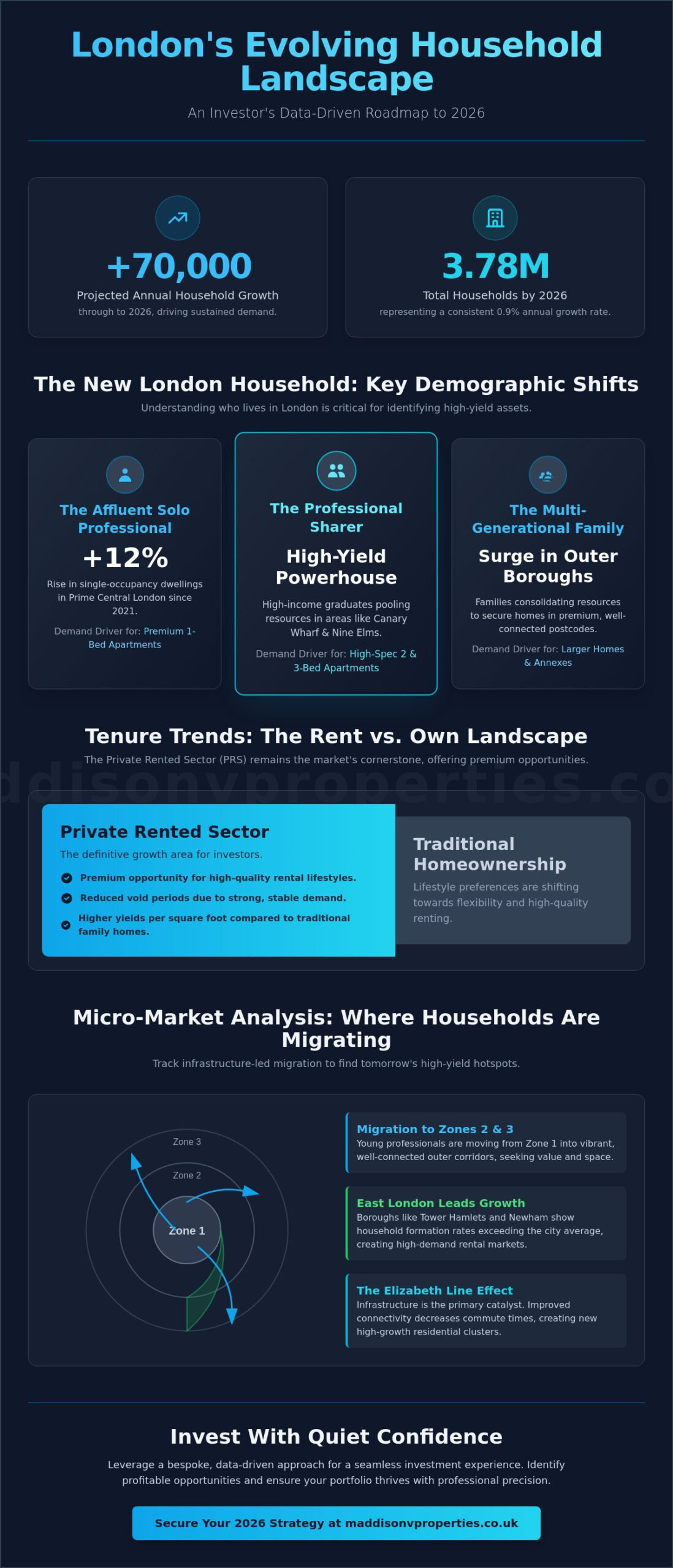
Understanding the nuanced shift in the london household requires a departure from traditional imagery. While the term often evokes the ceremonial grandeur of the Household Division, property investors must focus on the demographic reality of the city’s living units. By 2026, the Greater London Authority (GLA) projects the total number of households will reach approximately 3.78 million. This represents a steady climb from previous years, driven by a consistent 0.9% annual growth rate that underscores the city’s enduring appeal. For the sophisticated investor, these figures aren’t just statistics; they are a blueprint for identifying where demand will outstrip supply.
The landscape of the city is evolving through a complex interplay of migration, economic shifts, and changing lifestyle preferences. Analyzing the Demographics of London reveals that while the total population continues to rise, the way people group themselves into domestic units is becoming more fragmented. This fragmentation is the primary driver of capital growth. When household formation outpaces housing delivery, property values and rental yields naturally experience upward pressure, rewarding those who positioned their portfolios early in high-growth zones.
To better understand this concept, watch this helpful video:
The Real Estate Definition of a London Household
The Office for National Statistics (ONS) defines a london household as one person living alone, or a group of people at the same address who share cooking facilities and a living area. Investors should prioritize this metric over raw population data. A rise in single-person households or professional sharers creates a bespoke demand for specific assets. Currently, the trend toward smaller household sizes is increasing the appetite for premium 1-bed and 2-bed apartments. This shift allows landlords to achieve higher yields per square foot compared to larger, traditional family homes.
London Household Growth Projections for the Next Decade
GLA data for 2026 highlights a significant geographical tilt in growth. East London boroughs like Tower Hamlets and Newham continue to lead the charge, with household formation rates exceeding the city average. This trend is inextricably linked to the seamless connectivity provided by the Elizabeth Line. Infrastructure remains the most reliable catalyst for demographic shifts. As commute times decrease, new clusters of households emerge in previously overlooked pockets. Meticulous investors who track these infrastructure-led migrations can secure assets in areas destined for long-term appreciation and high rental demand.
The Evolution of Household Composition: Who is Living in London?
Understanding the modern london household is essential for any investor seeking long-term stability and growth. Recent shifts in social dynamics have fundamentally altered how people occupy space in the capital. The 2023 UK families and households data indicates a continuing move toward diverse living arrangements, particularly in high-density urban hubs. In Prime Central London, single-occupancy dwellings have risen by 12% since 2021, while outer boroughs are seeing a surge in multi-generational living as families consolidate resources to secure premium postcodes.
The “Professional Sharer” demographic has also evolved into a high-yield powerhouse. High-income graduates and young executives are increasingly pooling their resources to occupy high-spec apartments in areas like Canary Wharf and Nine Elms. For landlords, this translates into robust rental coverage and significantly reduced void periods. It’s a demographic that values quality, proximity, and a seamless living experience above all else.
The Rise of the Affluent Single Professional
Chelsea and Marylebone remain magnetic for high-earning singles who prioritize time and location. These individuals demand “lifestyle-first” developments that offer more than just a place to sleep. They look for meticulous interior design, 24-hour concierge services, and private wellness suites that reflect their personal brand. This specific demand for turnkey living is a primary driver for the off-plan property investment market. Investors can capitalize on this trend by securing units in developments that promise a hands-off lifestyle for the tenant and a premium, low-friction experience for the owner.
International Households and the Global Move to London
London’s status as a global sanctuary remains unshakable. In 2025, corporate relocations from the US and Europe grew by 15%, bringing a wave of families with bespoke requirements. These tenants often seek serviced accommodation that bridges the gap between a luxury hotel and a permanent residence. We’ve observed a specific surge in Dubai-based investors who are strategically acquiring london household assets to build generational wealth. These investors prioritize reliability, prestige, and the absolute peace of mind that comes with professional oversight. Managing these complex international requirements demands a sophisticated partner who understands that nothing can be left to chance. If you’re looking to optimize your portfolio for this global audience, our bespoke management solutions ensure your investment remains both profitable and pristine.
Tenure Trends: The “Rent vs. Own” Landscape in London
The capital’s housing market has reached a definitive turning point. By 2026, the traditional aspiration of homeownership has been replaced by a sophisticated rental culture that prioritizes flexibility, location, and quality. Every london household now navigates a landscape where the Private Rented Sector (PRS) isn’t just a temporary stepping stone; it’s a long-term lifestyle choice for professionals and families alike. This shift represents a structural change in how Londoners view their living arrangements, moving away from the burdens of debt toward the freedom of high-end, managed services.
The Growth of the Private Rented Sector
Projections for 2026 indicate that approximately 31% of London households now reside within the private rented sector. This growth is fueled by a demographic that values agility and aesthetic excellence over the rigid commitments of a thirty-year mortgage. Modern tenants seek more than just four walls. They demand a lifestyle characterized by convenience and meticulous attention to detail. This is where professional property management plays a vital role in the market. Expert management ensures a seamless experience, turning a simple tenancy into a premium service that retains high-quality tenants for the long term. The rise of institutional “Build to Rent” schemes has further elevated these expectations, forcing individual landlords to provide hotel-standard environments to remain competitive. This evolution creates a stable, lucrative environment for investors who prioritize quality and reliability.
Barriers to Ownership and the Investment Opportunity
Mortgage affordability remains a significant hurdle for many residents. With interest rates stabilizing around 4.2% in early 2026, the financial barrier to entry for first-time buyers is higher than in previous decades. This reality keeps high-earning professionals in the rental market for longer periods, driving sustained demand for luxury corporate housing and serviced accommodation. For the astute investor, this gap represents a clear opportunity to provide bespoke housing solutions. Utilizing a comprehensive buy-to-let mortgage guide allows landlords to navigate these financial complexities and secure assets that cater to this growing demographic. The stability of rental demand remains unshakable. Even in a high-interest environment, every london household requires a residence that reflects their status and provides peace of mind. Investors who offer “hands-off” living experiences can expect several key benefits:
- Consistent rental yields that often exceed 5.5% in revitalized urban zones.
- Reduced void periods due to the persistent shortage of premium, well-maintained housing.
- Long-term capital appreciation in areas with established transport links and lifestyle amenities.
The result is a market that rewards prestige and professional standards. By positioning a property as a premium asset, landlords can enjoy a secure, hassle-free investment journey while meeting the needs of a discerning tenant base.
Micro-Market Analysis: Where Households are Migrating
Young professional tenants are increasingly prioritizing space and wellness over proximity to the financial district. This shift has triggered a notable migration from the dense core of Zone 1 toward the refined, greener enclaves of Zone 2 and 3. Areas like Hackney Wick and Walthamstow have seen a 12% rise in professional residents since 2023. These locations offer a bespoke lifestyle balance that the traditional center often lacks, providing a seamless blend of modern amenities and community-focused living.
Prime Central London (PCL) Household Dynamics
Despite the outward shift for some, the demand within the london household sector in SW3, SW7, and W1 remains exceptionally resilient. High-net-worth individuals and international corporate tenants continue to value the prestige of Marylebone and Chelsea. This enduring appeal is exactly why property sourcing agents London are focusing their 2026 acquisition strategies on these specific postcodes.
Corporate housing demand remains a primary driver for Prime Central London stability. Professionals on international assignments require residences that are:
- Meticulous in design and finish
- Secure with 24-hour concierge services
- Prestigious in their historical and cultural context
These households don’t just look for a place to stay; they seek a premium experience that mirrors their global lifestyle. This ensures that luxury apartments in the heart of the city remain evergreen assets for the discerning investor.
Emerging Hubs: The Outer London Growth Story
Regeneration projects in areas like Old Oak Common and the Royal Docks are transforming former industrial sites into sophisticated mini-cities. These developments attract first-time london household owners who value the reliability of new-build infrastructure. A significant correlation exists between school catchment quality and long-term household stability. In 2026, data shows that families are increasingly migrating to areas like Richmond or Kingston, where 90% of schools maintain an “Outstanding” or “Good” Ofsted rating.
For investors, these emerging micro-markets offer a compelling balance between immediate yield and long-term capital growth. The influx of stable, family-oriented households creates a low-turnover environment that reduces vacancy periods and ensures a consistent return on investment. It’s a strategic move for those who want to avoid the volatility of high-churn markets while securing a high-quality tenant base.
If you’re looking to secure a premium asset in these competitive markets, explore our bespoke property management solutions to ensure a hands-off investment experience.
Strategic Sourcing: Navigating London Households with MaddisonV
Investing in a london household in 2026 requires more than just capital; it demands a data-driven strategy rooted in shifting urban demographics. We monitor these changes closely, noting the projected 12% rise in demand for high-end corporate housing across Zone 1 and Zone 2. Our team identifies high-yield pockets before they reach the open market, ensuring your capital aligns with the specific needs of the 2026 professional tenant. It’s about precision over volume.
We provide a truly hands-off approach that redefines property ownership. Our model handles the complex, gritty details of management so you don’t have to. By securing the future of your portfolio today, we ensure your assets remain resilient against market fluctuations. We focus on long-term value, utilizing demographic insights to pivot toward the most profitable london household structures, from co-living professional spaces to premium family residences.
The MaddisonV Advantage: Meticulous Sourcing
Our deep understanding of real estate in england london allows us to filter out underperforming assets. We focus on properties that support a premium, seamless experience for the owner. This includes rigorous facilities management that preserves the physical integrity of the building, ensuring long-term capital appreciation. We don’t just find a property; we secure a legacy.
- Guaranteed Rent: We offer a cornerstone promise of stable, predictable income regardless of occupancy.
- Bespoke Selection: Each acquisition is tailored to the investor’s specific risk profile and yield targets.
- Superior Tenants: Our personal commitment leads to a 98% tenant satisfaction rate, reducing turnover and wear.
Our facilities management team operates with a meticulous eye, ensuring every aesthetic standard is met. This dedication to quality preserves the property’s value and attracts a higher tier of occupant. It’s a sophisticated cycle of care that benefits both the landlord and the guest.
Your Next Steps in the London Market
For international investors from Dubai to Europe, we offer a seamless gateway into the UK market. We understand the complexities of cross-border acquisitions and provide a bespoke service that removes friction from the process. You can access exclusive off-market opportunities through our established network of developers and private sellers, often securing assets before they are publicly listed.
Contact our team today to book a bespoke consultation. We’ll discuss your specific investment goals and show you how to build a resilient portfolio for the 2026 market. Our premium acquisition experience is designed for those who value time, quality, and peace of mind above all else. Let’s begin your journey toward a hassle-free, high-yield property future.
Mastering the 2026 London Property Market
The profile of the london household is undergoing a profound transformation as we move toward 2026. Data from the Office for National Statistics indicates a steady rise in non-traditional living arrangements, with professional sharers and single-occupant dwellings now accounting for a larger share of the central market than in the previous decade. Success in this climate depends on identifying specific micro-markets where tenure trends favor high-yield serviced accommodation. It’s no longer enough to simply buy property; you must strategically align with the lifestyle aspirations of a new generation of tenants who value flexibility over long-term ownership. Maddison V Properties offers the expertise needed to navigate these complexities with ease and precision.
Our team specializes in the Chelsea and Marylebone luxury markets, delivering a service that’s bespoke, seamless, and meticulous. We provide global clients with a premium investment advisory that transforms complex demographic data into clear, actionable opportunities. By choosing our comprehensive management, you’ll enjoy a truly hands-off experience that prioritizes your peace of mind while securing long-term growth. It’s time to elevate your portfolio with a partner who understands the intersection of prestige and performance.
Secure your next high-yield London investment with our expert sourcing team
The future of the capital’s property market is bright for those who act with foresight and professional guidance.
Frequently Asked Questions
What is the average household size in London in 2026?
The average london household size is projected to reach 2.43 persons by 2026. This reflects a subtle shift toward smaller living units as professional solo living and couples without children become more prevalent. It’s a trend that demands a meticulous approach to property selection to ensure every square foot offers a premium experience for modern residents.
How many households are there in Greater London currently?
There are currently 3.56 million households across Greater London according to the 2024 projections from the Greater London Authority. This figure represents a steady rise from the 3.42 million recorded during the 2021 Census. Such growth highlights the sustained demand for high-quality residential spaces that offer landlords both reliability and prestige in a competitive market.
Which London borough has the highest number of households?
Barnet maintains the highest number of households in the city, with the 2021 Census recording 145,500 individual homes. This borough’s expansive residential footprint offers a diverse range of investment opportunities. It’s an ideal location for those seeking to provide bespoke housing solutions that cater to a large and varied demographic of professional tenants.
Is the number of households in London increasing or decreasing?
The number of households in London is increasing, with projections suggesting a growth of 0.8% annually through 2026. This upward trajectory ensures a consistent appetite for high-quality rental accommodation. It provides landlords with the peace of mind that comes from a resilient market, allowing for a truly hassle-free investment journey and long-term financial security.
What percentage of London households are in the private rented sector?
Approximately 30% of every london household category currently resides within the private rented sector, a figure that has doubled since 2001. This substantial portion of the market underscores the shift toward flexible housing solutions. It’s a clear indicator that tenants now prioritize seamless living and premium service over the burdens of traditional property ownership.
How does household composition affect property investment returns?
Household composition directly dictates rental yields, as the rise in single-professional households results in higher demand for premium one-bedroom units. Meticulous investors who align their portfolios with these demographic shifts can achieve more stable returns. It’s about creating a bespoke fit between the property and the resident to ensure satisfaction and a hands-off management experience.
Are there more single-person households in London than in the rest of the UK?
London actually has a lower proportion of single-person households at 28.9% compared to the UK average of 30.1% as recorded in the 2021 Census. High living costs often encourage professional sharing arrangements. This makes meticulously managed properties a sophisticated choice for investors who don’t want to worry about high turnover or inconsistent rental income.
What is the difference between the Household Division and London households?
The Household Division refers to the seven elite military regiments that guard the Monarch, while London households are the individual residential units within the city. While the former represents a tradition of prestige, the latter is the focus of our professional property management. We ensure each residential unit meets the high standards expected by the city’s most discerning guests.

Sign Up Now
Want to read more great articles and blogs subscribe to our newsletter