
What if the secret to unlocking your next 15% in annual yield isn't acquiring more property, but refining the assets you already hold? Many UK...

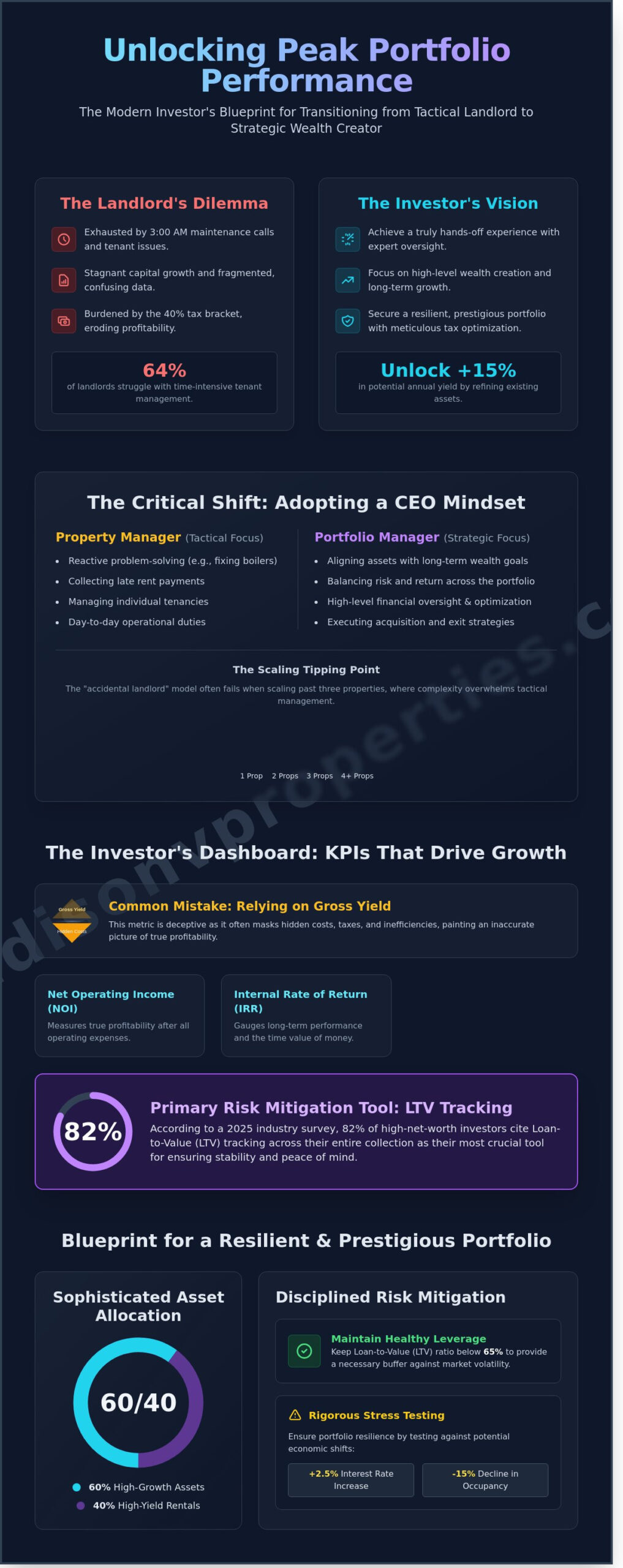
What if the secret to unlocking your next 15% in annual yield isn’t acquiring more property, but refining the assets you already hold? Many UK investors feel the weight of fragmented data and the mounting pressure of the 40% tax bracket; it’s a burden that turns a dream of freedom into a complex administrative puzzle. You’ve likely felt the exhaustion of managing 3:00 AM maintenance calls while your capital growth remains stagnant. Recent data shows that 64% of landlords now struggle with the time-intensive nature of tenant management. It’s clear that traditional real estate portfolio management needs a sophisticated, modern update to remain profitable in 2026.
We’re here to help you transition from a weary landlord to a strategic investor with a clear, ambitious roadmap. You’ll discover how to master the art of high-yield management to achieve a truly hands-off experience. This guide explores the bespoke strategies needed for meticulous tax optimization, seamless operational flow, and a definitive path toward future acquisitions. It’s time to replace friction with prestige and secure the premium lifestyle your investments were meant to provide.
Key Takeaways
- Transition from a tactical landlord to a strategic CEO by outsourcing mundane maintenance to focus on high-level wealth creation and long-term growth.
- Discover how to balance high-yield rentals with capital-intensive assets through sophisticated real estate portfolio management techniques tailored for the 2026 market.
- Mitigate risk and enhance stability by diversifying your holdings across premium geographical sectors, ensuring a resilient and prestigious investment profile.
- Implement a meticulous audit to identify and replace underperforming assets, allowing you to refine your collection for maximum capital appreciation and peace of mind.
- Learn how a success-based sourcing model provides a seamless, hands-off experience that aligns your financial goals with expert, professional oversight.
Understanding Real Estate Portfolio Management: Beyond Basic Landlording
Real estate portfolio management represents a fundamental departure from the traditional, often chaotic experience of managing individual tenancies. It is a meticulous, high-level oversight that treats your property collection as a unified financial vehicle rather than a series of isolated headaches. While a property manager focuses on tactical duties like repairing a boiler or collecting a late payment, a portfolio manager acts as a central intelligence hub; they ensure every asset aligns with your long-term wealth objectives. This distinction is vital for those seeking a bespoke, premium experience that prioritizes growth over mere survival. By incorporating core Investment Management Principles, you can balance risk and return across various jurisdictions and asset classes.
The transition from a landlord to an investor requires a shift in perspective. Managing a single unit is often manageable, but the “accidental landlord” model typically fails once an investor scales past three properties. At this threshold, the complexity of compliance, maintenance, and finance becomes overwhelming without a strategic framework. Effective real estate portfolio management provides the structure needed to maintain a hands-off, premium lifestyle while your assets continue to appreciate in value.
To better understand how these management levels interact, watch this helpful video:
The Shift from Reactive to Proactive Investment
Moving beyond the firefighting phase of investment is essential for scaling. By 2026, successful investors will rely on centralized data to identify assets that underperform by even 0.5% before they drain resources. This proactive stance shifts the focus toward long-term capital appreciation and stability. It views every square foot through a corporate financial lens, ensuring your investments remain seamless, profitable, and secure. This approach replaces the stress of tenant issues with the clarity of a well-defined exit strategy.
Key Performance Indicators (KPIs) for Your Portfolio
Relying on Gross Yield is a common mistake that often masks hidden costs and inefficiencies. Serious investors prioritize Net Operating Income (NOI) and Internal Rate of Return (IRR) to gauge true performance. In a 2025 industry survey, 82% of high-net-worth investors cited Loan-to-Value (LTV) tracking across their entire collection as their primary risk-mitigation tool. We monitor these metrics meticulously to provide the peace of mind that comes with a truly professional, optimized real estate portfolio management strategy. This ensures your collection remains a source of pride and prestige.
The Core Pillars of Effective Asset Management and Allocation
Successful real estate portfolio management strategies require a meticulous balance between immediate cash flow and long-term capital appreciation. Sophisticated investors in 2026 prioritize a 60/40 split; they allocate 60% of capital to high-growth assets in maturing markets and 40% to high-yield rentals that provide consistent liquidity. This structure ensures the portfolio remains resilient during economic shifts while capturing the upside of urban regeneration projects. Effective real estate portfolio management isn’t just about acquisition; it’s about the precision of the hold.
Risk mitigation relies on disciplined leverage and rigorous stress testing. Maintaining a Loan-to-Value (LTV) ratio below 65% provides a necessary buffer against volatility. Investors should stress test their holdings against a 2.5% interest rate increase or a 15% decline in occupancy rates to ensure debt coverage remains healthy. Using debt as a surgical tool rather than a blunt instrument allows for a seamless expansion of your footprint without compromising the stability of your core assets. It’s about creating a foundation that’s both ambitious and grounded.
Geographical Diversification Strategies
Stability meets prestige in London districts like Marylebone, where luxury apartments offer a reliable 3.2% yield alongside historical capital preservation. Contrast this with Dubai’s off-plan market, where investors target 8.5% tax-efficient yields in high-growth districts like Business Bay. Balancing these requires a bespoke approach to currency fluctuations and regulatory changes. Holding assets in both GBP and AED mitigates the risk of a single-market downturn. If you’re looking for a bespoke management solution to handle these international complexities, professional oversight is essential to maintain your peace of mind.
Sector and Property Type Mix
Diversifying property types reduces “yield drag” caused by aging stock and rising maintenance cycles. Professional investors balance traditional Buy-to-Let (BTL) with short-term serviced accommodation to maximize revenue. In 2026, serviced units often generate 45% more gross income than long-term tenancies in prime locations. New-build developments play a vital role here; their 10-year warranties and energy-efficient designs significantly lower operational costs. Knowing when to exit a stagnant asset is as crucial as the initial purchase. A minimum of 20% of the portfolio should be reviewed annually for potential reinvestment into emerging trends like corporate housing or green-certified residential spaces.
The CEO Mindset: Why Strategic Oversight Trumps Tactical Maintenance
Successful investors treat their holdings as a sophisticated enterprise rather than a collection of individual units. Effective real estate portfolio management requires a fundamental shift from tactical maintenance to strategic oversight. While a traditional estate agent focuses on the singular transaction, a portfolio manager operates as a CEO; they prioritize risk mitigation, liquidity, and long-term appreciation. By outsourcing the gritty details of tenant relations and property repairs, you reclaim the mental bandwidth necessary for high-level wealth decisions. This transition provides a seamless, hands-off experience that prevents the psychological burnout common among DIY landlords.
The benefits of this executive approach extend beyond simple time-saving. It’s about access. Professional managers leverage deep-rooted networks to secure off-market deals that never reach public listings. In 2025, data from luxury property syndicates showed that 22% of high-yield transactions occurred entirely behind closed doors. By positioning yourself as a strategic lead, you gain the clarity, control, and calm required to scale your wealth with precision.
- Reduced Burnout: Eliminating the “death by a thousand cuts” caused by minor property disputes.
- Strategic Networking: Accessing bespoke financing and off-market opportunities through institutional relationships.
- Wealth Focus: Shifting energy from “fixing” to “growing” through meticulous asset allocation.
Efficiency Through Professional Facilities Management
Professional facilities management residential is a cornerstone of asset preservation. It’s a meticulous process that protects the long-term value of luxury properties. While DIY management might seem cost-effective, a 2026 cost-benefit analysis reveals that premium management results in a 15% increase in asset longevity. High aesthetic standards are non-negotiable for attracting corporate tenants and high-end guests. Our approach ensures every property remains in pristine condition, offering a premium, hassle-free environment that justifies higher rental premiums and ensures 100% occupancy rates.
The Power of Bespoke Financial Advisory
Modern real estate portfolio management integrates financial advisory directly into the review process. It’s no longer enough to simply hold assets; you must optimize their capital structure. We integrate mortgage consultations to ensure international buyers secure competitive rates, often targeting 3.5% or lower in the 2026 market. Refinancing acts as a powerful tool for expansion. By extracting equity from seasoned assets, you can fund new acquisitions without injecting fresh capital. This cycle of refinancing and reinvesting creates a rhythmic, sustainable growth pattern for your entire portfolio.
Building and Auditing Your Property Portfolio for Maximum Growth
Effective real estate portfolio management requires a clinical eye for detail and a willingness to prune underperforming assets. By 2026, the gap between prime assets and secondary stock has widened, making a structured audit essential for sustained wealth. Investors who fail to recalibrate their holdings often find their profits eroded by rising operational costs and shifting tenant demands.
- Step 1: Conduct a meticulous audit of net rental yields; focus on the 4.8% benchmark for London residential assets to ensure your cash flow remains robust.
- Step 2: Identify “laggards” where annual maintenance exceeds 18% of gross income or where capital appreciation has stalled below the 3.1% national average.
- Step 3: Optimise tax structures and mortgage products; consider moving assets into a Family Investment Company (FIC) to mitigate the impact of the current 45% top-rate tax bracket.
- Step 4: Establish acquisition criteria that prioritise “ESG-ready” buildings, which helps you avoid the heavy retrofitting costs expected by 2028.
- Step 5: Implement a recurring quarterly review process with your advisory team to ensure your strategy stays aligned with fluctuating interest rates.
The Annual Portfolio Health Check
Your annual review should transcend simple profit and loss statements. It’s a time to evaluate tenant quality through the lens of corporate contract longevity and payment reliability. We benchmark your performance against the 5.7% growth seen in Prime Central London throughout 2025. With the 2026 regulatory shift requiring tighter compliance on the Decent Homes Standard, auditing your portfolio’s physical condition ensures you aren’t hit by unexpected enforcement notices or vacant periods.
Identifying Growth Opportunities in 2026
Smart capital is moving toward high-end new builds in London’s regeneration zones, such as the Brent Cross Town development, which is set to deliver thousands of new homes and office spaces. Sustainability is now a non-negotiable asset. Properties with a Grade A EPC rating currently command a 14% rental premium compared to older, less efficient stock. For those looking further afield, Dubai’s Dubai Islands district offers luxury off-plan entries with projected 7.5% net yields, providing a seamless hedge against UK market volatility. Investors seeking to maximise rental income in London through corporate positioning and premium property standards will find these regeneration zones particularly compelling in 2026.
If you’re looking to transition into a truly passive investment model, our team provides a bespoke management solution that guarantees your rent and protects your long-term growth.
Bespoke Portfolio Management with MaddisonV Properties
Effective real estate portfolio management requires more than just oversight; it demands a visionary approach to wealth preservation. At MaddisonV Properties, we provide a seamless, prestige-driven experience that transforms property ownership from a logistical burden into a silent legacy. Our dual-market presence in London and Dubai allows investors to capitalize on the 15.9% capital growth seen in Dubai’s 2023 luxury market or the stable 4.5% yields found in London’s corporate housing sectors. We operate on a success-based sourcing model, which aligns our interests directly with your ROI. This ensures every asset we recommend is vetted with the same rigor we apply to our own investments. You’ll move toward a hands-off lifestyle where your wealth grows autonomously, free from the friction of daily operations.
Our Full-Suite Advisory Service
Our team manages every lifecycle stage of your investment journey. We bridge the gap between sourcing, acquisition, mortgage advisory, and meticulous facilities management. We handle the complex, gritty details so you enjoy the rewards without the stress. In March 2024, we transformed a client’s fragmented collection of 8 residential units into a high-performance portfolio. By shifting to a serviced accommodation model, we boosted their monthly cash flow by £3,200 while reducing their personal time commitment to zero. For a deeper understanding of how professional property management in 2026 can transform your investment experience, our comprehensive guide outlines the refined strategies behind guaranteed rent and meticulous asset oversight.
Start Your Strategic Journey Today
The first step toward professional real estate portfolio management is a private consultation to audit your current holdings. We’ll identify underperforming assets and create personalised roadmaps for scaling within the luxury sector. We focus on design-conscious properties that attract premium corporate guests, ensuring your portfolio remains resilient against market shifts. Our 2026 strategy focuses on three key pillars: liquidity, luxury, and long-term stability. If you’re ready to experience a sophisticated partnership, Enquire about our bespoke portfolio management services to begin your transition to autonomous wealth.
Mastering Your Investment Legacy for 2026
Success in the 2026 property market demands a transition from passive landlording to a sophisticated CEO mindset. You’ve learned that rigorous auditing and strategic asset allocation are the foundations of long-term wealth. Effective real estate portfolio management requires a balance of local precision and global vision to ensure your capital remains both protected and productive. It’s about moving beyond tactical maintenance to embrace a future defined by high-yield, premium assets.
MaddisonV Properties brings this vision to life. We’re specialists in the prestigious London markets of Chelsea and Marylebone, where we manage high-value assets with meticulous care. Our reach extends through exclusive partnerships in Dubai and Europe, offering you a seamless gateway to international growth. From the initial sourcing of a property to the daily complexities of facilities management residential properties demand, our full-service advisory handles every detail so you don’t have to. We provide the prestige and peace of mind that modern investors deserve. Our approach is bespoke, ensuring your unique financial goals are met with quiet confidence and professional excellence.
Discover Bespoke Portfolio Management at MaddisonV
The future of your wealth is built on the decisions you make today. Let’s create something extraordinary together.
Frequently Asked Questions
What is the difference between property management and real estate portfolio management?
Property management handles the daily operations of a single unit, while real estate portfolio management focuses on the high-level financial performance of your entire collection. Property managers fix leaks and find tenants. A portfolio manager analyzes your 5% yield against market benchmarks to ensure your capital works as hard as possible. It’s the difference between maintaining an asset and curating a wealth-generating machine.
How many properties do I need before I require professional portfolio management?
Most investors find that managing 3 to 5 properties independently becomes a full-time commitment that hinders further growth. Once you reach this threshold, the administrative burden of compliance and maintenance often leads to missed opportunities. Professional oversight ensures your first five units remain profitable while you focus on acquiring the next five. It transforms a time-consuming job into a seamless, hands-off investment.
Can portfolio management help me reduce my tax liability in the UK?
Strategic management can significantly lower your UK tax bill by restructuring assets into limited companies or optimizing interest relief. Since the 2017 Section 24 changes, individual landlords often pay 40% more tax than those using corporate structures. Our meticulous approach ensures you utilize every available allowance, protecting your margins and providing the peace of mind that comes with total fiscal efficiency.
Is it better to diversify my portfolio across different cities or stay in one market?
Diversifying across 2 or 3 distinct markets is generally safer than concentrating all your capital in a single London borough. While London offers prestige and long-term growth, adding properties in Manchester or Birmingham can provide higher yields of 6% to 8%. A balanced geographic spread protects your income if one specific local economy slows down. It’s a bespoke strategy that balances stability with ambitious growth.
What are the typical fees for real estate portfolio management in London?
Typical fees for real estate portfolio management in London range from 1% to 3% of the total asset value annually. Some firms prefer a percentage of gross rental income, usually between 12% and 20% for a premium, all-inclusive service. These fees cover everything from meticulous financial reporting to the promise of a hands-off experience. You’re investing in a professional partnership that prioritizes your long-term wealth over simple utility.
How often should a property portfolio be audited for performance?
You should audit your property portfolio every 6 months to ensure each asset meets its performance targets. A bi-annual review allows you to identify underperforming units that yield less than 4% and decide whether to renovate or divest. This rhythmic assessment keeps your strategy agile and responsive to shifting market conditions. It ensures your investment remains a source of pride rather than a collection of stagnant assets.
Can a portfolio manager help me secure better mortgage rates for new acquisitions?
A dedicated manager can often secure mortgage rates that are 0.5% to 1% lower than standard retail offers. They leverage established relationships with private banks and specialist lenders who prefer the stability of managed portfolios. This access to bespoke financing can save you £5,000 or more annually on a £500,000 loan. It’s a tangible benefit that directly improves your cash flow and accelerates your acquisition timeline.
What is the role of off-plan property in a balanced real estate portfolio?
Off-plan properties provide essential capital growth and modern energy efficiency, with most new builds achieving an EPC rating of B or higher. Buying at a 5% to 10% discount during the construction phase allows you to capture equity before the keys are even handed over. These assets require less maintenance in their first 5 years, making them a cornerstone of a premium, hassle-free investment strategy.

Sign Up Now
Want to read more great articles and blogs subscribe to our newsletter