
Did you know that the average new-build apartment in London contains between 40 and 90 defects at the moment of handover? While your property in...

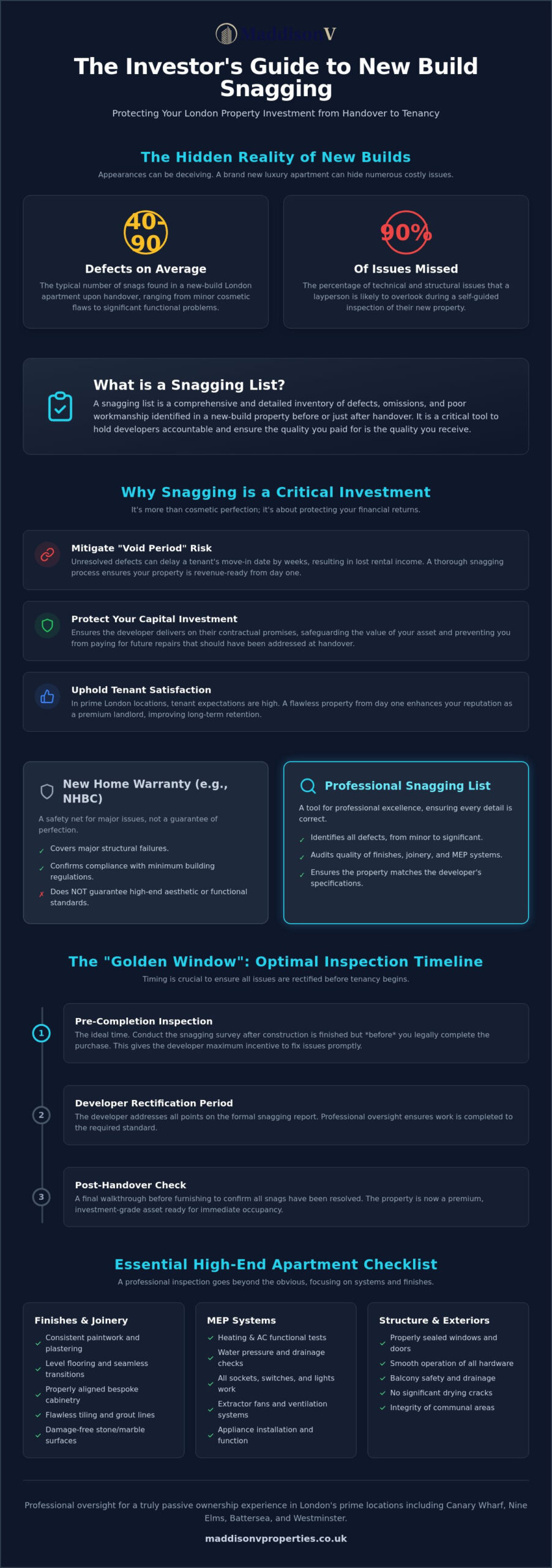
Did you know that the average new-build apartment in London contains between 40 and 90 defects at the moment of handover? While your property in Canary Wharf or Nine Elms may appear pristine, a layperson typically misses 90% of technical issues during a self-guided walkthrough. It’s understandable to feel a sense of anxiety regarding hidden structural flaws or the potential for delayed rental income while repairs are completed. Mastering the snagging list for new build apartments is the most effective way to bridge the gap between a finished construction site and a premium, investment-grade asset that’s ready for immediate occupancy.
This guide offers a sophisticated framework to help you protect your capital and ensure your luxury residence meets the highest standards of quality, durability, and style. We’ll explore a comprehensive checklist tailored for high-end finishes, clarify the 2026 reporting timelines under the New Homes Quality Code, and provide a clear roadmap for a seamless handover. By adopting a meticulous approach to due diligence, you can secure the financial stability and mental tranquility that define a successful London property investment. You’ll learn how to hold developers accountable within the standard rectification period, ensuring your portfolio remains both prestigious and profitable from the very first day.
Key Takeaways
- Safeguard your capital by identifying the “void period” risks that can delay rental income and disrupt your investment timeline.
- Gain a comprehensive snagging list for new build apartments to evaluate high-end specifications, including bespoke joinery, marble alignment, and sophisticated MEP systems.
- Navigate the “Golden Window” for inspections to ensure all structural and aesthetic omissions are rectified before your furniture installation begins.
- Identify neighborhood-specific challenges in Canary Wharf, Nine Elms, and Battersea to maintain the prestige and functional standards of your London portfolio.
- Understand the value of professional oversight in managing the delicate relationship between developers and surveyors for a truly passive ownership experience.
What is a Snagging List and Why is it Critical for London Investors?
In the context of the London property market, What is a Snagging List is essentially a detailed inventory of defects, omissions, and instances of poor workmanship identified before or shortly after the handover of a new build property. A meticulously prepared snagging list for new build apartments serves as your final line of defense. It ensures that the developer delivers the exact level of quality you’ve paid for, protecting both your capital and your future rental yield.
For the sophisticated investor, the primary risk isn’t just a scratched floorboard; it’s the “void period” risk. Unresolved snags can delay your first tenancy by weeks. If a tenant arrives on day one to find a malfunctioning heating system or unfinished cabinetry, they may rightfully demand rent credits or even terminate the agreement. Addressing these issues before the keys are handed over ensures your asset is revenue-ready from the moment of completion.
To better understand this concept, watch this helpful video:
It’s a common misconception that a “certified” building is a perfect one. While a property might receive sign-off from the National House Building Council (NHBC) or a similar warranty provider, this certification primarily confirms that the structure meets minimum safety and building regulations. It doesn’t guarantee the high-end aesthetic standards or functional excellence expected in a premium London development. A warranty is a safety net for major structural failures; a snagging list is a tool for professional excellence.
Asset Protection vs. Cosmetic Perfection
It’s vital to distinguish between acceptable settling issues and genuine defects. While minor drying cracks are common as a building breathes, significant structural movement or misaligned joinery suggests a deeper lack of care. When you pay a luxury premium for an apartment, that investment should be reflected in every mitered joint and polished surface. Implementing a professional snagging list for new build apartments during the pre-completion phase allows you to catch these details before they become permanent frustrations. Snagging is a strategic audit of developer obligations, ensuring every contractual promise is physically manifested in the property.
In modern high-end construction, the accuracy of this physical manifestation is often secured through advanced BIM and VDC workflows. Experts like CRAYDL provide the digital coordination necessary to ensure that complex MEP and structural systems are installed correctly the first time, which significantly streamlines the eventual snagging process for the end investor.
The Financial Impact of a Poor Handover
In prime locations like Chelsea or Westminster, tenant expectations are exceptionally high. A poor first impression doesn’t just lead to immediate complaints; it erodes long-term retention and diminishes your reputation as a premium landlord. The cost-benefit analysis of a professional survey is clear; the modest fee is a fraction of the cost of a single week’s lost rent or a mid-tenancy repair visit. For those focused on off-plan property investment, this final check is the bridge between a paper asset and a tangible, high-performing financial instrument.
The Essential Snagging Checklist for High-End Apartments
Entering a newly completed residence in Nine Elms or Westminster often feels like stepping into a pristine showroom. However, the aesthetic polish can frequently mask technical shortcomings that only reveal themselves once a tenant moves in. A bespoke snagging list for new build apartments must go beyond surface-level aesthetics to evaluate the complex, integrated systems that define modern luxury living. It’s about ensuring every detail is functional, flawless, and future-proof.
Mechanical, Electrical, and Plumbing (MEP) Standards
Luxury developments rely heavily on sophisticated climate control, high-speed connectivity, and integrated security. It’s essential to ensure every underfloor heating zone is individually tested and that comfort cooling systems respond accurately to thermostat adjustments without excessive noise. Smart home hubs, which serve as the central nervous system of a high-end flat, require verification for seamless integration with lighting, blinds, and audio systems. In districts like Canary Wharf and Battersea, testing the intercom link to the 24-hour concierge is non-negotiable for resident safety, convenience, and prestige. Don’t overlook the basics; socket polarity and the performance of high-speed fibre connections should be confirmed before you finalize your portfolio management strategy.
Internal Finishes: The ‘Touch and Sight’ Test
Premium finishes require a meticulous eye and a tactile approach. Use low-angle light to reveal “holidays” in paintwork or uneven plastering that might otherwise remain hidden during a standard walkthrough. When inspecting bespoke cabinetry, check for smooth operation, soft-close functionality, and precise shadow-gap detailing. For properties featuring natural stone, ensure marble veining alignment is consistent across joints to maintain the intended aesthetic flow. Floor tiles must be perfectly level, with grout lines that are uniform, consistent, and flawless. High-value kitchen surfaces, such as Quartz or Granite, should be examined for micro-scratches or chips that often occur during the final stages of a new build property construction.
The “Wet Room” audit is equally critical for long-term asset protection. Rainfall showers must undergo pressure testing to ensure consistent flow, while concealed drainage systems should be checked for any blockages or slow runoff that could lead to moisture damage. Finally, examine the glazing and external assets. Acoustic glass performance is vital for maintaining tranquility in central London locations, especially near busy transport hubs. Balcony decking levels should be verified to ensure proper drainage, preventing standing water that could damage high-spec finishes over time. By being thorough now, you protect your investment from the avoidable costs of mid-tenancy repairs.
Timing the Inspection: Navigating the Golden Window
Timing the delivery of your snagging list for new build apartments is a strategic decision that directly impacts your property’s time-to-market. While many buyers wait until they have the keys, sophisticated investors understand that the most effective inspections occur before the legal completion date. Under the New Homes Quality Code (NHQC) mandatory in 2026, buyers now have a strengthened right to conduct pre-completion inspections. This allows for the rectification of issues while the developer’s contractors are still on-site, ensuring your asset is truly tenant-ready from day one.
Following the initial handover, a 24-hour post-completion check is essential to catch any accidental damage caused during the final furniture installation or the movement of heavy appliances. This brief window provides a clear distinction between developer omissions and subsequent wear. Beyond this immediate period, you’re protected by the two-year developer warranty, often referred to as the “defects liability period.” During these first 24 months, the developer is legally obligated to fix any defects resulting from poor workmanship or materials. At MaddisonV, we meticulously oversee the “re-snagging” process, verifying that every reported issue has been resolved to our exacting standards before we sign off on the repairs.
The Pre-Completion Advantage
The “Golden Window” refers to the specific period between the exchange of contracts and the legal completion of the sale. Leveraging this timeframe is advantageous because developers are highly motivated to achieve a “clean” handover to meet their internal targets and financial deadlines. By submitting your snagging list for new build apartments during this phase, you ensure that repairs are prioritized and completed before you take possession. This proactive approach eliminates the need for remedial works once the property is on the rental market, allowing for an uninterrupted transition from completion to first tenancy.
Managing Snags with Tenants in Situ
Attempting to coordinate repairs once a tenant has moved in is a logistical nightmare that can quickly erode your investment’s profitability. It requires constant communication between the tenant, the developer, and the maintenance team, often leading to scheduling conflicts and privacy concerns. Poorly managed repairs can damage tenant relationships, potentially resulting in requests for rent abatement or even early lease termination. Utilizing professional property management services ensures these complexities are handled with professional distance, protecting your time and your tenant’s experience. We act as the authoritative buffer, ensuring that the developer honors their obligations without disturbing the peace and tranquility of your residents.
Development Specifics: Snagging in Canary Wharf, Nine Elms, and Battersea
A standard snagging list for new build apartments often fails to account for the unique engineering complexities of London’s high-growth districts. Whether you’re investing in a glass-wrapped tower in Canary Wharf or a heritage-inspired development in Westminster, the architectural profile dictates the specific risks your inspection must mitigate. For the discerning investor, understanding these localized nuances is the difference between a high-performing asset and a maintenance-heavy liability.
In Canary Wharf, the primary technical concern involves high-rise wind whistling and acoustic seal integrity. At significant altitudes, even the smallest gap in window seals can create intrusive noise that disrupts the tranquility of a premium residence. Similarly, in Nine Elms and Battersea, the prevalence of district heating systems requires a rigorous audit of Heat Interface Units (HIU). These complex connections manage the transfer of heat from a central plant to your individual apartment; any commissioning error here can lead to inconsistent temperatures and frustrated tenants.
The “View Audit” is another critical, yet often overlooked, component of a professional inspection. Investors pay a significant premium for the iconic London skyline. Scratches, seeds, or distortions in the glazing can permanently obscure these vistas. In historic areas like Westminster and Marylebone, the challenge shifts to ensuring that heritage-sympathetic finishes, such as traditional sash windows or ornate masonry, meet modern fire safety and thermal building regulations without compromising the aesthetic appeal—a level of precision and quality that specialists like MAD Fenster provide to the high-end market.
High-Rise Living Challenges
Vertical living demands specialized checks. Balcony drainage must be tested against the driving rain and high-velocity winds characteristic of London’s riverfront. We verify that door seals are robust and that communal lift access systems synchronize perfectly with individual security fobs. We also address the common “new build smell” by ensuring that Mechanical Ventilation with Heat Recovery (MVHR) systems are correctly balanced. A poorly tuned MVHR system doesn’t just fail to filter air; it can become a source of persistent noise that diminishes the user experience.
District-Specific Investment Potential
Nine Elms remains a formidable “buy property London” hotspot for 2026, offering a unique blend of modern infrastructure and riverside prestige. When comparing build quality in the Battersea Power Station area, it’s vital to look beyond the brand name of the developer and focus on the execution of the communal interfaces. For a broader perspective on how these districts fit into the wider capital, consult our London market guide. To ensure your high-rise investment is flawlessly executed from day one, explore our off-plan property investment opportunities where we handle the oversight so you can enjoy the rewards.
The MaddisonV Approach: Professional Oversight for Passive Investors
Achieving a truly passive investment requires a partner who understands that the final handover is just the beginning of your property’s financial journey. While the technical details of a snagging list for new build apartments are complex, the oversight of these details shouldn’t rest on your shoulders. For our sourcing clients, a professional snagging review is provided as a standard component of our service. We act as the authoritative bridge between you, the developer, and the surveyor; managing every interaction to ensure your interests are protected with quiet confidence and meticulous care.
Our role is to alleviate the anxieties of property ownership by providing a polished, all-encompassing solution. We don’t just identify defects; we manage the rectification process until every mitered joint and climate zone meets our aspirational standards. This level of oversight ensures your London residence remains a high-yielding, low-friction asset from the very first day of tenancy. By handling the complex operational details, we allow you to enjoy the rewards of a sophisticated portfolio without the burden of administrative friction.
From Sourcing to Seamless Management
Our commitment to quality begins long before the first inspection takes place. As experienced property sourcing agents London, we prioritize developments from builders with a documented history of excellence. By identifying high-quality developers during the sourcing phase, we naturally minimize the volume of snags encountered at completion. Once your acquisition is finalized, our facilities management team takes over the ongoing property health, ensuring that the visual and functional standards of your investment are maintained for the long term. It’s a fluid process designed to provide financial security, mental tranquility, and effortless oversight.
Your Partner in Prime Real Estate
For the international investor, having a localized expert on the ground is invaluable. We understand the nuances of the London market and the specific standards required in districts like Westminster and Canary Wharf. Overseeing the snagging list for new build apartments ensures that your capital is protected and that your property is positioned as a premium choice for high-tier tenants. We take immense pride in the standards of our portfolio, ensuring nothing is left to chance and every detail is considered. Your London investment should be as passive as it is profitable, reflecting the prestige of the city itself. To begin your journey with a partner committed to your long-term success, enquire about our bespoke property sourcing and management today and secure your next prime acquisition.
Safeguarding Your Capital in London’s Most Prestigious Developments
Navigating the final milestones of a property acquisition requires more than just a keen eye; it demands a strategic commitment to long-term excellence. By implementing a meticulous snagging list for new build apartments, you transform a standard handover into a professional audit of your financial future. We’ve detailed how timing your inspection within the pre-completion window and scrutinizing district-specific technicalities in Canary Wharf or Nine Elms can prevent costly void periods while preserving your apartment’s luxury status.
As specialists in high-value developments across Battersea, Nine Elms, and Canary Wharf, we offer a bespoke service tailored specifically for high-net-worth international investors. Our end-to-end management model handles every detail from initial sourcing to final snagging, ensuring your transition into the London market is as seamless as it is prestigious. Secure your London investment with a professional snagging and management strategy to ensure your portfolio remains a constant source of pride and profit. Your journey toward effortless, high-yielding ownership in the world’s most vibrant capital is just a consultation away.
Frequently Asked Questions
How many snags are normal for a new build luxury apartment in London?
It is standard for a new-build flat in London to have between 40 and 90 defects at the point of handover according to 2026 data. While this range may seem high for a premium development, it includes everything from minor paint “holidays” to complex mechanical misconfigurations. Identifying these issues early ensures your property maintains its high-end appeal and investment value.
Can I do my own snagging or should I hire a professional surveyor?
Hiring a professional is highly recommended because a layperson typically misses 90% of technical defects during a self-guided walkthrough. For a 1-2 bedroom flat in London, a professional survey usually costs between £250 and £450. This small expenditure protects you from the significant costs of repairing hidden structural or mechanical flaws later.
What happens if the developer refuses to fix a snag on my list?
If a developer refuses to address a valid defect, you can escalate the matter through the New Homes Quality Code (NHQC) or the New Homes Ombudsman Service. These 2026 protections provide a clear, legal path for dispute resolution. You should ensure every item on your snagging list for new build apartments is documented with clear evidence to support your claim.
Is snagging different for a new build apartment compared to a house?
Yes, apartment snagging involves unique elements such as communal heating interfaces (HIU), acoustic seals for high-rise wind, and balcony drainage systems. Unlike houses, apartment inspections should ideally extend to communal lobbies and lifts. These shared assets directly impact your tenant’s experience and the overall prestige of your investment in areas like Canary Wharf.
When is the best time to carry out a snagging inspection for an off-plan property?
The optimal time for an inspection is the “Golden Window” between the exchange of contracts and legal completion. The NHQC allows for a certified inspector to conduct a pre-completion survey while the developer’s team is still on-site. This proactive approach ensures the property is tenant-ready the moment you receive the keys.
Does the NHBC warranty cover cosmetic snags like paint scratches?
The NHBC warranty primarily covers structural defects, but the developer is responsible for all defects, including cosmetic ones, during the first two years of ownership. However, you must report cosmetic issues like paint scratches or chipped tiles at the point of handover. Once a tenant moves in, proving the developer caused these minor marks becomes significantly more difficult.
How long does a developer have to fix the issues on a snagging list?
Developers are generally required to rectify identified problems within 30 days of receiving the report. This timeline ensures that your snagging list for new build apartments doesn’t lead to prolonged vacancy or delayed rental income. Prompt action is essential to maintain the momentum of your investment strategy and ensure a seamless transition for your residents.
Can I withhold completion funds if snags are not fixed?
You generally cannot withhold completion funds for minor snags, as the legal contract to complete is usually independent of defect rectification. Withholding funds could lead to a breach of contract and the potential loss of your reservation fee. Instead, rely on the NHQC protections and the developer’s legal obligation to fix issues during the two-year liability period.

Sign Up Now
Want to read more great articles and blogs subscribe to our newsletter