
What if the pristine, glass-fronted elegance of your new Canary Wharf acquisition is merely a veneer for structural nuances that could erode your...

What if the pristine, glass-fronted elegance of your new Canary Wharf acquisition is merely a veneer for structural nuances that could erode your long-term rental yield? You’ve committed significant capital to the UK’s premier developments, yet the fear of hidden issues behind polished finishes remains a persistent concern for the sophisticated international investor. Managing the handover process from Singapore or New York requires more than just a keen eye; it demands a technical and strategic new build property defects checklist to safeguard your asset before the critical warranty periods expire.
We understand that your time is your most valuable currency and that you require absolute confidence in your portfolio’s integrity. This guide provides a rigorous framework for evaluating property quality, ensuring your investment is perfectly tenant-ready for the high-end market. We will examine the 2026 regulatory shifts, including the updated New Homes Quality Code and the Building Safety Levy, to provide the market intelligence you need for effortless oversight, financial security, and mental tranquility. By mastering these nuances, you ensure your London property performs as a premier asset through 2030 and beyond.
Key Takeaways
- Understand why a “flawless” finish often masks underlying technical issues that can jeopardize long-term rental yields and capital growth in the competitive London market.
- Master a comprehensive new build property defects checklist that covers everything from HVAC commissioning to smart home integration to ensure your asset meets Prime Central London standards.
- Navigate the critical 2026 legal timelines and the “handover window” to protect your rights under the updated New Homes Quality Code while managing your investment from overseas.
- Learn why professional facilities management begins at the snagging stage, transforming a standard walkthrough into a rigorous phase of due diligence for your portfolio.
- Gain clarity on 2026 compliance requirements, including cladding safety and the Building Safety Levy, to ensure your property remains a secure, high-performing asset through 2030.
The Financial Reality of New Build Defects in 2026
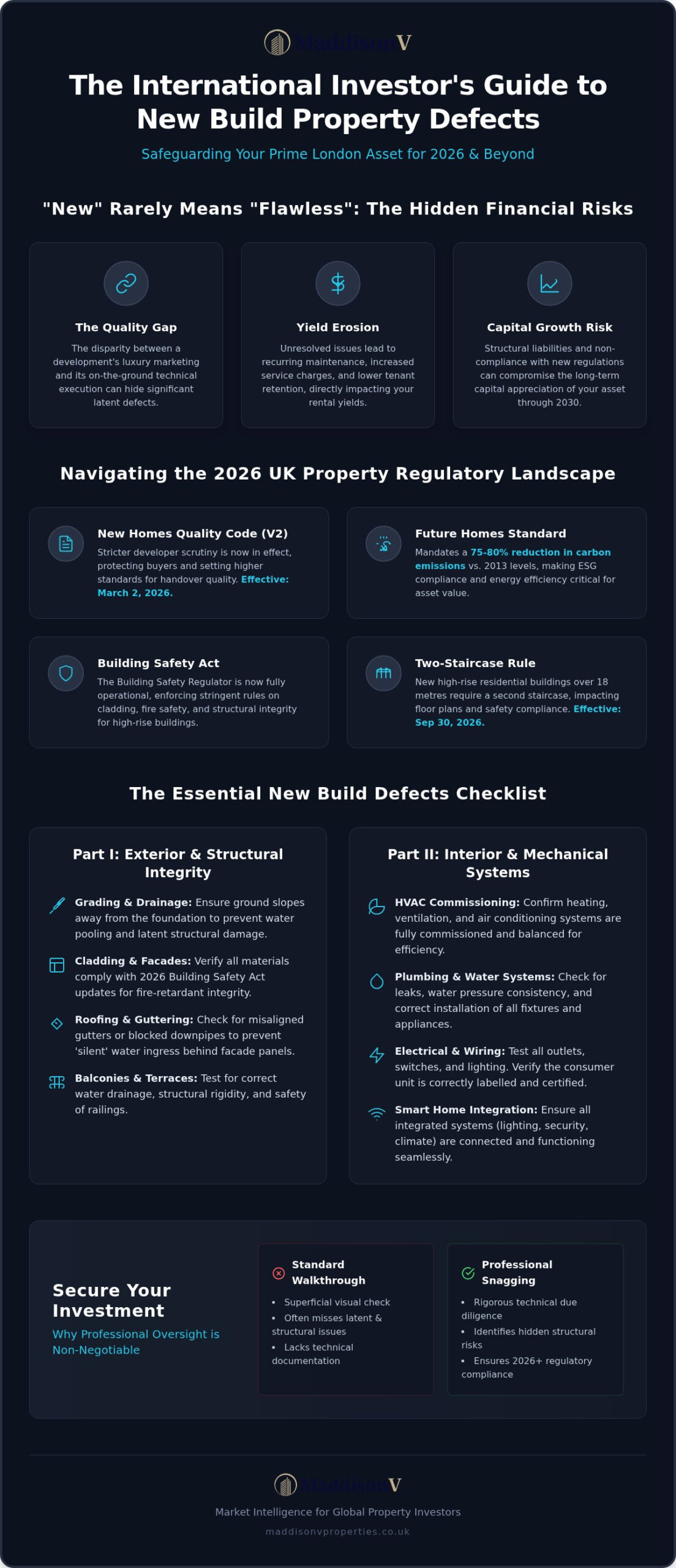
In the 2026 London market, the allure of a glass-fronted skyscraper in Nine Elms or a contemporary warehouse conversion in Canary Wharf often masks a complex reality. Investors frequently assume that a high price point guarantees architectural perfection. However, the technical complexity of modern builds means that “new” rarely equates to “flawless.” For the global investor, a rigorous new build property defects checklist is not merely a task; it’s a fundamental component of capital protection. The UK continues to serve as a reliable safe haven for international wealth, but the bedrock of this security is the physical quality of the asset. Unresolved issues don’t just stay small. They evolve into structural liabilities that can compromise the prestige of your portfolio and your long-term financial returns.
The Cost of Complacency: Yield vs. Repair
A minor leak in a luxury Battersea apartment might seem like a triviality, but in high-end blocks, these issues quickly escalate into significant insurance premiums and service charge spikes. Tenant retention in the Prime Central London (PCL) market relies on an uninterrupted lifestyle of ease, aesthetics, and functionality. If a property is plagued by recurring maintenance visits, the rental premium you’ve projected will inevitably soften. The Quality Gap represents the growing disparity between the architectural vision of a Prime Central London development and the technical execution of its complex mechanical systems. Protecting your capital growth forecasts through 2030 requires identifying these risks before the first tenant moves in. This proactive approach ensures your asset remains tenant-ready, high-performing, and prestigious.
2026 Building Regulations and ESG Compliance
The regulatory landscape has shifted significantly as of 2026. With the Building Safety Regulator now fully operational and the New Homes Quality Code (Version 2) in effect since March 2, 2026, developers are under stricter scrutiny than ever before. Modern high-rise developments must now adhere to the Future Homes Standard, mandating a 75-80% reduction in carbon emissions compared to 2013 levels. This focus on energy efficiency and insulation is no longer optional; it’s a prerequisite for ESG compliance and future-proofing your asset. Investors must also be vigilant regarding Latent Defects, which are faults hidden within the structure that only surface once the building is occupied. Implementing a professional new build property defects checklist ensures that your handover protocols align with the Building Safety Act and the two-staircase rule taking effect on September 30, 2026. These measures provide the financial security, effortless oversight, and mental tranquility that define a premier investment experience.
The Essential New Build Property Defects Checklist: Exterior & Structural
Securing the perimeter of your investment requires a shift from financial analysis to technical scrutiny. The building’s envelope is its first line of defense, and any failure here can lead to catastrophic damage to luxury interiors and long-term capital value. A robust new build property defects checklist begins with a meticulous evaluation of the exterior, where the most significant structural liabilities often reside. For developments in Nine Elms or Canary Wharf, where high-rise architecture meets intense environmental exposure, verifying that the construction exceeds the baseline NHBC Technical Standards is essential for asset protection.
- Grading and Drainage: Ensure the ground slopes away from the foundation to prevent water pooling, which is a primary cause of latent structural issues.
- Cladding and Facades: Verify that all materials comply with the 2026 Building Safety Act updates, focusing on fire-retardant integrity and secure mechanical fixings.
- Roofing and Guttering: Identify misaligned gutters or blocked downpipes that can lead to “silent” water ingress behind expensive facade panels.
- Balconies and Terraces: Check for correct falls toward drainage points and the rigidity of safety railings to ensure they meet the high-end safety expectations of PCL tenants.
Structural Integrity: Beyond the Minimum Code
In the first year of a new build’s life, minor settlement cracks are common as the structure “breathes” and finds its level. However, investors must distinguish these from structural movement, which manifests as diagonal cracking or misaligned door frames. In modern warehouse conversions, check for moisture penetration through original brickwork; in new-build towers, focus on the load-bearing capacity of floors designed to support heavy marble or bespoke hardwood installs. MaddisonV acts as your expert partner, ensuring these technical details are managed through professional property management from the moment of handover.
Windows, Doors, and Thermal Bridging
For properties in vibrant hubs like Canary Wharf, acoustic performance is a non-negotiable luxury. Poorly fitted glazing gaskets can result in persistent wind whistling at height, a defect that immediately degrades the tenant experience. Inspect all window and door seals for air leakage paths that compromise the thermal efficiency mandated by the 2026 Future Homes Standard. Finally, pay close attention to the external masonry. Weep holes are essential gaps in the mortar that allow moisture to escape the cavity, preventing dampness from penetrating the interior and protecting your asset’s internal aesthetics for the long term.
Interior & Mechanical Systems: Ensuring Prime London Standards
The internal mechanical systems of a Prime Central London asset are the pulse of the property. While basic assessments might focus on whether a light switch functions, a professional new build property defects checklist for 2026 must evaluate the performance of complex HVAC and comfort cooling systems. Luxury apartments in Nine Elms require rigorous commissioning tests to ensure climate control is silent, responsive, and efficient. Similarly, underfloor heating requires thermal imaging as a non-negotiable inspection tool; a cold spot beneath a bespoke marble floor is a defect that’s exceptionally expensive to rectify after completion.
Smart home integration is often marketed as a premium feature, but it frequently suffers from hidden connectivity gaps. Verifying the “intelligent” nature of a build means testing scene-setting lighting and dimming functionality across all circuits. High-end tenants expect a fluid experience where technology enhances their lifestyle rather than complicating it. Plumbing systems must also be stress-tested to ensure that the water pressure supports the “rainfall shower” experience expected in high-value developments. Using a comprehensive new build property defects checklist allows you to identify these pressure issues before they become a tenant grievance or a maintenance liability.
The Finish Quality: Chelsea and Marylebone Expectations
In neighborhoods like Chelsea and Marylebone, the standard for joinery and cabinetry is remarkably high. Inspecting mitres for precision and soft-close mechanisms for effortless movement is a core part of your due diligence. For stone and marble surfaces, look for hairline fractures or improper sealing that could lead to permanent staining. These aesthetic details are the visual markers of a premier asset. They directly influence your property’s ability to command top-tier rental yields in a competitive global market.
Electrical Safety and Data Infrastructure
The modern UHNW tenant often treats their home as a primary workspace. Testing high-speed fiber connectivity is essential to meet the needs of the “Work from Home” professional. Beyond data, you must verify the integrity of fire alarm and suppression systems as part of the rigorous 2026 safety protocols. Ensuring these systems are fully operational provides the mental tranquility that global investors seek. For a deeper look at long-term oversight, consult The Sophisticated Investor’s Guide to Property Management in 2026. This level of meticulous care ensures your London acquisition remains a safe haven for your capital while providing an aspirational experience for the end-user.
The Investor’s Snagging Strategy: Managing the Process Remotely
For the global investor based in Singapore, Dubai, or New York, the final weeks before completion represent a high-stakes period of transition. You’ve secured a premier asset in a high-value neighborhood like Battersea or Westminster, but distance shouldn’t compromise your due diligence. The “Handover Window” in 2026 is governed by the updated New Homes Quality Code (Version 2), which mandates that developers must inform you of your right to a pre-completion inspection. This legal timeline is your primary opportunity to deploy a new build property defects checklist and ensure the developer rectifies deficiencies before you take possession. Accepting a property with unresolved issues can lead to immediate friction with high-end tenants and unnecessary capital expenditure.
Relying on a developer’s internal quality control is a risk few sophisticated buyers are willing to take. While municipal inspectors may only spend a brief window on-site, a professional snagging surveyor provides a meticulous, multi-hour assessment of the build. This independent oversight transforms the handover from a simple key exchange into a rigorous phase of asset protection. By using cloud-based tracking and a digital punch list, you can monitor the progress of repairs in real-time from anywhere in the world. This transparency ensures that nothing is left to chance and that the property meets the exacting standards of the London luxury market.
Remote Management for International Buyers
Leveraging a London-based property management partner for the final walkthrough is the most effective way to maintain “eyes on the ground.” We use high-resolution video and 3D matterport scans as empirical evidence, providing you with a virtual presence during the inspection. This level of detail is crucial when negotiating with developers to fix cosmetic or technical flaws before the final funds are released. Managing this transition smoothly is essential for those who have engaged in Off-Plan Investment, as it marks the moment your speculative capital turns into a tangible, income-generating asset.
Legal and Warranty Protections
Understanding the layers of protection available to you in 2026 is vital for long-term financial security. The NHBC 10-year warranty provides a safety net, but its coverage is specific: the developer is typically liable for all defects during the first two years, while years three through ten focus exclusively on major structural issues. The typical Defects Liability Period for UK new builds usually spans the first two years after completion, during which the developer is legally obligated to rectify any non-structural issues. In cases of significant deficiencies, your solicitor may advise withholding a portion of the final payment until the works are certified as complete. To ensure your portfolio is managed with this level of professional scrutiny, explore our bespoke portfolio management services designed for the international elite.
Securing Your Investment: Why Professional Oversight Beats a DIY Checklist
While a new build property defects checklist serves as a useful baseline, it cannot replace the nuanced market intelligence and technical expertise of a dedicated partner. For UHNW investors, the transition from construction to occupancy is a critical phase where financial security meets operational excellence. The MaddisonV approach moves beyond a simple walkthrough. We apply a level of meticulous due diligence that ensures your London or global new build performs as a premier asset from day one. This isn’t just about finding wonky sockets. It’s about verifying that the functional and visual standards of your portfolio align with your long term capital growth objectives.
Professional facilities management begins at the snagging stage, not after the first tenant moves in. By identifying and rectifying deficiencies early, you protect your legacy and streamline future inheritance considerations. A tenant ready asset provides the mental tranquility that defines the MaddisonV experience. It ensures that your property is positioned to attract the elite demographic of Prime Central London, where the margin for error is non existent. Our commitment to reliability and prestige means that nothing is left to chance, allowing you to enjoy the rewards of passive ownership while we handle the complex operational details. For those managing international assets that require professional site clearance and waste management, you can learn more about Skip Bin Hire Services to see how high-standard logistical support is delivered.
MaddisonV bridges the gap between clinical management and a genuine appreciation for high quality environments. Our role as a Property Sourcing Agent in London extends far beyond the initial acquisition. We act as your advocate during the handover, ensuring that the developer’s finished product matches the aspirational quality promised in the off plan marketing. This active protection is essential for investors looking to scale their portfolios across both London and Dubai. By maintaining high tier standards across every unit, you build a consistent and prestigious brand for your personal or family office holdings.
From Handover to High-Yield
Integrating a rigorous new build property defects checklist into your broader Real Estate in England strategy is the hallmark of a sophisticated investor. It ensures your property is not just another unit in a block, but a high performing asset tailored for the elite rental market. This strategic alignment between acquisition, snagging, and management creates a fluid process that maximizes yield and minimizes vacancy. To secure your position in the PCL market and ensure effortless oversight of your UK assets, Enquire about our comprehensive property management and sourcing services today.
Safeguarding Your Global Portfolio Through 2030
Navigating the transition from construction to completion requires a strategic blend of technical scrutiny and market foresight. The foundation of a high-performing Prime Central London asset is established during the critical handover window. By deploying a rigorous new build property defects checklist, you protect your capital from latent liabilities and ensure your investment meets the exacting standards of the 2026 luxury market. This meticulous approach transforms a standard acquisition into a premier, tenant-ready environment designed for long-term appreciation.
We specialize in providing comprehensive portfolio management for international UHNW investors who demand effortless oversight and financial security. Our team acts as your dedicated eyes on the ground, offering expert snagging oversight and facilities management across Chelsea, Marylebone, and Nine Elms. Whether you’re scaling your holdings in London or Dubai, we handle the complex operational details so you can enjoy the rewards of passive ownership. Secure your London investment with our expert management team and enjoy the peace of mind that comes with elite professional care. Your legacy deserves nothing less than perfection.
Frequently Asked Questions
Is a new build home inspection really necessary in 2026?
A professional inspection is essential in 2026 to ensure compliance with the updated New Homes Quality Code. Even in premier developments, technical nuances often hide behind polished finishes. Identifying these issues before completion allows you to leverage the developer’s obligations under the latest regulations. This proactive step protects your capital and ensures the property is tenant-ready for the high-end market. It provides the mental tranquility that your asset meets Prime London standards.
What are the most common defects found in luxury London apartments?
In luxury London developments, common defects often involve the performance of complex mechanical systems. These include HVAC imbalances, comfort cooling noise, and poor smart home connectivity. You might also find issues with glazing seals in high-rise towers or improper stone sealing in bespoke kitchens. Identifying these technical nuances early ensures that your property provides the aspirational experience expected by UHNW tenants in neighborhoods like Canary Wharf or Nine Elms.
Can I refuse to close on a property if defects are found?
Closing on a property is a legal obligation once it’s certified as “practically complete.” You generally can’t refuse to close due to minor cosmetic snags. However, if the property fails to meet critical safety standards or the 2026 Building Safety Act requirements, you may have legal grounds to delay. In such cases, your solicitor might negotiate to withhold a portion of the funds until the developer rectifies the significant deficiencies.
How much does a professional snagging survey cost for a London property?
Professional snagging survey costs in 2026 typically range between £250 and £600. For a standard 1-2 bedroom apartment in London, you can expect to pay approximately £250 to £340. Larger penthouses or bespoke residences in areas like Marylebone may incur higher fees based on the property’s scale. Investing in a new build property defects checklist conducted by an expert is a minor cost compared to the potential loss of rental yield.
How long does a developer have to fix defects after handover?
Developers are generally responsible for rectifying defects during the initial two-year Defects Liability Period. Under the New Homes Quality Code (Version 2), there’s increased pressure on builders to resolve issues promptly. If a defect is found after this window, it may only be covered if it’s a major structural failure under the 10-year warranty. Acting quickly during the first 24 months is vital for ensuring your investment performs as a premier asset through 2030.
What is the difference between snagging and a structural survey?
A snagging survey is a visual inspection focused on the finish, functionality, and immediate quality of a new build. It identifies cosmetic flaws and minor mechanical issues before a tenant moves in. A structural survey is a more invasive and technical assessment of the building’s core integrity and foundations. For modern PCL developments, a snagging survey is usually the priority during handover to ensure the asset is tenant-ready and aesthetically perfect.
Does the NHBC warranty cover cosmetic defects?
The NHBC warranty primarily focuses on major structural issues rather than cosmetic defects. During the first two years, the developer is responsible for fixing all defects, including finish quality and functional snags. From years three through ten, the insurance only covers significant structural failures. It’s essential to identify cosmetic flaws during the initial handover to ensure they’re rectified while the developer’s liability is at its peak and your asset remains flawless.
Can I manage the snagging process if I am based in Dubai or the USA?
You can absolutely manage the snagging process remotely by partnering with a London-based investment advisory. We act as your “eyes on the ground,” conducting the walkthrough and documenting issues using high-resolution video and digital tracking. This allows you to oversee the new build property defects checklist from Dubai, Singapore, or the USA without the need for travel. Our professional oversight ensures your portfolio is managed with meticulous care and quiet confidence.

Sign Up Now
Want to read more great articles and blogs subscribe to our newsletter