
Rent collection works best when payment dates, first-month rent, records and late-payment follow-ups are handled through one clear process. A rent...

Rent collection works best when payment dates, first-month rent, records and late-payment follow-ups are handled through one clear process. A rent collection service in London can coordinate these steps, track payments and give landlords a clearer view of rental income.
It’s understandable to want rent to arrive on time without monitoring every payment yourself. A clear process sets expectations for tenants and gives landlords an organised record of what has been paid and when.
This guide explains how to set rent due dates, calculate a prorated first month, read payment statements and follow up on late rent. It also covers how automated collection can reduce routine administration and what to consider when choosing professional support for a London rental property.
Key Takeaways
- Set a clear rent due date and agree how the first month’s rent will be prorated, so both parties understand the amount and timing.
- Use payment statements to track rent received, outstanding balances and the dates of transactions.
- Keep late-rent communication in writing and follow a consistent process for reminders and formal follow-up.
- According to UK Government, legislation.gov.uk, the permitted charge for late rent is limited to an annual rate of 3% above the Bank of England base rate, calculated for each day the rent remains unpaid.
- Automated collection and professional management can help organise routine payment tracking and reduce day-to-day administration.
Rent payment timelines and account statements
A reliable rent schedule connects the tenancy start date, agreed due date and recorded payment. Clear statements show whether rent arrived in full, helping landlords distinguish a timing issue from arrears.
Rent Payment Timelines
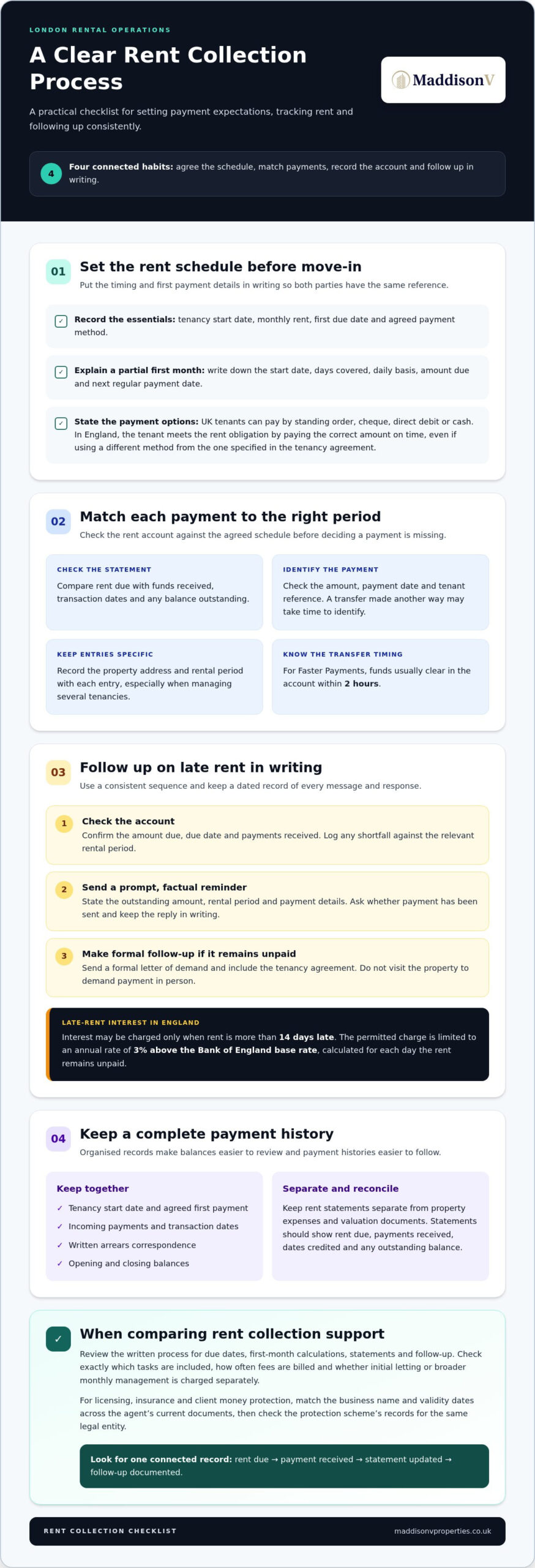
At move-in, record the tenancy start date, monthly rent, first due date and agreed payment method. Landlords commonly request rent in advance, often on the first day of the month. Put these details in writing so tenants know when each payment is due and landlords can match incoming funds to the right rental account.
For Faster Payments, funds usually clear in the account within 2 hours. Tenants meet their rent obligation by paying the correct amount on time, even if they use a different method from the one specified in the tenancy agreement. UK tenants can pay by standing order, cheque, direct debit or cash.
Missed Rent and Arrears
If the full amount has not appeared by the due date, compare the rent account with the agreed schedule before treating the balance as arrears. Check the amount, payment date and tenant reference. A payment sent another way may take time to identify. Log each shortfall against the relevant rental period to keep the account accurate.
Move-in records also help resolve disputes about the first payment: retain the tenancy start date, agreed amount and transaction record together. A reported arrears claim exceeded £7,500 after a tenant stayed in the property for over 5 months without paying rent. Written records make the timeline easier to follow.
Late-Payment Notifications
A useful notification process starts with a prompt, factual reminder after a missed due date. State the outstanding amount, rental period and payment details, then ask the tenant to confirm whether payment has been sent. Keep messages and replies in writing, including any agreed repayment arrangement, so the follow-up history is clear.
If the balance remains unpaid, send a formal letter of demand and include the tenancy agreement, highlighting the tenant’s responsibility to pay rent on time. Do not visit the property to demand payment in person. A dated record of each notification gives the landlord a consistent account of what was requested and when.
Landlord Payment Tracking
Review each statement by matching rent due against funds received, transaction dates and any outstanding balance. Record the property address and rental period with each entry, especially when managing several tenancies. This makes it easier to spot missed payments, trace unidentified transfers and see whether arrears have carried into the next period.
Keep rent statements separate from property expenses and valuation documents. A valuation describes a property’s worth; a rent account records payments and balances. For each tenancy, retain the opening balance, incoming payments, written arrears correspondence and closing balance. This creates a practical payment history for financial reviews and tenancy administration.
Setting rent due dates and prorating first-month rent
Agree on the rent due date, payment method and first accounting period before the tenancy begins. A written schedule helps landlords match each payment to the right rental period, while a clear first-month calculation prevents confusion when move-in falls mid-month.
In England, tenants meet their rent obligation by paying the correct amount on time, even if they use a different payment method from the one specified in the tenancy agreement. Landlords may charge interest on overdue rent only after it is more than 14 days late, subject to the applicable cap.
For a partial first month, use the agreed monthly rent and the days covered by the initial rental period. Set out the calculation in writing, including the start date, daily basis, amount due and next regular payment date. For example, a tenancy beginning after the usual monthly due date may require rent only for the remaining days before the standard monthly cycle starts.
Keep initial letting costs separate from ongoing rent collection or monthly management charges. A letting agent’s agreement should identify which work secures the tenancy and which continues after move-in. Review the service description, billing frequency and any separate charges before signing, so you can compare like-for-like arrangements.
Monthly statements should show rent due, payments received, dates credited and any outstanding balance. Ask for entries to be grouped by property and rental period, especially when several tenancies share an account. Consistent statements make late payments easier to spot and help reconcile rent income with your own records.
To assess a London letting agent’s licensing, insurance and client money protection, review its current credentials, insurance documents and client money protection certificate. Match the business name and validity dates across the documents, then check the protection scheme’s records for the same legal entity.
A rent collection fee may cover recording rent due, matching incoming payments, notifying tenants about missed payments and preparing landlord statements. The written agreement should explain exactly which tasks are included and whether initial letting or broader monthly management is billed separately. The fee depends on the agreed scope, property arrangements and payment administration, with the price provided after a quote request.
Before choosing a schedule, compare the agent’s written process for due dates, first-month calculations, statements and follow-up. For landlords who also need oversight of several properties, portfolio management support can connect rent administration with broader portfolio records.
Chasing late rent and guarantors
Start with the rent schedule: compare the due date and amount with payments received. If the account shows a shortfall, contact the tenant promptly and ask whether payment has been sent or delayed. Record the date, outstanding amount and response in writing. A clear timeline helps distinguish an administrative delay from continuing arrears and identify a proportionate next step.
Use a consistent sequence rather than relying on informal reminders. Send a written reminder identifying the rental period, unpaid amount and payment instructions. If rent remains outstanding, follow up with a formal letter of demand and include the relevant tenancy agreement, highlighting the tenant’s obligation to pay on time. Keep dated copies of messages and letters together in one account record.
Do not visit the property to demand rent in person. Written communication creates a record and gives tenants a clear opportunity to explain a payment issue. A portal can help organise messages and transaction details when one is used for the tenancy, but keep copies of important notices outside it too. If a tenant reports a transfer, note its date and allow time for it to appear before updating the balance.
A guarantor may be relevant if the tenancy agreement includes a guarantee. Review the signed wording to understand which rent obligations it covers and how to notify the guarantor. Keep the tenant’s payment history and correspondence together, then communicate factually about the outstanding amount. Do not treat a deposit as an automatic substitute for pursuing arrears; record it separately from rent payments.
The permitted charge for late rent is limited to an annual rate of 3% above the Bank of England base rate, calculated for each day the rent remains unpaid, according to UK Government, legislation.gov.uk. Keep the calculation tied to the outstanding rent and the days unpaid, and show the working in the account record. A charge should not obscure the original arrears or the dates used to calculate it.
For each follow-up, log the working day, contact method, response and next action. If the tenant proposes a payment plan, record the agreed amounts and dates, then update the balance as payments arrive. If a promised payment is missed, refer to the written plan and send a measured reminder. This structured approach helps landlords track arrears while keeping communication professional and focused on resolution.
Do not visit the property to seek rent in person. Continue addressing arrears through the documented contact process.
Automated rent collection
Automation can organise recurring rent records around each tenancy’s agreed due date. Enter the property, tenant reference, payment schedule and monthly amount in the chosen system. Then match incoming transactions against the rent account and flag any outstanding balance. A rent collection service in London can use these records to give landlords a consistent view of payment status, without scattered notes or manual calculations.
Payment methods still vary. Around 80% of rent payments collected by the service are received by Faster Payment. Around 20% are made through a mix of standing orders, cash deposits, credit cards and international bank transfers. Record the payment method and transaction details so an unfamiliar reference doesn’t leave a received payment unmatched.
Accurate setup matters. Check the tenancy start date, regular due date, agreed rent and landlord account details before activating a recurring schedule. If the first rental period is partial, enter its separate amount and date rather than treating it as a standard month. Review the next scheduled payment after setup to catch an incorrect reference or date early.
A tenant arranges a standing order through their bank, so do not assume the system initiates every payment method. Clarify who sets up the instruction, which reference the tenant should use and how payments are recorded. For an international transfer, retain the transaction details needed to identify the funds when they arrive.
Automated reminders can make follow-up more consistent when payment has not appeared by the due date. Set a review point, check for a matching transaction, then send a factual notice if rent remains outstanding. Identify the property, rental period and amount due. Keep the reminder and response with the account record.
Automation does not remove the need to review exceptions. A partial payment, bank delay or incorrect reference may require someone to compare the transaction with the tenancy record. Establish a process for checking unmatched funds and correcting the ledger rather than accepting an automated status without review. This helps keep payment records accurate.
Before relying on an automated workflow, test it against a sample tenancy record. Confirm that the due date, payment received, outstanding amount and statement period appear correctly. Review the account after changes to tenancy details or payment instructions. When comparing rent collection services in London, consider how each process handles exceptions as well as routine payments. A well-maintained system can reduce administrative work while keeping rental income visible and manageable.
Professional rent collection services
Professional support can standardise payment administration, reporting and follow-up. The key decision is whether you need rent collection alone or broader oversight of the tenancy.
Service Scope Versus Full Management
A rent collection arrangement usually focuses on recording rent due, matching payments received, issuing statements and following up on arrears. Full property management covers a wider range of landlord responsibilities, so compare the written scope rather than relying on a service label. Check which tasks remain yours, including tenant communication, property issues and decisions that may affect possession.
Rent collection may suit landlords who manage tenant relationships and property decisions themselves but want a structured payment process. Full management is a broader option when you want rent administration combined with ongoing property oversight. In either case, the service agreement should distinguish routine payment work from actions that require your approval.
Before appointing an agent, map out the work you want handled. Decide who checks a rent transfer, updates the account, contacts a tenant about a shortfall and reports unresolved arrears. Compare that list with the written scope. A clear division reduces duplicate messages and helps identify gaps before they affect the tenancy.
Contract Terms and Service Risks
Read the contract for its start and end dates, renewal process, cancellation terms and notice requirements. Check how it defines rent collection, when statements are provided, how payments are transferred to you and who corrects account errors. Confirm which actions need landlord approval and how tenant communications are recorded.
Also review how the agreement handles missed rent, partial payments and unresolved arrears. A collection service can document payment history and follow-up, but possession decisions involve separate steps. Make sure the contract states where the service’s responsibility ends and what work remains with you. This distinction matters if rent remains unpaid after written reminders.
Ask how tenant funds are handled, how account discrepancies are reported and what happens if the assigned contact changes. Compare the contract’s record-keeping process with your requirements, including access to statements and copies of notices. If the agent uses a portal, confirm how you can retrieve account records after the agreement ends.
A practical comparison weighs scope, communication, payment reporting and contract flexibility, not just the service name. List the tasks you expect, then check each against the agreement before signing. This makes it easier to choose support that fits your level of involvement and your rental property’s needs.
For support that aligns payment oversight with wider property responsibilities, discuss your landlord requirements.
MaddisonV Properties: Property Management
MaddisonV Properties offers Property Management for landlords seeking a coordinated approach to their London rental property. It may suit you if managing rent administration alongside wider property oversight has become difficult to handle independently.
Property Management brings a rental property’s day-to-day needs into a considered management relationship. For landlords with several properties, Portfolio Management can help coordinate oversight across the portfolio. The right support depends on your priorities, from managing one rental property to coordinating a broader investment plan.
If you are considering a new acquisition as well as ongoing oversight, Property Sourcing can support your search, while Mortgage Consultations can inform financing discussions. These are distinct needs, so consider which part of your property plans needs support first.
For a tailored conversation about managing your London property, contact MaddisonV Properties or visit maddisonvproperties.co.uk.
Set up a more considered approach to rental oversight
Your next step is to decide how involved you want to be in the day-to-day running of your rental property. A clear brief helps identify which responsibilities you want to retain, where consistent administration would help and how rent records should fit your wider property plans.
Choosing a rent collection service in London is about more than receiving payments. It is an opportunity to establish an approach that suits your property, your tenants and the level of oversight you prefer. With those priorities in view, you can discuss a practical way forward and the landlord experience you want.
For a considered discussion about your rental property plans, contact MaddisonV Properties today. A clear next step can bring greater order to your property responsibilities and leave you better placed to focus on what comes next.
Frequently Asked Questions
What rent collection services are available in London?
London landlords can choose rent collection alone or combine payment administration with full property management. A standalone arrangement may suit an owner who handles tenant and property matters personally. Broader management can coordinate rent administration with other tenancy responsibilities. Before deciding, compare the written scope, including who handles account queries, updates landlords and manages tasks beyond payment collection.
How much do London rent collection services charge?
The price depends on the case and is given after a quote request; factors include the agreed service scope, property arrangements and payment administration. A payment-only arrangement differs from broader management, so compare the tasks included rather than judging a fee by its label. Ask for the proposed work and billing basis in writing, and consider whether any separate letting or management charges apply.
How does a London landlord set up a rent collection service?
Agree the service scope in writing, then provide the signed tenancy agreement, landlord payment details and tenant contact information. For an existing tenancy, reconcile the rent ledger first, including the last payment received, any outstanding balance and relevant correspondence. This gives the arrangement a clear starting point. Confirm how account queries and discrepancies will be handled before administration transfers.
How do rent collection services handle late rent and rent arrears?
They can record missed payments, keep a communication history and follow an agreed escalation process, while landlords retain decisions about legal action. Under the Renters’ Rights Act, the mandatory eviction threshold under Section 8 will rise from two months to three months’ rent arrears, and the notice required before a possession claim will increase to four weeks. Rules on collecting rent in advance may depend on the applicable tenancy law, so landlords should check the current requirements before setting payment terms.
How quickly do London agents transfer rent to landlords?
An agent’s transfer schedule depends on its remittance and reconciliation processes. This is separate from how long a tenant’s payment takes to reach the agent. Check the written agreement for when cleared funds are sent, how weekends or bank processing affect the schedule, and how deductions or unmatched payments are handled. A clear remittance process helps you plan cash flow and identify delays.

Sign Up Now
Want to read more great articles and blogs subscribe to our newsletter