
What if the document that makes a property sale feel official doesn’t actually bind either party to complete it? If you’re asking what is a...

What if the document that makes a property sale feel official doesn’t actually bind either party to complete it? If you’re asking what is a memorandum of sale, it helps to understand the distinction: an accepted offer can feel like a firm commitment, but the memorandum has a more limited role.
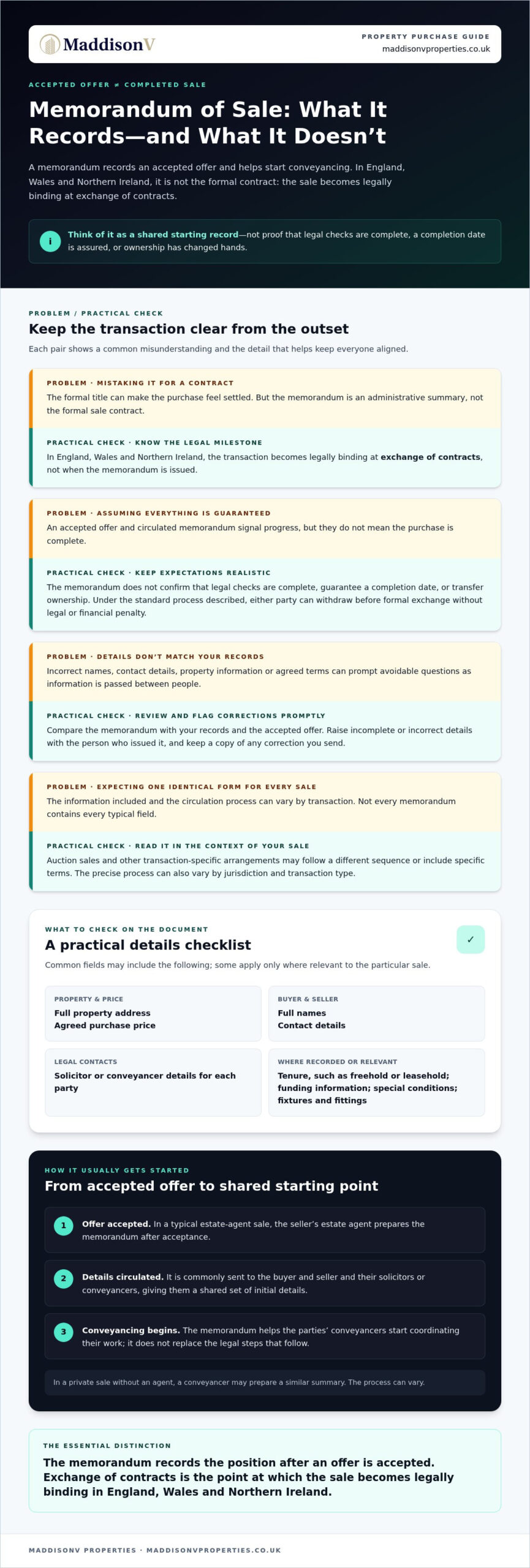
In England, Wales and Northern Ireland, a memorandum of sale records that an offer has been accepted and helps start the conveyancing process. It isn’t the formal contract, and the transaction doesn’t become legally binding until contracts are exchanged. Accurate details and prompt communication still matter: they help the people handling the sale begin with the same information.
This guide explains who usually prepares and receives the memorandum, what it commonly includes, and what happens after it’s issued. You’ll find practical checks for names, contact details, price and property information, as well as guidance on keeping expectations realistic about timing. Understanding the document’s purpose and limits can help you approach the next stages with confidence.
Key Takeaways
- Understand what is a memorandum of sale and how it fits into the wider property transaction.
- Learn who usually prepares the document, who receives it, and which details are commonly included.
- Separate what the memorandum records from what it signals, so you can set realistic expectations for your offer.
- See how the next stages progress, while recognising that transaction timings can vary.
- Explore how property search, mortgage consultations, conveyancing guidance and solicitor referrals can support your purchase.
What Is a Memorandum of Sale in a UK Property Transaction?
A memorandum of sale often arrives soon after an offer is accepted. Its formal title can make the purchase feel settled, but its role is more limited. It records key information about the proposed transaction and gives the buyer, seller and their conveyancers a shared starting point for the work ahead.
This shared record helps keep essential details aligned as the transaction moves from an agreed offer towards conveyancing. An incorrect name, contact detail or agreed term can prompt avoidable questions or delays when information is passed between people. The memorandum is a useful reference, not a substitute for the legal and practical steps that follow.
For buyers asking what is a memorandum of sale, the key distinction is between recording progress and securing a completed purchase. In England, Wales and Northern Ireland, the memorandum itself is not the formal sale contract. The transaction becomes legally binding at exchange of contracts, not when the memorandum is issued. The precise process can vary by jurisdiction and transaction type.
When Is a Memorandum of Sale Usually Issued?
In a typical estate-agent sale, the memorandum is prepared after the seller accepts the buyer’s offer. Circulating it signals that the transaction is moving into its next phase and gives the parties’ conveyancers information to begin coordinating their work. It does not mean legal checks are complete, a completion date is assured or ownership has changed hands.
An auction or another transaction-specific arrangement may follow a different sequence. Treat the memorandum as part of the process for your sale, rather than proof that every property purchase follows an identical route.
Is a Memorandum of Sale the Same as a Contract?
No. A memorandum is an administrative summary of the accepted offer and key transaction details. The formal contract is a separate legal document. In England, Wales and Northern Ireland, an accepted offer and memorandum do not, by themselves, make the sale legally binding. Under the standard process described here, either party can withdraw before formal exchange without legal or financial penalty.
The memorandum doesn’t complete the purchase or transfer ownership either. It records the current position; the formal legal stages still need to progress. If your purchase involves a different UK jurisdiction or a non-standard arrangement, the process may differ, so don’t assume the same legal position applies everywhere.
Who Issues a Memorandum of Sale and What Details Does It Record?
In a typical estate-agent sale, the seller’s estate agent prepares the memorandum after the offer is accepted and circulates it to the relevant parties. The process can vary. In a private sale without an agent, a conveyancer may prepare a similar summary to gather initial details and help start the legal process.
Understanding “what is a memorandum of sale” also means recognising that it is a shared reference, not a one-size-fits-all form. The UK Government Guidance on Buying a Home describes it within the wider purchase process. The information recorded helps the people involved begin with a consistent account of the proposed sale.
Which Parties Receive the Memorandum?
It’s commonly circulated to the buyer’s and seller’s solicitors or conveyancers, as well as to the buyer and seller. This gives the transaction contacts a common set of starting details, including who to contact and which property and agreed price the matter concerns. Distribution can vary, so not every sale will use precisely the same circulation process.
Which Details Should Buyers and Sellers Check?
Review the document against your records as soon as you receive it. Check the property address, agreed price, full names and contact details, along with the solicitor or conveyancer contacts. If anything is wrong or incomplete, raise it promptly with the person who issued the memorandum so the relevant parties can work from corrected information.
Common fields may include:
- The full property address and agreed purchase price.
- The buyer’s and seller’s names and contact details.
- Contact details for each party’s solicitor or conveyancer.
- Tenure, such as freehold or leasehold, where it’s recorded.
- Funding information, special conditions or fixtures and fittings, where relevant to the particular sale.
These are typical details, not a guarantee that every memorandum will contain every item. Tenure may be included, but its presence and wording can depend on the transaction. Auction sales and other arrangements may involve specific terms or additional information, which should be understood in the context of that sale.
Compare each entry with the offer and the contact details you supplied. A misspelt name or outdated solicitor email address is easier to correct early than after it has been repeated across communications. Keep a copy of any correction you send so you can refer to the updated details as the transaction progresses.
If you’d value support coordinating the wider purchase, MaddisonV Properties offers buying assistance including property search, mortgage consultations, conveyancing guidance and solicitor referrals. Explore property buying support as you prepare for the next stage.
What Does a Memorandum of Sale Mean for Your Offer and the Transaction?
An accepted offer and a circulated memorandum are meaningful signs of progress, but they don’t mean the purchase is complete. The document sets out the position at that point in the transaction. Work, decisions and uncertainties remain.
| What it records | What it signals | What it doesn’t guarantee |
|---|---|---|
| Key details of the proposed sale, such as the property and agreed price. | The parties are moving towards the next stages of the transaction. | That the sale will complete, that ownership has transferred, or that a completion date is fixed. |
This distinction is central to understanding what is a memorandum of sale: it marks a stage in the process, not its conclusion. The Rightmove Guide to Memorandum of Sale and Martin & Co both discuss the possibility of a buyer or seller withdrawing before the transaction reaches the formal contract stage. The details and consequences of an individual situation can depend on its circumstances, so don’t treat the memorandum as a guarantee or a complete statement of legal rights.
Does the Memorandum Guarantee That the Sale Will Complete?
No. Progress has begun, but the transaction still needs to move through its later stages. In a typical sale in England, Wales or Northern Ireland, an accepted offer and issued memorandum do not themselves make the purchase legally binding; formal exchange of contracts is the key point. This is general information, not advice on a specific case. The legal effect should be checked for the relevant UK jurisdiction and transaction.
The memorandum supports coordination, but it can’t guarantee that either party will continue or that outstanding matters will be resolved in a particular way. If circumstances change, speak with your conveyancer about your position rather than relying on the memorandum for an answer.
Does It Set a Deadline for Completion?
No. Issuing the memorandum does not, by itself, set a completion date or promise a fixed period. The pace depends on the circumstances of the sale and the people involved. A property chain, mortgage arrangements or professional checks may affect progress, but none is a certain cause of delay or a reliable prediction of timing.
Distinguish agreed next steps from a confirmed timetable. Keep communication clear, respond to requests from the professionals involved, and treat proposed dates as provisional until they’re formally agreed through the appropriate process. This gives you a more realistic basis for planning without assuming that an early milestone guarantees the outcome.
What Happens After a Memorandum of Sale Is Issued?
Once the memorandum has been circulated, the sale moves into a period of coordination and professional work. Knowing what is a memorandum of sale helps set expectations: it gives the people involved a shared starting point, but it doesn’t provide a completion date or make every next step identical. The sequence depends on the property and the circumstances of the transaction.
A typical progression may look like this:
- The agent circulates the details. The buyer, seller and their conveyancers receive the transaction information so they can identify the parties and property involved.
- The parties check the record. Each side reviews the details and promptly flags apparent errors to the person who issued the memorandum.
- Conveyancers begin their work. The initial information helps them open communication and progress the transaction. Searches and enquiries may form part of this work, depending on the circumstances.
- Other preparations continue. A buyer may arrange a survey or progress mortgage arrangements, while the parties stay in touch about the steps ahead.
- Later stages follow as the transaction progresses. Exchange and completion come later, with timing and arrangements dependent on the sale.
This describes a usual hand-off, not a prescribed checklist for every purchase. Steps may overlap, happen in a different order or not apply in the same way to a particular transaction.
What Should Buyers and Sellers Do First?
Start by checking the details. Compare the property address, agreed price, party names and professional contact information with your own records. If something is inaccurate, tell the issuer promptly and make sure the corrected information reaches the relevant contacts. Then keep in touch with your conveyancer and respond to requests as they arise. The memorandum’s issue marks progress, not a completion date.
Buyers can also organise any planned survey or mortgage steps. Sellers can ensure their conveyancer has the information needed to progress their part of the transaction. Specific requests and responsibilities vary, so follow the guidance of the professionals handling your matter rather than assuming one process applies to every sale.
Why Can the Sale Still Take Time?
Professional checks, property-specific enquiries and the circumstances of the parties all influence progress. A chain, for example, may involve several linked transactions, while a buyer’s mortgage process may have its own requirements. These are possible factors, not fixed explanations or guarantees of delay. Even a straightforward-looking transaction can require careful coordination, and another sale may follow a different path.
Keep plans flexible until dates are agreed through the appropriate process. Regular, clear communication helps everyone understand what remains outstanding without creating false certainty about how quickly it will be resolved.
If you’d like structured support as your purchase progresses, explore property buying assistance from MaddisonV Properties, including conveyancing guidance and solicitor referrals. This support can help you stay organised alongside the professionals responsible for your transaction.
How MaddisonV Properties Can Support Your Property Purchase
Understanding the paperwork is one part of buying well; assessing the property, funding and next steps is another. Knowing what is a memorandum of sale helps put the document in context. Buying assistance can also help when you’re searching for a property, considering mortgage options or organising questions as the transaction progresses.
MaddisonV Properties supports buyers with property search, mortgage consultations, conveyancing guidance and solicitor referrals. The team brings over 50 years of combined experience, supporting buyers at different stages of a purchase. This assistance complements the work of your appointed professionals; it doesn’t replace their role or determine how quickly the transaction moves.
Where Buying Assistance Fits After an Offer Is Accepted
After an offer is accepted, clear transaction information helps you understand who is involved and what stage comes next. Conveyancing guidance can help you make sense of the process and organise questions for your solicitor or conveyancer. Solicitor referrals can connect you with legal support. These are guidance and referral services, not legal representation, and they don’t control third-party decisions, timings or outcomes.
Buying assistance can also be useful before you make an offer. A considered property search can help you focus on homes that fit your requirements, while a mortgage consultation can support your understanding of potential funding options. Every buyer’s circumstances are different. The aim is to help you make decisions with more context, not promise a particular result.
A Clear Next Step for Your Property Purchase
Whether you’re preparing to make an offer or have already received a memorandum, an organised approach can make the process more manageable. Keep your property priorities, funding questions and professional contacts together. Use guidance relevant to your situation, while leaving legal advice and formal conveyancing work to your appointed solicitor or conveyancer.
For broader context as you consider a purchase in the capital, consult a London property market guide alongside your own property and financial priorities. MaddisonV Properties’ experience across the transaction lifecycle can provide a helpful point of reference as you plan, without implying that an adviser can guarantee the actions or timetable of other parties.
If you’re looking for personalised support with your purchase, explore MaddisonV Properties’ buying assistance, from property search and mortgage consultations to conveyancing guidance and solicitor referrals.
Make Your Next Property Decision with Confidence
Knowing what is a memorandum of sale helps put one document in the context of buying a home. Keep your own priorities in view: consider what matters most in a property, which questions still need answers, and what guidance would help you make decisions with care.
A considered purchase is built through clear choices, useful information and steady preparation. You don’t need to resolve every detail at once. Focus on the decision in front of you, keep plans flexible as the transaction develops, and draw on appropriate professional support when needed.
When you’re ready to explore support tailored to your purchase, visit MaddisonV Properties to explore buying assistance. The team can support you with property search, mortgage consultations, conveyancing guidance and solicitor referrals.
Frequently Asked Questions
Is a memorandum of sale legally binding in the UK?
Generally, no, but the position depends on the UK jurisdiction and transaction. In England, Wales and Northern Ireland, the memorandum itself isn’t the formal contract, and either party can withdraw before contracts are exchanged without legal or financial penalty. In practical terms, what is a memorandum of sale? It’s an early transaction record, not a guarantee of completion. For a specific purchase, ask your conveyancer to explain the relevant legal position.
Can a buyer withdraw after a memorandum of sale has been issued?
In the standard process in England, Wales and Northern Ireland, a buyer can withdraw before formal exchange of contracts. The memorandum doesn’t itself prevent that. If you’re considering withdrawing, tell your conveyancer and the agent promptly, particularly if your circumstances or plans have changed. They can explain the practical implications for your specific transaction. Don’t assume that a different arrangement, such as an auction, follows the same steps or terms.
Who sends the memorandum of sale to the solicitors?
Usually, the seller’s estate agent prepares and circulates it to the buyer’s and seller’s solicitors or conveyancers after the offer is accepted. A private sale without an agent may follow a different process, with a conveyancer preparing a similar record. If you haven’t received a copy, contact the person coordinating the sale and make sure the correct solicitor details have been shared so the relevant professionals can communicate.
What happens if the memorandum of sale contains incorrect details?
Tell the person who issued it as soon as you spot the error, and identify the incorrect entry clearly. If the solicitor’s email address is wrong, for example, provide the correct details and ask for the amendment to be circulated to the relevant parties. Keep a record of the correction. If the issue concerns a price or other agreed term, raise it with your conveyancer as well so they can advise on the appropriate next step.
Does a memorandum of sale mean the property is sold?
Not in the sense of a completed purchase. The property may be described as “Sold Subject to Contract” after an offer is accepted, but this indicates a transaction in progress, not that ownership has transferred. Buyers shouldn’t treat the memorandum as confirmation that they can take possession or make irreversible plans. Sellers should also understand that the sale remains subject to later stages before completion.
How long does it take to complete after a memorandum of sale?
There’s no fixed period set by the memorandum. The average time from an accepted offer to completion is typically 8 to 12 weeks, but this is a general estimate, not a promised timetable. A chain, mortgage application, property searches or enquiries may affect progress, and circumstances differ between transactions. Use dates discussed by the parties as planning information, and rely on your conveyancer for updates specific to your purchase.
Can a memorandum of sale be issued for an auction property?
A similar record may be used, but auction transactions can follow different arrangements, so don’t assume the usual estate-agent sequence applies. The auction terms and documents are particularly important to understanding what has been agreed and what happens next. If you’re buying at auction, review the transaction paperwork with your conveyancer before relying on a memorandum to explain your position. The relevant process can depend on the specific sale and jurisdiction.

Sign Up Now
Want to read more great articles and blogs subscribe to our newsletter