
While the broader Prime Central London market adjusted by over 3% last year, Marylebone property investment values surged by a remarkable 9.6% to...

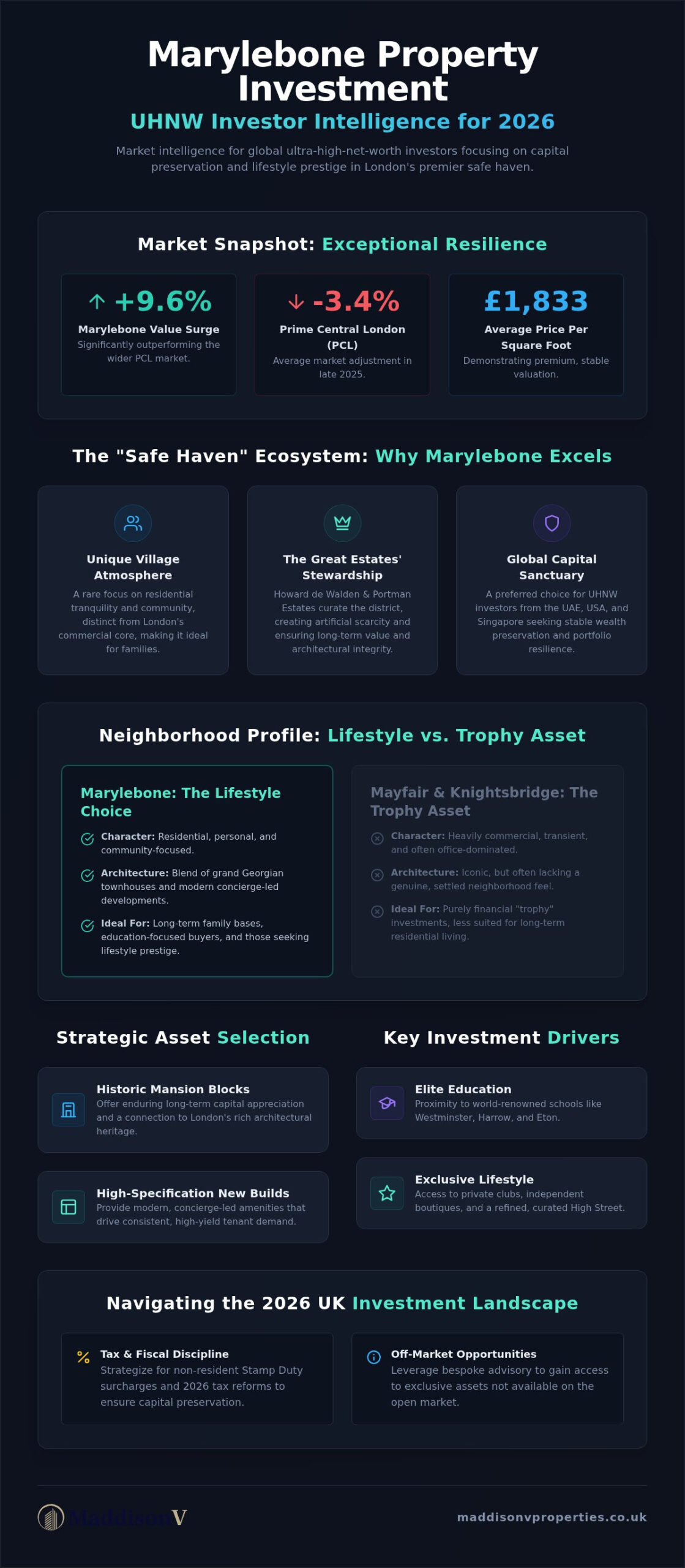
While the broader Prime Central London market adjusted by over 3% last year, Marylebone property investment values surged by a remarkable 9.6% to reach an average of £1,833 per square foot. You likely recognize that the current UK fiscal environment, defined by the abolition of Section 21 evictions and 2026 tax reforms, requires a more disciplined approach to capital preservation. It’s natural to feel a sense of caution as non-resident stamp duty surcharges and global volatility reshape traditional investment maps.
This guide provides the strategic intelligence you need to secure resilient, high-yield assets that offer more than just financial returns. We’ll show you why Marylebone remains the premier safe-haven for international UHNW investors who demand a blend of village lifestyle and stable growth. You’ll discover the mechanics of the Howard de Walden Estate, the nuances of the 2026 tax landscape for overseas buyers, and the specific off-market opportunities that provide proximity to elite institutions like Westminster School. We’ve designed this analysis to ensure your portfolio remains passive, prestigious, and perfectly positioned for the next decade.
Key Takeaways
- Understand why the unique “village” ecosystem provides artificial scarcity and valuation resilience, positioning the district as a premier safe haven for global capital.
- Analyze the latest market intelligence and growth forecasts through 2030 to understand how a strategic Marylebone property investment can outperform broader PCL trends.
- Compare the long-term capital appreciation of historic Victorian mansion blocks against high-specification new builds to refine your asset selection strategy.
- Identify the lifestyle catalysts—from proximity to elite schools like Westminster and Harrow to exclusive private clubs—that drive consistent, high-yield tenant demand.
- Gain clarity on the 2026 UK tax landscape, including non-resident Stamp Duty surcharges, and learn the advantages of sourcing off-market assets through bespoke advisory.
The Marylebone Investment Allure: A Safe Haven in 2026
Marylebone stands as a rare anomaly within the landscape of Prime Central London. While other districts often feel like extensions of the commercial center, this neighborhood retains a distinct “village” atmosphere that prioritizes residential tranquility and community cohesion. For global UHNW investors, a Marylebone property investment represents more than a financial asset; it’s a commitment to a stable, safe-haven environment that has historically resisted the volatility seen in other global markets. Understanding Marylebone’s history and profile reveals a legacy of careful stewardship that continues to attract capital from the UAE, USA, and Singapore in 2026.
International buyers increasingly view the UK as a sanctuary for wealth preservation amid shifting global tax landscapes. The post-pandemic era has accelerated a trend toward lifestyle-driven investments, where the quality of the immediate surroundings is as vital as the projected rental yield. This shift is particularly evident in Marylebone, where the blend of heritage and modernity creates a unique value proposition for those seeking capital preservation and lifestyle prestige.
To better understand the practicalities of this market, watch this helpful video regarding mixed-use investment opportunities in the area:
The Great Estates: Curating Value and Scarcity
The enduring prestige of the area is largely attributed to the stewardship of the Howard de Walden and Portman Estates. These historic entities own vast swathes of the district, which allows them to curate a retail and residential mix that prevents over-development and maintains a high barrier to entry. By selecting independent boutiques and high-end eateries for the High Street, the Estates create an environment that feels exclusive, artisanal, and refined. Effective estate management ensures long-term capital growth by meticulously controlling the tenant mix and architectural integrity of the district. This centralized oversight creates an artificial scarcity of stock, ensuring that demand consistently outstrips supply for high-specification apartments and townhouses.
Marylebone vs. Mayfair and Knightsbridge
While Mayfair and Knightsbridge remain iconic, many international families are shifting their focus toward Marylebone’s more residential, personal character. Mayfair often feels heavily commercial, dominated by offices and transient crowds; in contrast, Marylebone offers a genuine neighborhood feel where residents are recognized at their local establishments. The district provides a unique blend of grand Georgian architecture and modern amenities, such as concierge-led developments that mirror the luxury of Dubai but with the historical soul of London. Families particularly value the proximity to elite educational institutions like Westminster School and Harrow, making it a preferred choice for those seeking a long-term base for their children’s education. This transition from “trophy” assets to “lifestyle” homes is a defining characteristic of the 2026 market, reinforcing the area’s status as a resilient, prestigious, and secure investment choice.
Market Intelligence: Yields, Growth, and 2030 Forecasts
Marylebone’s property market demonstrates a remarkable divergence from the broader Prime Central London (PCL) narrative. While PCL averages faced a 3.4% contraction in late 2025, Marylebone achieved a 9.6% increase, reaching an average price of £1,833 per square foot. This resilience isn’t accidental; it’s the result of a meticulously managed ecosystem that prioritizes capital preservation over speculative volatility. As we move through 2026, the Bank of England’s base rate of 3.75% provides a stable foundation for investors who value long-term security. Sophisticated buyers recognize that the current price levels, though premium, represent a stabilized floor following the broader market corrections seen since the 2014 peak.
Rental Demand Drivers in W1U and NW1
Rental yields in W1 remain attractive for international landlords, supported by a unique and affluent tenant demographic. The “Harley Street Effect” continues to act as a powerful catalyst for demand, as elite medical professionals require high-specification residences within walking distance of their private practices. Simultaneously, we see consistent corporate demand from senior partners in the West End and the City who prize the district’s discretion and world-class dining. The typical tenant for Marylebone luxury lets is an ultra-high-net-worth individual, often a medical consultant from the Harley Street district or a senior executive seeking proximity to the West End’s corporate hubs. This concentrated demand ensures that vacancy rates for premium mansion blocks and new-build apartments remain exceptionally low, even as global economic shifts impact other luxury markets.
Capital Growth: The 2026 to 2030 Outlook
The trajectory for capital appreciation through 2030 is underpinned by strong liquidity and international interest. Data from the official UK House Price Index reveals that while PCL prices fell by 24.5% between 2014 and early 2026, this prolonged correction has positioned Marylebone as a value-driven entry point for 2026. Leading industry forecasts anticipate a cumulative growth of 16.8% for PCL by 2030, with Marylebone expected to lead this recovery as the market stabilizes. International demand remains a critical pillar of this growth; North American buyers currently represent 19% of all overseas applicants, drawn by the area’s architectural history and village charm. Ongoing revitalisation projects by the Howard de Walden Estate further guarantee that the district’s infrastructure and aesthetic appeal will continue to command a premium over neighbouring districts. Securing these high-performing assets often requires a deep understanding of local nuances and access to bespoke property sourcing that identifies opportunities before they reach the open market.
Strategic Asset Selection: Mansion Blocks vs. New Builds
Navigating a Marylebone property investment requires a nuanced understanding of how different asset classes align with your long-term objectives. Investors typically find themselves choosing between the historical prestige of Victorian mansion blocks and the turnkey efficiency of modern developments. While both offer significant capital preservation, their operational profiles and tenant appeals differ substantially. Making an informed choice depends on whether you prioritize heritage-driven capital uplift or the effortless oversight of a high-specification new build. Each path requires a different strategy for managing service charges and maintenance expectations.
The Charm and ROI of Period Mansion Blocks
Traditional Victorian and Georgian mansion blocks are the architectural backbone of W1. These properties offer a level of character and historical soul that modern constructions rarely replicate. International buyers often find that architectural history acts as a significant value driver, especially for those seeking a quintessential London residence. These assets provide unique opportunities for renovation, allowing investors to achieve substantial capital uplift by modernizing period interiors while preserving heritage facades. You’ll need to be diligent regarding leasehold complexities and the potential for higher maintenance costs associated with historic PCL properties. We often find that the most lucrative opportunities in this segment are found through off-market channels; roughly one-third of Prime Central London transactions currently occur without ever reaching public portals.
Modern New-Builds: Amenities and ESG Standards
The rise of developments like Marylebone Square has introduced a new standard of luxury that caters specifically to the requirements of the modern UHNW tenant. These residents prioritize seamless lifestyle integration, demanding 24-hour concierge services, secure underground parking, and high-tier wellness facilities. In 2026, sustainability has moved from a preference to a requirement. High EPC ratings and robust ESG standards are now critical for ensuring long-term liquidity and tenant retention. These properties offer a more predictable financial profile with lower immediate maintenance requirements, making them ideal for a truly passive portfolio. For those exploring the benefits of early-stage entry, The Sophisticated Investor’s Guide to Off-Plan Property Investment in 2026 provides deeper market intelligence on securing these premium assets. Whether you choose the enduring charm of a mansion block or the refined ease of a new build, the key is identifying stock that is prestigious, functional, and enduring.
The Lifestyle Premium: Elite Education and Culture
The true valuation of a Marylebone property investment extends far beyond the physical square footage; it’s anchored in the district’s world-class social and intellectual infrastructure. For international UHNW families, W1 represents a rare pocket of London where elite education, historic green spaces, and private members’ clubs converge within a walkable radius. This density of prestige creates a “lifestyle premium” that sustains property values even during broader market shifts. It’s this unique ecosystem that transforms a residential asset into a multi-generational family hub.
Education-Driven Investment Strategies
Proximity to Britain’s most storied academic institutions is a primary driver for capital from the UAE, USA, and Singapore. While local favorites like Westminster School are within easy reach, Marylebone also serves as a strategic base for families with children attending Harrow or Eton, thanks to its superior transport links. The academic calendar dictates the rhythm of the local market. We see a surge in high-tier rental demand every spring as families secure residences ahead of the September term. Sourcing a property within the immediate “school run” radius isn’t just about convenience; it’s a calculated move that ensures long-term resale liquidity. Buyers recognize that a home near these educational landmarks will always command a premium from the next generation of international arrivals.
Lifestyle Amenities as Yield Enhancers
The cultural fabric of Marylebone is defined by its artisanal discretion and historical elegance. Residents enjoy immediate access to Regent’s Park, London’s most prestigious green space, which offers an expansive natural retreat that modern developments in Canary Wharf or Nine Elms cannot replicate. The elite social infrastructure is further bolstered by proximity to exclusive private members’ clubs and the refined dining scene of the West End. While we’ve discussed the Harley Street medical district’s impact on yields, it also functions as a lifestyle anchor, providing residents with world-leading healthcare on their doorstep. Curated retail on Marylebone High Street acts as a permanent magnet for high-spending tenants who prefer independent boutiques over mass-market luxury.
The Marylebone Village lifestyle represents a harmonious intersection of artisanal discretion, historical elegance, and effortless access to the capital’s most refined cultural and social circles. This environment ensures that demand for premium residences remains constant, regardless of global economic cycles. If you’re ready to secure an asset in this prestigious enclave, explore our professional property sourcing and portfolio management services to find your ideal London home.
Navigating the Acquisition: Expert Sourcing and Management
Executing a Marylebone property investment in 2026 requires a sophisticated approach to acquisition that extends far beyond browsing public listings. In a market defined by low inventory and high international demand, the most desirable assets often remain behind closed doors. This is where the role of a dedicated sourcing partner becomes indispensable. We handle the complex operational details of due diligence and negotiation, ensuring your entry into the London market is both secure and efficient. Our priority is to alleviate the anxieties of overseas buyers by providing a clear, rhythmic path from initial research to final completion.
The Sourcing Process for International Investors
Navigating the acquisition of high-value PCL stock involves managing intricate legal and fiscal requirements. The 2026 tax landscape remains a primary consideration for our clients; non-residents currently face a 2% Stamp Duty surcharge alongside the 5% additional dwelling surcharge. Expert sourcing agents provide the local intelligence needed to navigate these costs while identifying properties with the greatest potential for capital preservation. For a detailed breakdown of the acquisition journey, consult our Property Sourcing Agents London: The Investor’s Guide to Prime Acquisitions in 2026. Our bespoke approach includes specialized mortgage consultations to secure financing that aligns with your global portfolio structure, allowing you to move with the quiet confidence required in competitive bidding scenarios.
Passive Ownership: Management and Retention
The transition from buyer to landlord should be seamless, prioritizing mental tranquility and financial security. Professional facilities management ensures that your asset maintains its visual and functional standards, which is essential for retaining high-tier tenants from the medical or corporate sectors. We focus on a passive investment experience, managing everything from quarterly digital record-keeping required by HMRC to meticulous maintenance responses. High tenant retention in the luxury sector is achieved through a detail-oriented service that mirrors the high-end aesthetics of the property itself. To understand how we handle complex operational details so you can enjoy the rewards, see The Sophisticated Investor’s Guide to Property Management in 2026. This end-to-end oversight transforms a physical building into a high-performing, passive wealth-generation vehicle that requires none of your daily attention.
Securing Your Legacy in London’s Village Heart
Marylebone’s sustained outperformance of the broader Prime Central London market is no coincidence; it’s the direct result of curated scarcity and meticulous estate stewardship. As we look toward 2030, the district’s unique blend of architectural heritage and elite social infrastructure continues to offer a peerless safe-haven for international wealth. You’ve seen how the “village” model provides a robust buffer against global volatility, ensuring that a Marylebone property investment remains both a prestigious lifestyle choice and a resilient financial anchor. Success in this competitive landscape requires more than just capital; it demands the right market intelligence and access to off-market opportunities.
Our boutique advisory handles the complexities of the 2026 tax landscape and ongoing facilities management so you can enjoy the rewards of effortless ownership. We invite you to secure your Marylebone investment strategy with MaddisonV Properties. Through bespoke PCL sourcing, expert mortgage advisory, and comprehensive management, we ensure your portfolio is built on a foundation of absolute security and long-term growth. The next decade of London property starts with a single, sophisticated step.
Frequently Asked Questions
Is Marylebone considered a better investment than Mayfair in 2026?
Marylebone offers a more resilient lifestyle investment for those prioritizing a “village” atmosphere over Mayfair’s commercial density. While Mayfair maintains its status as a global trophy location, Marylebone’s late 2025 price growth of 9.6% demonstrates superior capital resilience. The district attracts long-term family occupiers who value the balance of residential tranquility and artisanal retail, making it a preferred choice for investors seeking stability in 2026.
What are the current Stamp Duty (SDLT) implications for international buyers in Marylebone?
Non-UK residents must navigate a multi-layered tax structure when acquiring property. This includes a 2% non-resident surcharge and a 5% additional dwelling surcharge for buy-to-let assets. These costs are applied on top of standard tiered rates, making professional fiscal guidance essential. We integrate these considerations into our property sourcing process to ensure your Marylebone property investment remains financially viable and optimized for long-term retention.
How do the Great Estates (Howard de Walden and Portman) impact property values?
The Howard de Walden and Portman Estates act as disciplined guardians of local property values. By controlling the tenant mix on the high street and restricting over-development, they maintain an environment of refined exclusivity. This centralized stewardship ensures the public realm remains pristine and the architectural integrity stays intact. Such meticulous management creates an artificial scarcity of stock, which historically underpins capital preservation and consistent growth across the district.
Can I secure a buy-to-let mortgage for a Marylebone property as a non-UK resident?
International buyers can certainly access bespoke buy-to-let financing through specialized lenders. While the Bank of England base rate is 3.75% as of July 2026, non-resident mortgages typically require a higher deposit and specific due diligence. Our mortgage consultations bridge the gap between global investors and UK lenders. We help you secure competitive products that reflect your UHNW status, ensuring your acquisition process is smooth and professionally managed.
What rental yields can I realistically expect from a luxury apartment in W1?
Investors can realistically expect rental yields between 3% and 4% for luxury apartments in W1. While these figures are more conservative than emerging markets, they are supported by exceptionally low vacancy rates and high-tier tenant profiles. The primary objective for most buyers is capital preservation and long-term security. High-net-worth tenants, including medical specialists and corporate leaders, consistently pay a premium for the discretion and quality Marylebone offers.
Are there specific schools in Marylebone that drive property demand?
Proximity to elite institutions like Westminster School, Harrow, and Eton is a significant driver of local demand. Many international families view a residence in W1 as a strategic educational base for their children. This connection to the UK’s most prestigious academic circles ensures that properties within the “school run” radius maintain high liquidity. Such assets are perpetually in demand, as new generations of global families seek the same academic advantages.
How does off-plan investment in Marylebone compare to Dubai?
Marylebone off-plan investments offer a “safe haven” alternative to the high-volume developments typically found in Dubai. While Dubai focuses on rapid expansion and modern aesthetics, London’s Prime Central market is defined by heritage and strict planning limitations. Securing an off-plan unit in a development like Marylebone Square provides a rare opportunity to own a modern asset in a historic district where new supply is strictly controlled and perpetually scarce.
What is the “Harley Street Effect” on property investment?
The “Harley Street Effect” describes the constant demand for premium housing generated by the world’s most prestigious medical district. This cluster of private healthcare excellence attracts elite consultants and international patients who require high-specification, turnkey accommodation nearby. This specific demographic recession-proofs the local rental market. It ensures that residences within the Harley Street enclave command premium rents and maintain consistent occupancy, regardless of broader economic fluctuations in the UK.

Sign Up Now
Want to read more great articles and blogs subscribe to our newsletter