
Buying a new build before completion means committing before you can inspect the finished home. Choosing a London developer therefore involves more...

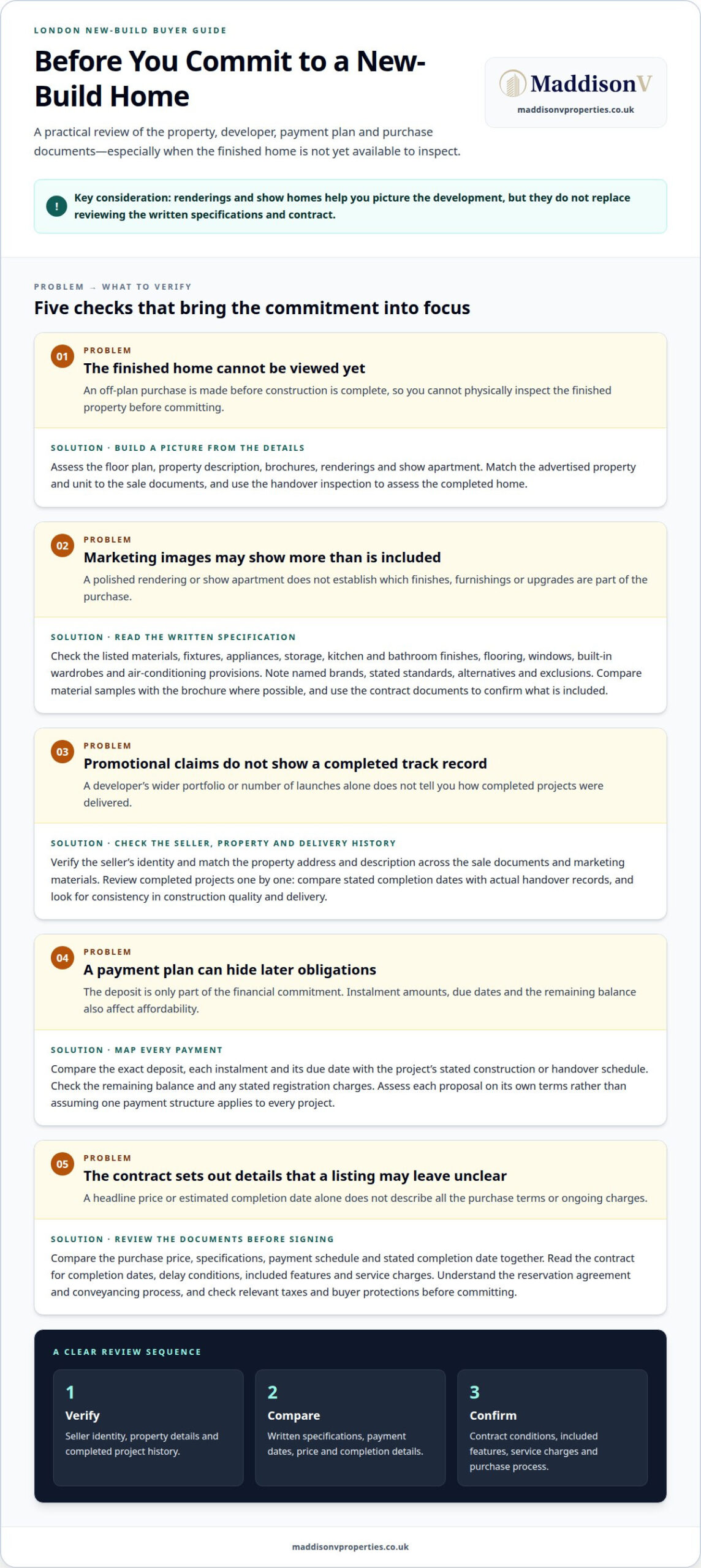
Buying a new build before completion means committing before you can inspect the finished home. Choosing a London developer therefore involves more than comparing brochures: review the developer and project details, understand the payment schedule, and check the purchase documents before signing.
It’s reasonable to want clarity about both the property and your total financial commitment. Renderings and show homes can help you picture the finished development, but they don’t replace a careful review of the property details and contract terms.
This guide explains how to check developer and project details, compare payment plans, and review the purchase contract, including completion dates, conditions and service charges. It also covers reservation agreements and the conveyancing process for London new builds, helping you assess the costs and buyer protections before deciding.
Key Takeaways
- Assess a proposed London new build through its floor plan, specifications, finishing details and show apartment, as the completed property may not be available to view before purchase.
- Carry out checks on both the developer and the development before proceeding with a purchase.
- Compare the payment schedule with construction milestones and make sure each instalment and its due date are clear.
- Review the purchase contract for completion dates, included features and ongoing charges, and understand the conveyancing process.
- Understand the relevant UK property taxes and buyer protections before committing to a new build purchase.
What Is an Off-Plan Property?
- Understand what you’re buying. An off-plan property is purchased before construction is complete, so you can’t physically view the finished home before committing. Dubai’s options include apartments, townhouses and villas, each with different layouts and shared facilities. Buyers assess them through floor plans, renderings, brochures, show apartments and the developer’s reputation. Off-plan properties accounted for 71.3% of Dubai residential sales during H1 2026. A careful approach to choosing an off-plan developer in Dubai starts with understanding how the promised home will be assessed.
- Read the specifications, not just the visuals. Renderings can suggest a polished interior, but the written specification sets out what the developer is offering. Review the listed materials, fixtures, appliances, storage and kitchen and bathroom finishes. Note the flooring, windows, built-in wardrobes and air-conditioning provisions. Check whether the specification names brands or describes general standards. If a show apartment includes features missing from the written details, use the contract documents to establish what is included.
- Compare finishes against practical use. Assess the specification room by room, weighing durability alongside appearance. Kitchen surfaces, for example, should suit regular use, while bathroom finishes should be easy to maintain. Where possible, view material samples and compare them with the brochure descriptions. Note any stated alternatives or exclusions. This helps distinguish included finishes from staging, furniture or upgrades shown only in marketing images.
- Plan for inspection at handover. Because you can’t inspect the completed property before purchase, use the handover inspection to compare it with the agreed plans and specifications. Check doors, windows, taps, appliances, floors and visible finishes. Record defects or incomplete work as snagging items for follow-up. Inspect the unit carefully rather than relying on photographs or the show apartment. The finished property is the best opportunity to assess workmanship and practical details.
- Include post-handover quality in your assessment. In Dubai, the Defect Liability Period for qualifying construction defects is typically 6 to 12 months after handover. Keep the handover records and note when issues appear, so they can be raised within the applicable period. Also consider the UAE’s property-tax position: the UAE offers zero property tax. This does not remove other purchase or ownership costs, so assess those separately when reviewing the total commitment.
Assessing UK Property and Developer Details
First verify the property and seller’s details, then assess the home itself. Review the property’s history, condition, buyer protections and the stated completion date.
-
Check Property and Seller Details
Verify the seller’s identity and the specific property details before proceeding. Check the property separately from any developer’s wider portfolio. Match its address and description with the sale documents and marketing materials. Resolve any mismatch in the property identity or seller information before proceeding.
-
Assess Developer Track Records
Review the developer’s completed projects and compare stated completion dates with actual handover records. Assess the track record project by project, focusing on completed developments and any delays rather than relying on promotional claims. Look for consistency in construction quality and delivery, not just the number of launches. This helps distinguish a record of completed work from a portfolio dominated by projects still under construction.
-
Evaluate Risks and Buyer Protections
Identify the main risks before committing: construction and completion timing, differences between marketing visuals and agreed specifications, and your obligations under the sale contract. UK property purchases involve legal checks and contractual documents. These don’t remove the need to understand the property details and payment commitments before signing.
- Compare properties and units on consistent terms. Shortlist UK properties by comparing the same details: property type, layout, location, included finishes and stated facilities. A studio and a family-sized apartment serve different needs, so compare like with like. Property portals may list more than 200 options, making a clear shortlist useful. Use the property’s full address to distinguish an actual home from broad marketing opportunities.
- Review listings, prices and completion dates together. Treat a listing as a starting point, then match its property and unit details against the sale documents. Compare the stated purchase price alongside the payment schedule, property specifications and completion date; a lower advertised figure alone doesn’t show the full commitment. Note the stated completion date and any contract wording about delays. For a considered property shortlist, explore UK property opportunities.
Down payments and installment plans
Map each payment against your available funds and the project’s stated handover schedule. The deposit is only part of the commitment; registration charges and later instalments also affect affordability.
- Check the initial payment and remaining balance. Buyers of off-plan properties in the UAE may make a down payment as low as 10-20%, then pay the remainder through a flexible plan until handover. Treat that percentage as a possible structure, not a standard offer for every project. Compare the exact deposit, instalment amounts and due dates in each proposal. A lower initial payment can still lead to larger later obligations, so assess the complete schedule before deciding.
- Match instalments to construction progress. Off-plan payment plans are often linked to construction milestones. Read each milestone carefully: note what triggers payment, when it is due and how it relates to the stated handover date. This clarifies when funds need to be available. A schedule tied to progress works differently from one based on fixed dates, so compare the actual terms rather than relying on the phrase “flexible plan.”
- Test affordability across the full term. Some Dubai buyers may prefer payment plans spread over 2-3 years, but the right schedule depends on your cash flow and other commitments. Map instalments against expected income and existing obligations, including the final payments due near handover. Keep a reserve for costs outside the property price. The key question is whether you can meet each contractual payment on time, not simply whether the first deposit fits your budget.
- Include registration charges in your cost calculation. For an off-plan property purchase in Dubai, the 4% DLD title registration fee is required within 30 days. An off-plan purchase also requires an Oqood fee of AED 1,000. Include both items alongside the purchase price and scheduled instalments when estimating the funds needed. Check the contract and payment instructions to understand when each charge is payable and how it is collected.
- Review resale terms before relying on an exit. Off-plan resale in Dubai may be allowed during the contract term, but your payment plan and contract remain central. Read the resale provisions and establish how outstanding instalments are treated if you sell before handover. You must follow the contract’s payment plan until handover, so a potential resale doesn’t remove your obligation to meet its terms. Compare an early-sale scenario with the funds needed to complete the purchase and hold the property.
Oqood registration and Sales & Purchase Agreements
- Review the reservation form before paying. Check that it names the same Dubai project and developer shown in the registration details. Verify the unit number, property type, stated price and reservation terms. Compare the form with the advertised offer, including any payment schedule or handover estimate. Resolve discrepancies before signing or paying. This first check helps ensure the reservation refers to the intended unit.
- Match the Sales & Purchase Agreement to your chosen unit. The SPA should identify the development and property you’re buying. Compare its unit details, layout references and specifications with the reservation documents. Check that the price and payment schedule match the terms already presented, and that names and other key details are consistent. Discrepancies between the reservation and SPA can change your understanding of what the purchase includes.
- Read the delivery clauses closely. Find the stated handover date and any terms allowing it to change or be delayed. Because the finished property isn’t available to inspect when you buy, the contract’s delivery terms matter. Check how the SPA describes penalties and when they apply. Marketing material or a sales conversation should not replace the written terms governing your agreement.
- Review charges and ongoing obligations. Find the maintenance charges in the SPA and identify which property or shared areas they cover. Compare the charges and payment obligations with your ownership plans. Read the terms on payment deadlines, late-payment consequences and other responsibilities. Include the registration costs and deadlines discussed earlier in your budget. The property price isn’t the only amount relevant to completion.
- Understand Oqood registration and retain your records. Oqood registration is one safeguard for Dubai off-plan purchases, alongside RERA regulations and escrow accounts. Review the records of your purchase and check that the registration details correspond with your SPA. Keep the signed agreement, payment receipts and registration paperwork together. These documents help you track what was agreed, what you’ve paid and which contractual dates still apply.
More than 60% of Dubai’s monthly real estate transactions came from off-plan sales during 2024-2025. That scale makes careful comparison of registration records and the SPA especially important to understanding what each purchase covers.
UK conveyancing and buyer protection
Treat conveyancing checks as part of your due diligence, not as a substitute for reviewing the sale documents. A solicitor or licensed conveyancer can help you check the title, contract and other information relevant to the property before you commit to the purchase.
- Confirm payment details before transferring funds. Compare payment instructions with the details provided by your solicitor or conveyancer. Check that the recipient, payment reference and amount are clearly identified. If the sale documents and payment instructions differ, resolve the discrepancy before transferring funds. Keep a copy of the instructions with the relevant payment records.
- Connect each payment to a purchase record. Keep each payment request, receipt and contract schedule together. For example, label records by property, unit and due date instead of storing them as unrelated bank documents. This creates a clear link between your contractual obligations and payments, making it easier to spot a missing receipt or an amount that doesn’t match the agreed schedule.
- Understand what conveyancing checks do and don’t answer. Conveyancing checks are one part of the buying process. They don’t establish whether a property’s specifications meet your expectations, whether the completion date suits your plans, or what remedies your contract provides. Consider these questions separately: review the title and search results, then assess the contract, property details and completion terms on their own merits.
- Build a property-specific records file. Keep the title information, signed contract, payment schedule, payment instructions and receipts together in a secure file. Add dated correspondence about specification changes, property updates and completion arrangements. For an international investor managing a UK purchase remotely, consistent records make it easier to follow purchase milestones and see which documents support each decision.
- Review purchase documents as a connected set. Consider the title information, searches and contract together, while checking what each document records. Match the property details across the contract, payment instructions and correspondence, then compare contractual payment dates with your receipts. These steps can surface inconsistencies early and keep your expectations grounded in written terms, not marketing descriptions or informal assurances.
MaddisonV Properties: UK Property Investment Opportunities
MaddisonV Properties helps investors explore UK property opportunities and build a property shortlist. Property sourcing supports your search, while mortgage consultations can help you consider financing as part of the wider purchase decision. Once a property is complete, property management can support its ongoing oversight.
Before comparing opportunities, bring together your preferred location, intended use and investment priorities. A considered shortlist keeps attention on project details, payment commitments and buyer protections.
Contact MaddisonV Properties to discuss your UK property investment plans.
Make Your Next Property Decision with Clarity
A disciplined approach to UK property investment starts by matching the property to its role in your wider plans. Decide whether you’re buying for personal use, future rental income or potential resale, then let that purpose guide your priorities. A London home for your own use may involve different trade-offs from an investment intended to fit a broader portfolio.
Before proceeding, define what matters most: location, intended use, investment horizon and how involved you want to be. This gives you a practical basis for weighing opportunities without getting distracted by features that don’t serve your objectives. Ground your decision in the commitments you’re comfortable making and the outcome you’re aiming for.
A considered purchase begins with clear priorities and a careful conversation about your next move. Contact MaddisonV Properties to discuss your London property plans and take the next step with confidence.
Frequently Asked Questions
How can overseas buyers check a UK property’s ownership and legal status?
Ask your conveyancer to review the title information and confirm the registered owner, property boundaries and any recorded rights or restrictions. Compare the property details with the sales particulars and draft contract, and clarify any differences before proceeding. The property’s address and legal description should refer to the same home. Keep copies of the documents and written explanations you receive.
How can buyers check a UK property’s title and outstanding charges?
Ask your conveyancer to review the title and relevant search results, including any recorded charges or restrictions that could affect the purchase. Check that the property details match across the title information, contract and other purchase documents. Keep written explanations and records with your transaction documents. If a name, address or other detail differs, ask for clarification before exchanging contracts.
What costs should overseas buyers consider when buying property in the UK?
Costs can include the purchase price, legal fees, survey costs and applicable property taxes. The amount and timing depend on the property and your circumstances, so request a written breakdown before committing. Compare the expected payments with your available funds and account for costs due at different stages of the transaction. Consider ongoing expenses as well as the initial purchase costs when assessing affordability.
How can buyers compare UK properties on condition, facilities and ongoing costs?
Compare the property’s condition and written details with what you see during viewings and in any survey. Look beyond photographs: consider the state of the building, shared facilities, maintenance arrangements and any work identified by the survey. Ask for clarification about reported defects or planned repairs. Reviewing these areas provides a more useful comparison than relying on listing descriptions alone.
What should a UK property sale contract include?
The contract should identify the buyer, seller and property, and set out the agreed price and terms of the sale. Review the property description, completion arrangements and any conditions or obligations that apply. Check that the contract matches the information provided during the purchase and ask your conveyancer about unclear terms before signing. Keep the signed contract and any written amendments together.
How can buyers check a UK property’s condition before completion?
Arrange an appropriate survey and review its findings alongside the property information and contract. Ask for written clarification about significant issues or work that may be needed. Before completion, check that the property’s condition and agreed arrangements are consistent with what you expect. Keep relevant reports and correspondence so you have a clear record of matters raised during the purchase.
What happens if a UK property purchase is delayed or the terms change?
Your next steps depend on the contract and the circumstances surrounding the delay or proposed change. Review the relevant provisions with your conveyancer to understand the effect on the transaction and any available options. Keep notices, payment records and correspondence together, and respond in writing to formal communications. Don’t assume a delay or change automatically gives you a particular remedy; the contract and circumstances determine what options may be available.

Sign Up Now
Want to read more great articles and blogs subscribe to our newsletter