
Good facilities management goes beyond fixing problems after they arise. In Tooting, it brings a property’s building systems and occupant services...

Good facilities management goes beyond fixing problems after they arise. In Tooting, it brings a property’s building systems and occupant services together, covering maintenance, safety, cleanliness and comfort. The aim is to keep daily operations running smoothly and help owners manage their buildings effectively.
Maintenance is often treated as a collection of separate tasks, but coordinating those tasks matters just as much. A considered approach can help preserve a property’s condition, improve the experience of the people who use it and make operating costs easier to understand.
This guide explains what facilities management covers, how hard and soft services differ, and which responsibilities typically fall within the role. It also looks at how facilities management in Tooting can support sustainability and cost-conscious operations, and when specialist support can help property owners maintain a well-functioning environment.
Key Takeaways
- Facilities management coordinates people, place and processes so buildings can operate effectively and support the people who use them.
- According to the International Organization for Standardization (ISO), ISO 41001:2018 specifies requirements for a facility management system.
- Distinguish hard services, which maintain a building’s physical systems, from soft services that support comfort, cleanliness and the occupant experience.
- Planned maintenance, service coordination and building performance monitoring can help property owners manage operations and identify opportunities to use resources more efficiently.
- Explore how facilities management can complement property management when you need consistent oversight of a building’s daily operation and condition.
What Is Facilities Management and Why Does It Matter for Your Business?
Facilities management coordinates the people, processes and building systems that keep a workplace operating. For organizations in Tooting, this can bring maintenance, occupant support and building services into a clearer operational framework.
The International Organization for Standardization (ISO) states that ISO 41001:2018 specifies requirements for a facility management system. It offers organizations a structured reference for managing facilities, rather than treating each maintenance issue as an isolated task. For example, a process for logging faults can connect a report, its assigned response and the record of completed work. That continuity helps managers see how building operations are being handled.
Outsourced Facilities Services
Outsourcing facilities services means hiring an external provider to handle selected operational tasks or coordinate a wider facilities function. An organisation might outsource cleaning while keeping maintenance coordination in-house, or delegate several services through a managed arrangement. The scope matters because it determines who handles service requests, coordinates providers and maintains performance records. Defining responsibilities helps owners understand what remains with their own team.
For example, a workplace could use external cleaners while its internal team manages building access and equipment maintenance. Another organisation might appoint a provider to coordinate several contractors, then review reports and outstanding work through an agreed process. The right arrangement depends on the building’s purpose, systems and occupants’ needs. Outsourcing can shift daily coordination, but responsibilities still need to be clear.
Service Desks and Work Requests
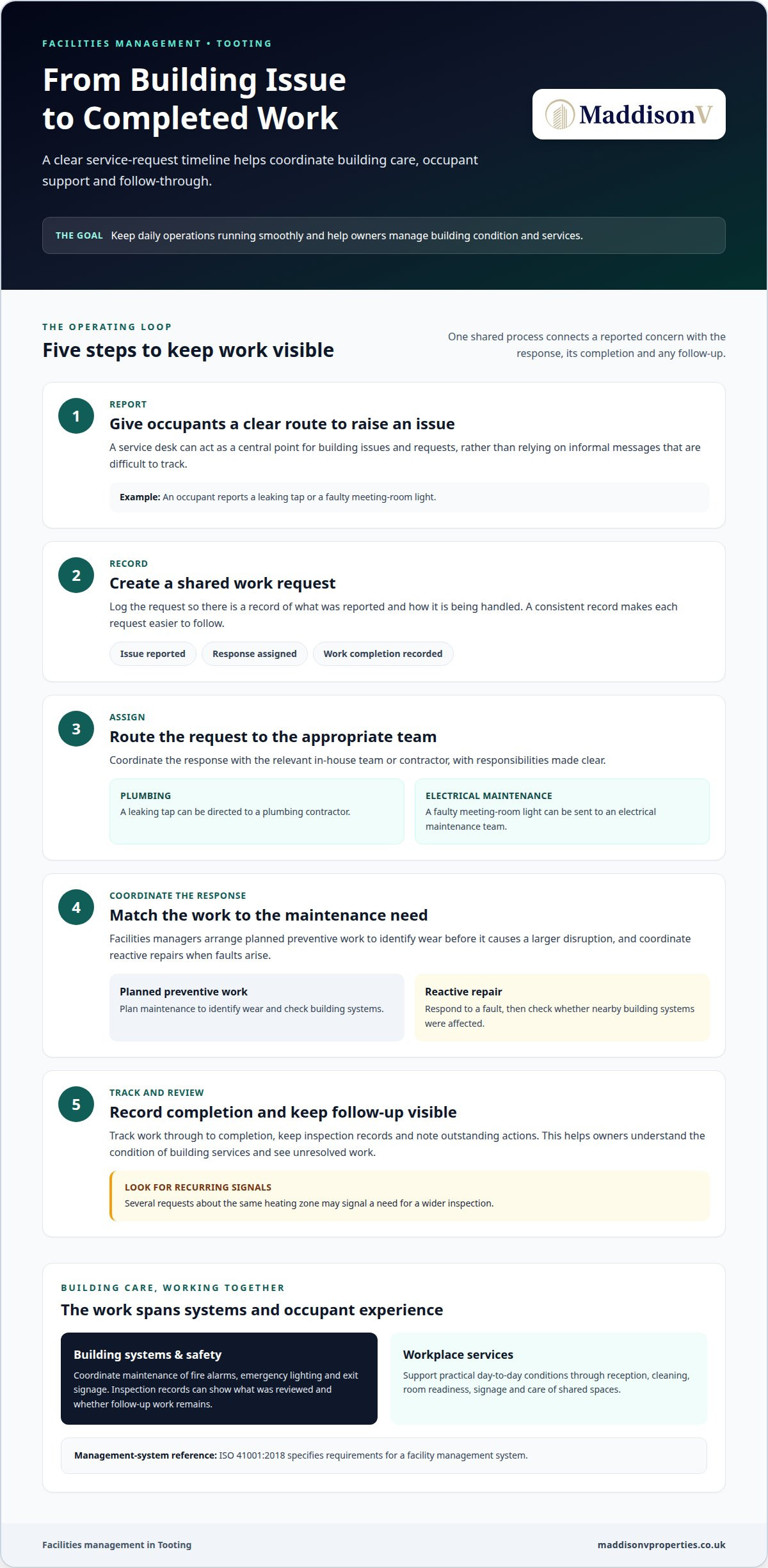
A service desk gives occupants a central point to report building issues and request support. A typical process records each request, assigns it to the appropriate team and tracks it through to completion. For instance, a leaking tap can be directed to a plumbing contractor, while a faulty meeting-room light goes to an electrical maintenance team. A shared record makes each request easier to follow.
For organisations, this approach can reveal recurring issues as well as individual faults. Several requests about the same heating zone, for example, may signal a need for a wider inspection. A service desk also gives staff a clear route for reporting concerns, rather than relying on informal messages that can be difficult to track.
Fire and life safety are also part of building operations. Facilities teams may coordinate maintenance of fire alarms, emergency lighting and exit signage, as well as updates to evacuation information. Inspection records can show which systems were reviewed and whether follow-up work remains. Clear records and coordinated maintenance help teams manage safety-related tasks as part of routine operations.
Workplace services focus on the practical conditions people encounter during the working day. They can include reception support, cleaning, room readiness, signage and care of shared spaces. In a Tooting office, preparing a meeting room before a booking and providing clear directions at reception can make the workplace easier to use. Coordinating these details helps create a consistent experience for employees and visitors.
What qualifications and accreditations should a facilities management company in the UK have? The relevant expertise depends on the work involved, such as electrical maintenance, fire systems or cleaning. ISO 41001:2018 provides requirements for a facility management system, but organizations should distinguish a management-system standard from task-specific competence.
What facilities management companies serve Tooting, London? Facilities management providers serving Tooting include London-based firms that coordinate building maintenance and workplace services. The right fit depends on the property’s systems, the services needed and how responsibilities are divided.
Facilities management responsibilities
Facilities managers coordinate the operational work that keeps a building usable, maintained and suited to its purpose. Their responsibilities can include maintenance planning, contractor coordination, inspections and communication with occupants.
Maintenance is a core responsibility. Facilities managers arrange planned preventive work to identify wear before it causes a larger disruption, and coordinate reactive repairs when faults arise. A recurring leak, for example, may need a repair followed by checks to see whether nearby building systems were affected.
Facilities teams also coordinate relationships with leaseholders, contractors and developers. A clear process identifies who reports an issue, who assigns the work and who records its completion. In a shared building, this helps distinguish a fault in a common area from one within an individual occupier’s space.
Building inspections and service performance need organised follow-through. A facilities manager can schedule inspections, keep records and track outstanding actions, such as a contractor’s recommendation to review a ventilation system. These records help owners understand the condition of building services and identify unresolved work.
Responsibilities can also extend to construction and renovation projects. During a refurbishment, facilities managers can coordinate access, contractor activity and communication with building users. Their operational knowledge of existing mechanical systems can help project teams account for how the building will function after construction.
Facilities management also involves coordinating work and documentation related to building codes and regulations, including construction, zoning, permits, inspections, leasing and hazardous waste disposal. The practical task is to keep relevant activities, records and communication connected as a project progresses. Public-facing buildings may need particular attention to access, signage and continuity of service during works.
Occupant needs are another part of the role. A facilities manager can coordinate a response when staff report poor lighting, an unusable meeting room or a fault affecting shared access. In a public building, clear directions and well-maintained shared spaces can also help visitors move around the site.
How responsibilities are divided depends on the organisation and property. Duties may be allocated by function, location or specialism. One team, for instance, may oversee a site while specialist contractors handle electrical maintenance or cleaning. Facilities managers can also coordinate with property managers so building operations support the owner’s wider objectives.
Do Tooting facilities management providers offer building maintenance and emergency callouts? Facilities management in Tooting can include building maintenance and reactive repairs. Emergency callouts may also be included, with response procedures set out in the agreed service scope.
For specialised planning or projects, organisations may also hire consultants. Construction and renovation work can draw on facilities managers’ knowledge of mechanical systems and building regulations.
Hard and soft facilities management
Facilities management combines building-system care with services that support occupants. In Tooting, the right mix depends on a property’s equipment, shared spaces and daily use.
Hard and Soft Service Categories
Hard services maintain a building’s physical infrastructure, while soft services support the people who use it. This distinction helps owners shape a scope around operational requirements and occupant experience. A heating fault needs hard-service attention; reception support and cleaning are soft services. Coordinating both connects building performance with the quality of shared spaces.
Hard Services in Practice
Hard facilities management covers systems such as electrical and plumbing installations, heating and ventilation, fire safety equipment and lifts. A maintenance plan might record a recurring boiler fault, arrange an inspection and track follow-up repairs. Monitoring these systems can also reveal patterns, such as repeated issues in the same corridor or apartment block.
Soft Services in Practice
Soft services include cleaning, landscaping, signage, customer service and coordination of contracted providers. In a residential development, this could mean arranging communal hallway cleaning and keeping entrance signs legible. These services shape residents’ experience of shared areas, while clear responsibilities help prevent missed tasks or duplicated work.
Services Available in Tooting
Facilities management in Tooting can cover building maintenance, cleaning, landscaping, provider coordination and support for shared areas. The right combination depends on whether a site is residential, commercial or mixed-use. A building with communal corridors, for example, may need regular cleaning alongside maintenance coordination for its lighting and entrance systems.
For owners, a useful distinction is between services that preserve building systems and those that support daily use. A clear scope identifies which tasks are included, who coordinates them and how requests are recorded. This makes it easier to connect contractor activity with the needs of both occupants and the property.
Services for Residential Buildings
Residential facilities management can cover communal-area cleaning, landscaping, maintenance coordination, signage and shared building systems. In a Tooting apartment building, this might include arranging repairs to corridor lighting and keeping entrance areas presentable. The mix of hard and soft services depends on the building’s shared facilities and residents’ practical needs.
Matching Services to the Property
A building’s layout and purpose help determine its facilities management requirements. A block with lifts, landscaped grounds and shared entrances has different needs from a smaller building with limited communal space. Owners can group tasks by system or location and assign coordination to the appropriate team. Reviewing recurring requests can show where service arrangements need adjustment.
Sustainability and operating cost savings
Building operations affect resource use and running costs. Facilities managers can review energy, water, waste and recycling records to identify opportunities to improve operating patterns. At a Tooting property, comparing meter readings with occupancy schedules can help show whether systems are running unnecessarily in little-used spaces.
Connected devices, such as sensors, timers and remote controls, can adjust building systems to match occupancy or planned schedules. A sensor might detect that a meeting room is empty, while a timer controls lighting in a shared corridor. These adjustments align energy use more closely with how the building is used.
Heating and ventilation schedules also affect consumption. A facilities team can compare operating times with how the building is used, then adjust settings where appropriate. If a workspace is empty outside scheduled hours, reviewing its heating schedule may reveal avoidable operation. Tracking the change afterwards helps managers assess its effect on building performance.
Resource monitoring gives owners a practical basis for action. Facilities managers can collect and report data on energy, water, waste and recycling. A rise in water use, for example, may prompt an investigation into a leak or a change in cleaning routines. Waste records can also show whether recycling arrangements suit the materials produced on site.
Benchmarking can put this work in context. Facilities managers may gather information and implement changes related to ISO management standards, green building certifications such as LEED, Fitwel and BREEAM, or GRESB benchmarking and reporting. These frameworks give property teams reference points for organising sustainability information and reviewing building practices.
Cost-conscious management starts with understanding what drives expenditure. A building’s operating schedule, equipment condition, occupancy and service requirements all affect resource demand. Reviewing these factors together can help distinguish routine consumption from unusual patterns, such as a system running longer than occupied hours require.
Planned maintenance can help assess equipment performance before faults disrupt normal operations. A ventilation system with recurring performance issues, for instance, may use resources inefficiently or affect indoor comfort. Recording inspections, repairs and system observations helps managers connect maintenance decisions with ongoing building performance.
Facilities managers and property managers can coordinate financial and sustainability objectives. A property manager may track operating priorities while the facilities team reviews service schedules and resource data. Together, they can weigh options such as adjusting system controls, changing waste collection arrangements or prioritising maintenance based on observed performance.
For property owners, the benefit is a clearer view of resource use and which operational changes deserve attention. Tracking energy, water and waste alongside occupancy and maintenance records makes sustainability part of practical property management. It also helps ensure cost decisions take account of comfort, service quality and the building’s long-term condition.
Benefits of facilities management
Facilities management gives property owners a coordinated view of building operations. Linking maintenance records with service requests, for example, can show whether a recurring fault has been resolved or needs further attention. This makes responsibilities easier to track and supports decisions based on the building’s actual condition, rather than scattered updates from separate teams.
A building management system can bring separate building systems together on one control platform. This lets teams track, analyse and report building data in a shared place. For example, reviewing ventilation and heating information together may reveal operating patterns that separate records would make harder to spot.
Coordinated services can also improve the experience of people visiting or occupying a building. A prepared reception area, useful information and clear directional signs help visitors find the right entrance or meeting room. In a residential building, clear notices and accessible wayfinding make shared spaces easier for residents and guests to use.
Comfort and usability matter as much as equipment performance. Facilities teams can help keep communal areas clean, lighting functional and access routes clear. If a resident reports a dark stairwell, recording the issue and coordinating its resolution supports a more usable shared environment. Attention to these practical details shapes how people experience a property each day.
Facilities management can support workplace productivity by reducing avoidable friction. A meeting room with working lights, prepared seating and clear booking information, for instance, is ready for use. Coordinated workplace services also help teams address practical concerns, such as a shared area that needs attention before scheduled activity.
Consistent records help owners understand the work taking place across a property. Logs of inspections, repairs and outstanding actions clarify which issues are resolved and which need follow-up. If lift faults appear repeatedly in maintenance records, managers can consider whether the pattern needs further investigation rather than treating each report in isolation.
When a building has multiple contractors, clear responsibilities make handovers easier. A facilities manager can coordinate who attends an issue, what work is completed and which actions remain open. If a repair affects a communal corridor, for example, recording the completion and any follow-up cleaning keeps the work connected from start to finish.
Owners can use operational insights to focus on the issues that matter. Reviewing recurring requests, building-system data and visitor feedback together can reveal priorities for service planning. At a Tooting property, this might mean addressing repeated access difficulties or investigating a pattern of faults in a shared area. The result is a more considered approach to maintaining the building and supporting its users.
MaddisonV Properties: Property Management
MaddisonV Properties provides Facilities Management Services to help London property owners coordinate day-to-day building operations. This support is useful when maintenance, shared areas or contractor coordination need closer oversight, or when property operations should align with broader ownership priorities.
Property Management can complement facilities support by addressing a property’s wider needs. Whether owners are reviewing one building or a broader portfolio, distinguishing the services helps clarify which operational responsibilities need attention and how they fit into overall management. The right focus depends on the property and the owner’s priorities.
If you’re considering support for your property’s operations, contact MaddisonV Properties to discuss your requirements.
Set Your Property’s Operational Priorities
Start by deciding what a well-run property should deliver for its owners and occupants. For facilities management in Tooting, priorities might include dependable shared spaces, a clear maintenance process or better oversight of building performance. Defining the goal helps shape an approach around the property’s purpose rather than relying on a generic service scope.
MaddisonV Properties supports owners with Facilities Management and Property Management. Property Sourcing and Mortgage Consultations can also help readers considering a purchase or planning their property strategy. These services connect operational needs with wider ownership decisions.
Choose the issue that most needs attention, then make that the starting point for a focused discussion. Discuss your property’s facilities management needs with MaddisonV Properties and take a considered next step towards a well-managed property.
Frequently Asked Questions
What health, safety, and fire regulations apply to facilities management in Tooting?
Requirements depend on how a building is used, its systems and the work taking place. Facilities teams should identify the relevant fire safety, workplace health and safety, building inspection and contractor requirements for the property. A refurbishment involving contractors, for example, calls for coordination of access, work records and relevant inspections. Keep documentation organised so owners can track responsibilities, completed actions and outstanding safety-related work.
How can a business hire a facilities management company in Tooting?
Start by defining the property’s operational needs, then set out the required services and responsibilities. A Tooting office might need maintenance coordination, cleaning and a clear way for staff to report faults; a residential building may prioritise communal areas and shared systems. Compare proposals against that scope, including how work is recorded, contractors are coordinated and performance is reported. Agree service boundaries and communication processes before work begins.

Sign Up Now
Want to read more great articles and blogs subscribe to our newsletter