
Deposit protection schemes in the UK safeguard a tenant’s deposit and provide a way to resolve disagreements about deductions. In England and Wales,...

Deposit protection schemes in the UK safeguard a tenant’s deposit and provide a way to resolve disagreements about deductions. In England and Wales, landlords or letting agents must protect a tenancy deposit within 30 days of receiving it and give the tenant details of where and how it is protected. The rules and deadlines differ across the UK.
Deposit protection can seem like an administrative formality, but it matters when a tenancy begins and if there’s a dispute at the end. This guide to deposit protection schemes in the UK explains when protection is required, how schemes work, and what tenants and landlords can do if they disagree about repayment.
You’ll also learn how the rules differ across England, Wales, Scotland and Northern Ireland, what can happen if a landlord misses a requirement, and how organised property management can help keep tenancy administration on track.
Key Takeaways
- Understand how custodial and insured schemes differ, including who holds the deposit during the tenancy and who returns it afterwards.
- Know what to expect when a tenancy ends: in England and Wales, an agreed deposit amount must be returned within 10 days.
- If you and your landlord disagree about deductions, a scheme’s independent dispute resolution can help assess the evidence.
- Learn how failing to protect a deposit can lead to court-ordered compensation of between one and three times the deposit amount.
- See how deposit protection supports financial security for both parties and creates a structured route for resolving disputes.
What is deposit protection?
Tenancy deposit protection safeguards money a tenant pays against damage, unpaid rent or other agreed deductions. In England and Wales, it also provides a defined process for holding the deposit and resolving repayment disputes.
When tenancy deposits require protection
Landlords must protect qualifying tenancy deposits in an authorised scheme and give tenants information about the protection. In England and Wales, this requirement applies to assured shorthold tenancies that started after 6 April 2007. It also applies to assured periodic tenancies, according to the UK Government.
The Housing Act 2004 sets legal obligations for landlords and letting agents in England and Wales when they take a tenancy deposit. The duty still applies when someone other than the tenant pays the money. A holding deposit does not need protection before the tenancy begins, but it must be protected once the person becomes a tenant.
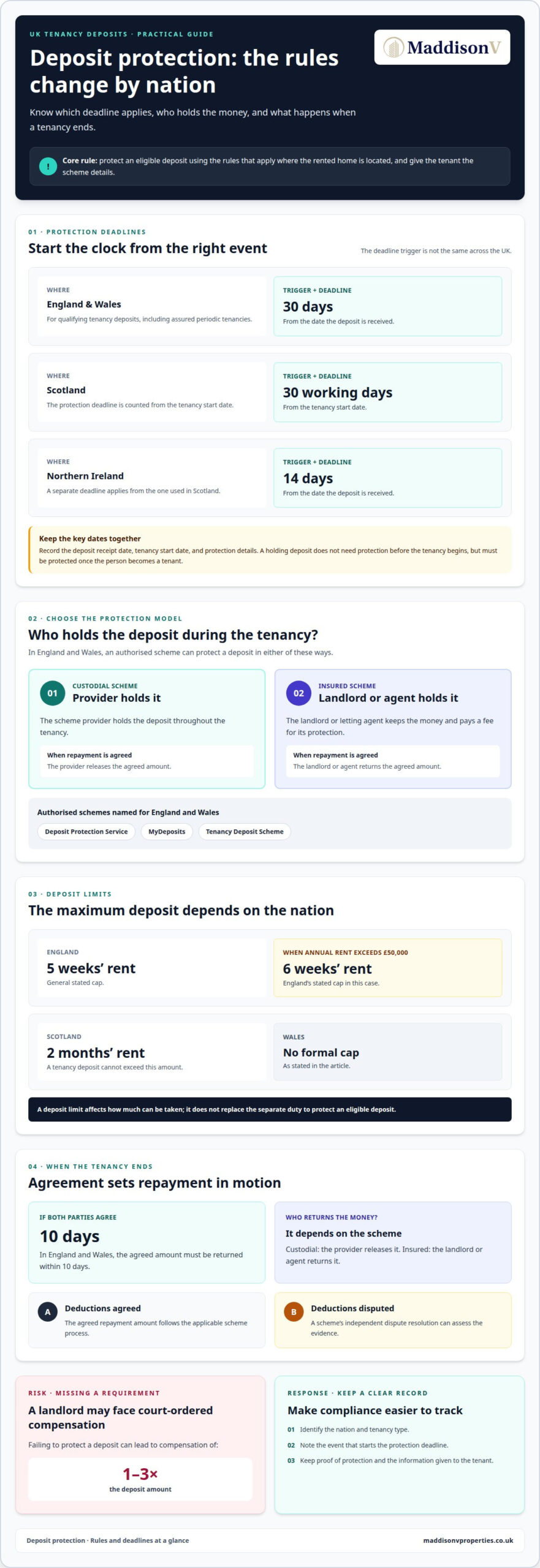
England’s rules also limit the amount a landlord can require. The cap is 5 weeks’ rent, or 6 weeks’ rent when annual rent exceeds £50,000. In Scotland, a tenancy deposit cannot exceed two months’ rent. These limits affect the amount taken; they don’t replace the separate requirement to protect an eligible deposit.
Government-authorised protection schemes
In England and Wales, landlords can protect deposits through the Deposit Protection Service, MyDeposits or Tenancy Deposit Scheme. Each provides an authorised way to protect a tenant’s money. Landlords or letting agents must tell tenants which scheme is being used and how the deposit is protected.
Schemes offer two models. In a custodial scheme, the provider holds the deposit throughout the tenancy. In an insured scheme, the landlord or letting agent keeps the money and pays a fee for its protection. The distinction affects repayment: whoever holds the deposit is involved in returning it.
For tenants, scheme details show where the deposit is protected and which process applies. For landlords, choosing a scheme model clarifies whether the provider or the landlord or agent holds the funds.
Protection across the UK
Which tenancy deposits must be protected in England, Wales, Scotland and Northern Ireland? Landlords must protect eligible deposits under the rules that apply in each nation, but Scotland and Northern Ireland use separate schemes from England and Wales. In England and Wales, protection applies to qualifying tenancies, including assured periodic tenancies.
Deadlines differ by nation: Scotland requires protection within 30 working days of the tenancy start date, while Northern Ireland requires it within 14 days of receipt. Wales has no formal cap on tenancy deposits, unlike the stated limits in England and Scotland. The location of the rented home therefore determines which scheme framework and deposit limit apply.
How can a tenant get their deposit back at the end of a tenancy? In England and Wales, once both parties agree how much the tenant will receive, the deposit must be returned within 10 days. In a custodial scheme, the provider releases the agreed amount; in an insured scheme, the landlord or agent returns it.
Deposit protection deadlines
Deposit protection deadlines differ across the UK, and the event that starts the clock varies. Landlords need to know whether the deadline runs from the date the deposit is received or the tenancy start date.
Protection deadlines across the UK
Across the UK, the protection deadline depends on the nation and its tenancy rules. In England and Wales, landlords must protect a deposit within 30 days of receiving it. Scotland allows 30 working days from the tenancy start date, while Northern Ireland sets a 14-day period from receipt. These are different triggers, not interchangeable ways to count the same deadline.
The 30-day protection deadline
In England and Wales, the 30-day deadline applies to qualifying deposits, including those for an assured shorthold tenancy that started after 6 April 2007. Tenancy deposit protection was introduced in England and Wales in April 2007. Within the relevant period, landlords or letting agents must protect the money and provide the tenant details of where and how it is protected.
The deadline is not just a target for beginning an application. Protection must be in place within the required period, and the tenant must receive the scheme information. In a custodial arrangement, the scheme holds the deposit; in an insured arrangement, the landlord or agent holds it. Either model must meet the applicable deadline.
For landlords managing several tenancies, record the event that starts the deadline for each deposit. In England and Wales, the clock starts when the deposit is received. In Scotland, it starts on the tenancy start date. Keeping the receipt date, tenancy start date and protection details together makes it easier to track each property’s deadline.
England’s tenancy framework changed on 1 May 2026, when assured periodic tenancies replaced assured shorthold tenancies in England and Wales. The deposit protection duty also applies to assured periodic tenancies. In England, a landlord does not have to protect a deposit for an assured tenancy that started before 1 May 2026. The tenancy type and start date therefore matter alongside the date the money was received.
These distinctions matter when a deposit is paid before occupation. A holding deposit does not need protection before the tenancy begins, but it must be protected once the person becomes a tenant. This change in status makes the tenancy start a separate administrative milestone. Don’t assume that handling the earlier holding deposit fulfils the protection duty.
The practical rule is to identify the nation, tenancy type and triggering event before calculating a deadline. A 30-day period from receipt in England and Wales differs from Scotland’s 30 working days from the tenancy start date, while Northern Ireland uses 14 days from receipt. Recording those details helps landlords apply the correct timetable rather than relying on one UK-wide date.
Deposit disputes and independent resolution
Deposit disputes usually concern how much should be returned at the end of a tenancy. In England and Wales, scheme-based resolution gives landlords and tenants a process for addressing disputed deductions while the deposit remains protected.
Handling deposit disputes
Start by identifying the specific deduction in dispute. Common examples include cleaning costs, unpaid rent or damage beyond ordinary use. The signed tenancy agreement can clarify the responsibilities the parties accepted, while relevant records help explain the amount claimed or challenged.
Useful records include check-in and check-out reports, dated photographs, invoices and written communications. They can link a proposed deduction to the property’s condition or an outstanding payment. Explain each amount clearly to keep the discussion focused on the evidence, rather than unrelated tenancy concerns.
Tenants can apply to the tenancy deposit scheme for repayment and use its dispute resolution process, according to the UK Government on legislation.gov.uk. If the landlord and tenant agree on some deductions but dispute others, list the agreed and contested amounts separately to clarify what remains unresolved.
Free dispute adjudication
Free adjudication gives landlords and tenants a scheme-based way to resolve disagreements about deposit deductions at the end of a tenancy. It allows the parties to seek an independent decision when direct discussion has not secured agreement.
Present information that relates directly to the deduction in question. For a cleaning claim, this could include condition records and an invoice; for alleged damage, photographs and inspection notes may help explain the disagreement. The decision depends on the evidence submitted and the relevant tenancy terms.
In England and Wales, the deposit remains protected in the scheme while a dispute is being resolved. The disputed money stays within the protection process rather than being treated as available to either party before the issue is settled. The custodial or insured model determines who holds the funds, but the dispute concerns how much each party should receive.
Independent resolution is most useful when discussion has not resolved a disputed deduction. An itemised explanation from the landlord and a specific response from the tenant can define the precise issue. For example, the parties might agree that rent is outstanding but disagree about a separate repair charge.
Keep communications factual and specific. Refer to the relevant clause in the signed agreement, identify the deduction and connect it to supporting records. If the parties agree before adjudication concludes, the repayment can be handled through the scheme’s process. This gives both sides a structured way to resolve the dispute and settle the tenancy’s financial arrangements.
What happens if a landlord fails to protect a deposit
Failing to protect a qualifying tenancy deposit can expose a landlord to a financial penalty and complicate possession proceedings. In the UK, a court can order a landlord who failed to protect a tenancy deposit to pay the tenant between one and three times the deposit amount. The outcome depends on the case; the payment is not an automatic fixed multiple.
The Housing Act 2004 sets legal obligations for landlords and letting agents in England and Wales when they take a tenancy deposit. They must use an authorised protection scheme where required and give the tenant information about where and how the money is protected. The obligation applies even when someone other than the tenant paid the deposit.
Landlords and letting agents must treat deposit protection and prescribed information as connected responsibilities. Protecting the money without giving the tenant the required details does not complete both tasks. For example, recording a scheme payment but failing to provide the scheme information leaves the landlord’s obligations in England and Wales incomplete.
In England, the consequences for possession proceedings depend partly on the notice date and tenancy rules. For a section 21 notice received before 1 May 2026, a landlord must return the deposit before eviction if it was not protected when required or was protected late. This makes the deposit’s protection status relevant to a landlord seeking possession under that notice route.
After 1 May 2026, an England landlord may obtain a court order to evict a tenant if, by the hearing, the deposit has been protected and the prescribed information given, the deposit returned, or the tenant’s claim was unsuccessful or unresolved. The listed conditions concern the position by the hearing. A landlord should distinguish this process from the rules applying to a section 21 notice received before that date.
Landlord and letting-agent support should make responsibility for deposit tasks clear. A practical record identifies who received the deposit, when it was received, which scheme holds or protects it, and when the tenant received the scheme details. For a portfolio with multiple tenancies, these records keep each deposit’s timeline distinct and prevent one tenant’s documents from being confused with another’s.
If a landlord discovers a missed deadline, establish the tenancy type, deposit receipt date, scheme status and information given to the tenant. Assured periodic tenancies in England also require protection. Confirming these details promptly can clarify the landlord’s position, including whether the deposit must be returned before a possession step or whether court proceedings could involve a compensation order.
Purpose of deposit protection schemes
Deposit protection gives landlords and tenants a formal framework for managing tenancy money. In England and Wales, protection was introduced in April 2007, bringing clear responsibilities for safeguarding deposits and sharing scheme details. Its purpose extends beyond storing funds: the process helps both parties understand how money is held, what deductions may be considered, and how disagreements can be addressed.
The scheme model determines who holds the deposit during the tenancy. With a custodial arrangement, the provider holds the money until repayment is agreed or a dispute is resolved. With an insured scheme, the landlord or letting agent holds the deposit and pays a fee for protection. The arrangements differ, but both place the deposit within a protection framework.
The distinction matters at the end of a tenancy. In a custodial scheme, the provider releases the agreed amount. In an insured scheme, the landlord or letting agent returns the deposit after the repayment amounts are agreed. If a landlord proposes a deduction for unpaid rent, for example, the scheme process separates the amount both parties accept from any amount still in dispute.
Protection also gives tenants a route to seek repayment and use the scheme’s dispute resolution process. In England and Wales, the deposit stays protected while a dispute is being resolved, so the disputed funds are not treated as freely available before the disagreement is settled. This process does not guarantee that every deduction will be rejected; it provides a defined way to consider claims.
For landlords, the protection process brings administration into focus. The landlord must identify the applicable scheme, protect the deposit within the relevant deadline, and provide the tenant with information about its protection. A clear record of the amount received, protection details and tenancy documents helps connect those obligations. For example, recording the receipt date makes the England and Wales 30-day deadline easier to manage.
The national framework matters too. Scotland uses separate schemes, and tenancy deposits there can only be protected through a custodial scheme. England and Wales allow custodial and insured arrangements. Landlords with properties across these nations need processes that reflect each property’s location, rather than assuming the same protection method applies throughout the UK.
Ultimately, deposit protection balances the interests of both parties: the tenant has a safeguarded repayment route, while the landlord can pursue reasonable deductions through an orderly process. For landlords seeking consistent oversight of tenancy administration, property management support can help organise property operations and related records.
MaddisonV Properties
MaddisonV Properties helps property owners bring structure to the responsibilities involved in managing a rental property. If deposit deadlines, tenant records and end-of-tenancy arrangements are difficult to coordinate with your other property duties, Property Management can support the wider oversight of your rental investment.
For owners building or refining a portfolio, Property Sourcing and Portfolio Management can support property decisions and ongoing oversight. Facilities Management addresses practical property operations, while Mortgage Consultations can support financing discussions when you’re considering an investment. These services complement careful deposit administration, but they do not replace landlords’ legal duties to protect deposits and provide the required information.
For personalised support with your property plans, contact MaddisonV Properties to discuss your requirements.
Make your next property decision with clarity
Rental administration is part of owning a property, not a task separate from investment planning. With deposit protection schemes in the UK explained in practical terms, you can make compliance part of a deliberate approach to property management. Consistent systems and clear responsibilities help connect each tenancy to your wider plan.
As your property interests develop, consider how ongoing oversight, sourcing decisions and financing discussions fit together. An investment’s role and management needs matter beyond the initial purchase. Aligning these choices can bring greater coherence to your portfolio and help you approach ownership with confidence.
Property Management, Property Sourcing and Mortgage Consultations can support different stages of that planning. For a considered discussion about your property priorities, speak with MaddisonV Properties. A clear next step can help you move forward with purpose.
Frequently Asked Questions
Custodial or Insured scheme?
Choose a scheme based on who should hold the deposit during the tenancy. In a custodial scheme, the provider holds the funds; in an insured scheme, the landlord or letting agent keeps them and pays a fee for protection. Consider who will manage repayment at the tenancy’s end and how deposit records will be maintained. Scotland permits custodial schemes only, so an insured arrangement is not an option there.
What can I do about an unprotected deposit?
Ask the landlord or letting agent for the scheme details and required deposit information. If the deposit remains unprotected, a tenant can apply to the tenancy deposit scheme for repayment and use its dispute resolution process. A court can order a landlord who failed to protect a deposit to pay between one and three times the deposit amount. Keep tenancy and payment records together.
What do landlords have to do?
For a qualifying tenancy, the landlord must protect the deposit through the applicable scheme and give the tenant information about where and how it is protected. This duty applies even if someone else paid the deposit. If a letting agent is involved, clearly allocate responsibilities and keep records showing who received the money and who completed the protection and information steps.
What is a UK deposit protection scheme for renters?
A tenancy deposit protection scheme safeguards an eligible deposit and provides a process for repayment or disputed deductions. The scheme’s role depends on its model: a custodial provider holds the money, while an insured scheme protects money held by the landlord or agent. For tenants, the scheme information identifies where the deposit is protected and which process applies at the tenancy’s end.
What are the UK tenancy deposit protection schemes and how do they compare?
In England and Wales, landlords can use the Deposit Protection Service, MyDeposits or Tenancy Deposit Scheme. These schemes offer custodial or insured protection, although Scotland permits custodial schemes only. Scotland and Northern Ireland have separate schemes from those used in England and Wales. Compare arrangements by checking who holds the funds, how repayment works and which nation’s rules apply to the property.
How long does a landlord have to protect a tenancy deposit and provide prescribed information?
In England and Wales, the landlord or letting agent must protect a qualifying deposit and give the tenant the required information within 30 days of receiving it. Scotland’s protection deadline is 30 working days from the tenancy start date; Northern Ireland’s is 14 days from receipt. These deadlines use different starting points, so the property’s nation and deposit receipt date matter.
What is the maximum tenancy deposit a landlord can charge in England?
In England, the maximum is 5 weeks’ rent, rising to 6 weeks’ rent if annual rent exceeds £50,000. The cap is based on rent, rather than a standard cash amount, so the permitted deposit changes with the rent and applicable threshold. This limit governs how much a landlord can require; it doesn’t remove the separate duty to protect an eligible deposit.
How can a tenant check whether their deposit is protected?
Use the details supplied by the landlord or letting agent to identify the scheme and confirm the deposit record with it. If you don’t have those details, request the scheme name and protection information in writing, and keep a copy of your request. The Deposit Protection Service, MyDeposits and Tenancy Deposit Scheme operate in England and Wales; Scotland and Northern Ireland use separate schemes.

Sign Up Now
Want to read more great articles and blogs subscribe to our newsletter