
The most compelling Camden investment may not be the one that looks strongest in an area-wide headline. Prospects can vary between streets, buildings...

The most compelling Camden investment may not be the one that looks strongest in an area-wide headline. Prospects can vary between streets, buildings and property types, so the name alone is no guarantee of a sound investment.
If you’re considering Camden, London, it’s understandable to want a clear answer on whether the area is right for you. Search results can mix it up with other places called Camden, while broad market claims may gloss over the costs and risks of a specific purchase. This guide focuses on Camden in north London and takes a measured, property-by-property approach.
You’ll learn how to distinguish Camden’s micro-locations and compare flats, houses and new-build opportunities using consistent criteria, including likely rental appeal, purchase costs, financing and ongoing management. We’ll also consider the market’s recent price correction alongside subdued rental growth, and outline what to verify before making an offer or appointing an adviser. The aim isn’t to promise a return, but to help you assess the evidence, understand the trade-offs and make a more informed decision about your capital.
Key Takeaways
- Confirm the guide covers Camden in north London, not other places or brands with the same name.
- Compare flats, period homes and new-build apartments against consistent criteria, including tenure, condition and maintenance exposure.
- Assess camden property opportunities individually. Area reputation alone can’t establish whether a property suits your investment aims.
- Set out your objectives, budget, intended holding period and preferred level of involvement before reviewing properties.
- Verify property-specific documents and market evidence before deciding whether to proceed or seek property sourcing and management support.
Camden Property Investment: What London Location Does the Search Mean?
A search for “Camden” can lead to very different places: Camden in north London, Camden, New Jersey, Camden, Maine, or Camden, the US apartment rental brand. This guide is about residential property investment in Camden, London, not accommodation offered under that brand or property in the American locations.
Even within London, the name can refer to different search areas. Camden Town is a neighbourhood; the wider London Borough of Camden includes multiple neighbourhoods and property markets. Nearby places may also appear in searches and comparisons, so check the address and map rather than relying on a listing’s broad location label.
Guide scope: Residential investment property in Camden, London. Verify property examples, current availability, rental evidence, development details, transport references and boundaries before relying on them. An area label alone doesn’t make a property suitable for investment.
Camden Town and the London Borough of Camden: Why the distinction matters
A neighbourhood name and borough name aren’t interchangeable. A Camden Town search focuses on a more specific area, while borough-level information may cover a broader mix of locations. Regent’s Canal and Camden Market can help orient a search, but they’re reference points, not evidence of an individual home’s investment potential. Check the precise context and property location on a current map.
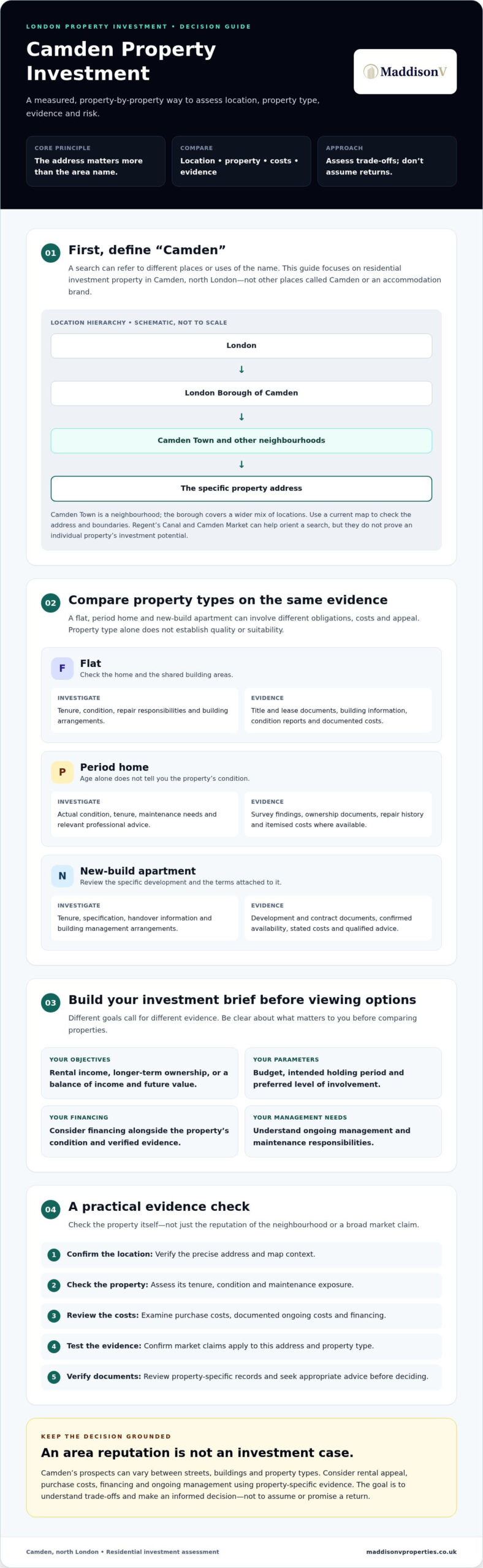
Location diagram, schematic and not to scale: London → London Borough of Camden → Camden Town and other neighbourhoods → specific property address. Nearby areas may enter a comparison, but check official mapping before treating any boundary or label as precise.
Who should use this Camden property investment guide?
This guide is for UK-based and overseas buyers comparing residential investment locations and property options. Some investors may prioritise rental income; others may focus on longer-term ownership or a balance of income and future value. Each goal calls for different evidence, so decide what matters to you before comparing properties.
Suitability depends on your objectives, financing, the property’s condition and verified evidence, not neighbourhood reputation alone. When assessing an individual opportunity, examine its specific costs and documents, and confirm that market claims apply to its address and property type. A clear brief helps you compare locations without mistaking a recognisable name for an investment case.
Camden Investment Property: How Location and Property Type Shape the Decision
Two properties with the same broad location label can involve different costs, obligations and appeal. Compare each home on its own terms: the building, tenure and documented expenses matter more than assumptions about a property type or neighbourhood. Examples and availability can change, so confirm current listings and property details before comparing options.
What should investors compare across Camden property types?
Use the same checklist for a flat, a period home and a new-build apartment. The table sets out questions to investigate, not features guaranteed to apply to every property.
| Property type | Tenure and condition | Maintenance exposure | Possible buyer profile | Evidence to check |
|---|---|---|---|---|
| Flat | Confirm the tenure and condition of both the unit and shared areas. | Check which repairs fall to the owner and what the building’s arrangements cover. | An investor seeking a home that may suit a defined rental brief. | Title and lease documents, building information, condition reports and documented costs. |
| Period home | Inspect the property’s actual condition and verify its tenure; age alone doesn’t establish quality. | Assess the home’s maintenance needs and obtain relevant professional advice. | A buyer whose objectives and capacity fit the particular property. | Survey findings, ownership documents, repair history and itemised costs where available. |
| New-build apartment | Review the specific tenure, specification and handover information. | Understand building management arrangements and any stated ongoing costs. | A buyer considering a newer home, subject to evidence and investment criteria. | Contract and development documents, confirmed availability, costs and qualified advice. |
Don’t assume a new build will need less maintenance or that an older home will require extensive work. Verify the facts for the individual property. Confirm any purchase, financing, repair or ongoing cost figures against current documents and with appropriately qualified professionals.
How do Camden micro-locations affect a property assessment?
Camden Town, King’s Cross and Primrose Hill are useful location references, but they aren’t interchangeable submarkets. Compare the exact address with the transport options, amenities and other features relevant to your likely tenant or ownership plans. Verify boundaries, routes, facilities and proximity claims using current information, rather than relying on a broad area description.
For wider context, read this London property market guide, then return to the evidence for the specific home. If you’ve set clear criteria, you can also consider whether property sourcing support fits your search. Confirm the firm’s current service scope and suitability for a Camden instruction before proceeding.
Is Camden a Good Property Investment? Compare Evidence, Risks, and Alternatives
It may be, but a neighbourhood’s reputation can’t establish whether a particular property is a sound investment. The answer depends on the purchase, documented costs, financing, your objectives and evidence that applies to the home. Treat area-wide claims as starting points for investigation, not promises of performance.
Which evidence can support a Camden investment case?
Build a dated evidence file for the property type and precise location you’re considering. For each comparable, note the source and whether the information relates to a completed transaction, an asking price or an advertised rent. These measures aren’t interchangeable, and a borough-wide figure may not describe a specific flat or house.
Separate broad indicators from property-level facts. Area data can help frame questions, but condition, tenure, building arrangements, documented costs and individual property features shape the decision. Verify current transaction and rental evidence before using it. If a reliable source, date or comparable isn’t available, mark the claim for confirmation rather than treating it as established fact.
- Potential advantages to test: whether the property suits the intended tenant or ownership plan, and whether comparable evidence supports the expected income or resale case.
- Potential drawbacks to test: whether purchase and ongoing costs, condition, tenure or building obligations weaken the case once verified.
What risks should investors test before comparing locations?
Compare Camden with your shortlisted London alternatives using similar properties, the same evidence period and consistent assumptions. For example, assess flats against flats and period homes against similar homes. Don’t compare unlike properties or mix advertised rents with completed transactions. Keep the comparison grounded in verifiable evidence; avoid headline yield, growth, vacancy or price claims unless they have a reliable dated source and clear methodology.
Test assumptions that can change the outcome, including maintenance needs, building management, financing terms, likely tenant demand and resale considerations. Model less favourable scenarios as well as your central estimate, and treat projected returns as uncertain, not guaranteed. Confirm property-specific figures from current documents and seek qualified advice where needed.
For financing context, review the London buy-to-let mortgage guide. Compare any general information with terms confirmed for your own circumstances; it can’t establish the financing available for an individual purchase.
How to Evaluate a Camden Property Investment Before You Make an Offer
A disciplined camden property investment review starts before a viewing. Set your criteria first, then test each opportunity against them. This keeps a polished presentation or persuasive forecast from taking the place of evidence.
- 1. Write your investment brief. State your objective, target property type, intended tenant profile and preferred financing approach. Decide whether you’re prioritising rental income, longer-term ownership or another goal, and record what would make you walk away.
- 2. Set your financial assumptions. Define your budget parameters, intended ownership period and preferred level of involvement. Model expected income alongside ownership costs, maintenance and possible periods without a tenant. Treat every figure as buyer-specific, and confirm it against current property documents and advice relevant to your circumstances.
- 3. Review the available property information. Request documents that help you understand the home’s condition, tenure, building arrangements, management and stated costs. Note what’s missing or unclear. Don’t treat a marketing claim as established fact until it’s verified.
- 4. Confirm material points. Ask appropriate professionals to review legal, tax, financing and property-condition questions. What matters will depend on the individual property and your circumstances, so general guidance isn’t a substitute for advice on your purchase.
- 5. Compare, then decide. Use one written checklist for the property and alternatives. Record the evidence, unresolved questions and assumptions behind your assessment. Proceed only if the verified information aligns with your objectives and risk tolerance.
For more perspective on acquisition checks, see this property sourcing and acquisition guide. Use it as a reference, then confirm that each point you rely on is current and applies to the specific property.
A clear process makes the decision more manageable, but it doesn’t remove investment risk. MaddisonV Properties offers property sourcing that includes market analysis, due diligence and negotiation. To explore whether this support fits your search, discuss your property sourcing requirements with the firm. Confirm its current service scope and suitability for a Camden instruction before proceeding.
Buying Camden Investment Property: Sourcing, Management, and Next Steps
Once you’ve set your criteria, compared the evidence and checked the property, proceed only if the verified details still fit your objectives, finances and appetite for risk. Support can help organise parts of the process, but it can’t remove investment risk or guarantee a purchase outcome.
When can a property sourcing adviser add value?
Property sourcing may be useful after you’ve established what you’re looking for. Depending on the agreed instruction, support can include market analysis, reviewing opportunities, due diligence and negotiation. For a Camden search, confirm that the adviser’s current service scope and local suitability match your brief. MaddisonV Properties is a London-based advisory and management firm, but Camden-specific listings or specialism aren’t confirmed.
Before appointing an adviser, clarify the engagement terms, included work, information you’ll need to provide and decisions that remain yours. The property sourcing agents guide offers further context on the sourcing process. Treat advice as support for an informed decision, not as a substitute for your own checks or professional advice.
What should happen after selecting a Camden property?
Before committing, resolve outstanding questions with suitably qualified professionals. This may include legal review, financing terms, tax considerations and an assessment of the property’s condition. Check that the documents and assumptions used in your decision relate to the specific home, and revisit your figures if new information changes the picture.
Then consider how much day-to-day involvement you want. Property management may be relevant if you’d prefer support with rent collection, tenant relations and maintenance coordination. Review the service scope and responsibilities carefully. Management can assist with ownership tasks, but it doesn’t guarantee rental income or a particular investment result. The property management guide explains the role in more detail.
A measured next step is to discuss your objectives and preferred level of support before deciding whether to proceed. Discuss your property investment brief with MaddisonV Properties and confirm whether its current services suit your requirements. This is an invitation to explore the fit, not a promise of Camden property availability or investment outcomes.
Make Your Next Property Decision with Confidence
A considered camden investment begins with a clear brief, not an area-wide promise. Compare similar properties, check current evidence and documents, and weigh condition, tenure, costs and financing against your objectives. The right choice depends on the individual property and your plans, whether you’re focused on rental income or longer-term ownership.
Before committing, confirm legal, tax, financing and condition questions with appropriate professionals. If you’d value support with the search, MaddisonV Properties is a London-headquartered property investment advisory and management firm. Its property sourcing includes market analysis, due diligence and negotiation, subject to confirming current service scope and suitability for your brief.
Discuss your property investment brief with MaddisonV Properties and explore what support may fit your requirements. With clear criteria and verified information, you can take your next step thoughtfully.
Frequently Asked Questions
Is Camden in London a good area for property investment?
Camden may suit some investors, but an area’s reputation alone can’t establish whether a particular property is a sound investment. Assess the home, its condition and tenure, documented costs, financing and evidence relevant to your objectives. Compare current rental and transaction information carefully, noting its source and date. Treat projected income or resale prospects as assumptions to test, not guaranteed outcomes, and seek professional advice for questions specific to your circumstances.
What types of property can investors buy in Camden?
Residential property searches may include flats, period homes and new-build apartments, but confirm current examples and availability rather than assuming them. Compare each property’s layout, condition, tenure and building arrangements. These details can affect costs, maintenance responsibilities and suitability for your plans. Review relevant documents and obtain appropriate professional advice before drawing conclusions. A property’s age or new-build status alone doesn’t establish its quality or investment potential.
How do I compare Camden with other London investment locations?
Compare like with like. Set a consistent date range and assess the same property type, tenure and investment assumptions in each location. Record whether evidence reflects completed transactions, asking prices or advertised rents, and note the source. Include property-specific costs and condition where information is available. This makes differences easier to interpret and helps prevent broad area claims or unlike comparisons from distorting your assessment.
What should I check before buying an investment property in Camden?
Review the available property information, including tenure documents, condition reports, building and management details, and documented costs. Check that important claims relate to the specific address and have current supporting evidence. Consider financing on terms confirmed for your circumstances. Ask appropriate legal, tax, mortgage and property-condition professionals to verify questions within their expertise. Keep a written record of missing information and resolve material uncertainties before deciding whether to proceed.
Can overseas investors buy property in Camden, London?
Whether an overseas buyer can proceed, and what obligations may apply, depends on individual circumstances and current requirements. Don’t rely on general online guidance to settle legal, tax or financing questions. Before making commitments, consult appropriately qualified professionals familiar with your situation and confirm the current position from authoritative sources. Also establish how you’ll review property documents, manage ownership responsibilities and assess financing terms from outside the UK.
How can a property sourcing adviser help with a Camden purchase?
A property sourcing adviser may support an investor with market analysis, due diligence and negotiation, depending on the agreed service. Clarify the adviser’s scope, engagement terms, responsibilities and what remains for you to decide. MaddisonV Properties is a London-headquartered property investment advisory and management firm, but Camden-specific listings or specialism aren’t confirmed. Sourcing support can inform your process, but it can’t remove investment risk or guarantee a purchase or return.
What ongoing support might a Camden landlord need?
A landlord who prefers not to handle every operational task directly may consider property management support. Confirm whether the service covers the activities you need, such as rent collection, tenant relations and maintenance coordination, and clarify responsibilities before appointing a provider. Consider the property’s specific building arrangements and condition when deciding what oversight may be required. Management can support day-to-day ownership, but it doesn’t guarantee rental income or investment performance.

Sign Up Now
Want to read more great articles and blogs subscribe to our newsletter