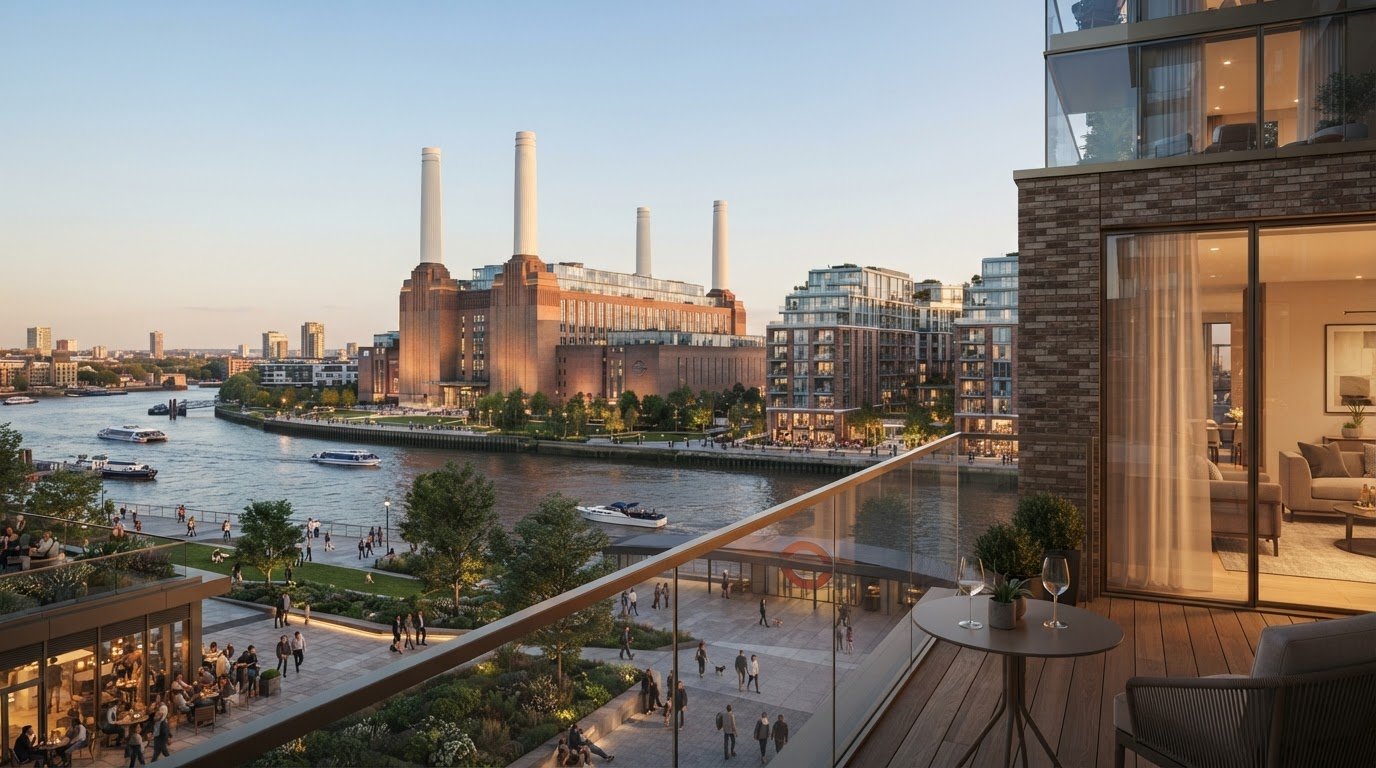
A Battersea Power Station property investment offers exposure to a landmark mixed-use development that includes more than 4,000 new homes. Its...

A Battersea Power Station property investment offers exposure to a landmark mixed-use development that includes more than 4,000 new homes. Its distinctive setting may attract buyers, but a landmark address alone doesn’t determine whether a property suits your investment goals. The specific home, its ongoing ownership costs and its appeal to future residents all matter.
The appeal is clear: Battersea Power Station brings together a landmark historic building, homes, shops, restaurants and public spaces. But a sound investment decision means looking beyond the setting and assessing how the property fits your plans, from ongoing costs to rental and resale appeal.
This guide outlines the main factors to consider before investing, including ownership costs, transport, amenities, development plans and property management. Use it to compare opportunities and decide what to explore next, focusing on evidence rather than assumed returns.
Key Takeaways
- Build a full ownership-cost picture by considering service charges, ground rent, utilities, repairs and routine maintenance alongside the purchase itself.
- Compare properties by how their layout, amenities and transport connections fit the needs of future residents, not by the landmark address alone.
- Factor planned development into your assessment: Phases 3 to 7 were estimated to be completed in 2028, while Electric Boulevard was planned to include 40 retail units and 10 cafes and restaurants.
- Use property management to coordinate practical landlord responsibilities, including bills, charges, repairs and maintenance.
- Consider how Battersea Power Station’s wider mix of homes and amenities could shape a property’s appeal over time, while assessing each opportunity on its own merits.
What are the service charges, ground rent, and other ownership costs?
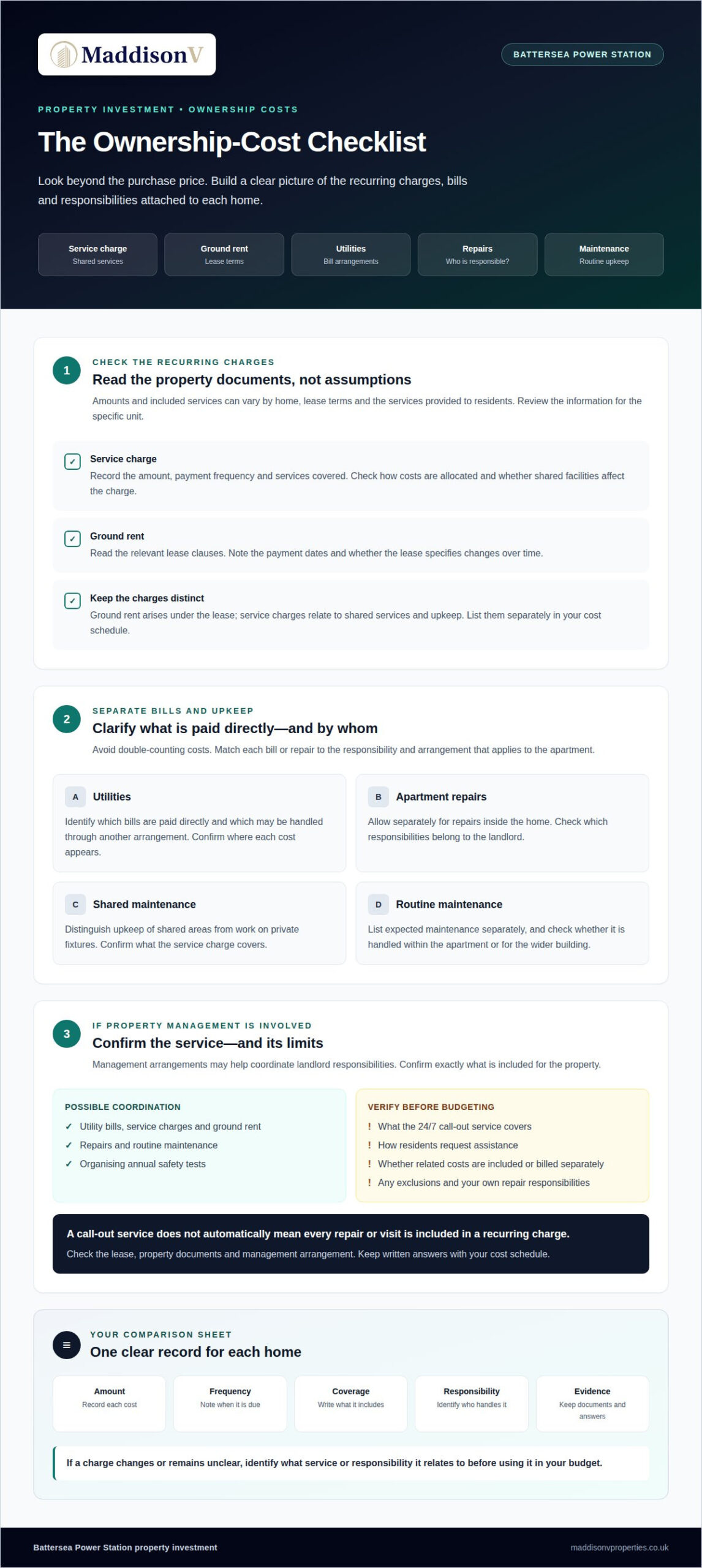
For a Battersea Power Station apartment, the purchase price is only one part of the ownership costs. Service charges, ground rent, utilities, repairs and routine maintenance can all affect your budget. The amounts depend on the individual home, its lease terms and the services provided to residents. Assess each cost separately before deciding whether the investment suits your plans.
Service charges generally cover the upkeep and shared facilities of a building or development. The charge may vary according to the services arranged for residents and how costs are allocated among properties. A home with shared facilities may have different costs from one with fewer communal areas. Review the service-charge information for the specific unit rather than assuming every Battersea Power Station apartment carries the same charge.
Ask what the service charge covers and when payments are due. Separate building services from expenses paid directly, such as electricity and other utilities. This helps you avoid counting the same item twice. For example, if a landlord arranges payment of a utility bill, confirm whether it appears in the service-charge statement or is paid separately.
Ground rent is another lease-related cost to check. The lease sets out its terms, so read the relevant clauses for the property you are considering. Note payment dates and whether the lease specifies changes over time. Keep ground rent separate from the service charge: ground rent arises under the lease, while the service charge relates to shared services and upkeep.
Allow separately for repairs and routine maintenance. A service charge may cover some shared maintenance, while repairs inside an apartment may be handled separately. Clarify which responsibilities belong to the landlord and which relate to the wider building. A repair to a private fixture, for example, may be managed differently from maintenance to a shared entrance.
Before committing, organise the figures in a simple cost schedule. Use the lease and property documents to record recurring payments, due dates and what each charge covers. List utilities, expected maintenance and repair responsibilities separately. This makes it easier to compare Battersea Power Station homes with different layouts or included services.
- Service charge: Record the amount, frequency and services covered for the specific property.
- Ground rent: Note the lease terms and payment schedule.
- Utilities: Identify which bills are paid directly and which are handled through another arrangement.
- Repairs: Separate responsibilities for the apartment from shared building maintenance.
For landlords, practical oversight can help keep these obligations organised. Property management may include paying utility bills, service charges and ground rent on a landlord’s behalf, as well as arranging repairs and routine maintenance. It can also include organising annual safety tests to help landlords comply with current legislation. Responsibilities depend on the management arrangement and the property.
Keep clear records of every payment connected with the apartment. Match invoices and statements to the relevant cost category, then compare them with the lease and management documents. If a charge changes, identify the service or responsibility it relates to before revising your forecast. This gives you a more realistic picture of ownership costs than the purchase price alone.
For a considered Battersea Power Station property investment, assess the full cost structure alongside the home’s features and intended use. A clear schedule of service charges, ground rent, utilities and maintenance helps you compare opportunities and plan for ongoing ownership more accurately.
Ask the property manager to explain how the 24/7 call-out service is organised and whether any related costs appear in the apartment’s service-charge information or are billed separately. Confirm what situations the service covers, how residents request assistance and whether the arrangement changes your own repair responsibilities. Do not assume that the existence of a call-out service means every repair or visit is included in a recurring charge; check the relevant property documents and lease.
Keep written answers with your cost schedule, noting which services are covered, any exclusions and how to report a problem. If a cost is unclear, ask for an explanation before using an estimate in your budget. This helps distinguish shared management arrangements from expenses arising within your apartment, making it easier to compare the responsibilities attached to each home.
What transport links, amenities, and planned developments affect property investment in Battersea?
Transport access affects how easily residents can reach work, services and leisure destinations. For a Battersea Power Station home, assess the journey from the entrance to the transport connection, not just the neighbourhood name. Compare routes for regular trips such as commuting, shopping and visiting local facilities. The most useful connection depends on residents’ destinations and travel habits.
Consider the entire journey, including walking time, transfers and the final stretch after leaving a station or stop. A route that looks direct on a map may involve an inconvenient interchange. Compare access at times that matter to the intended tenant or owner. Someone commuting to a central workplace, for example, may value a different route from a resident whose routine centres on nearby Battersea amenities.
Location within the development matters too. Battersea Power Station spans 17 hectares, or 42 acres, so the distance between a particular home and its everyday destinations can vary. Consider the apartment’s position relative to shared areas, shops and places to eat. A resident carrying groceries or returning home after an evening out may experience the site differently from a visitor spending time at one destination.
Amenities can strengthen a home’s appeal when they match residents’ routines. Battersea Power Station is planned as a mixed-use destination, combining homes with retail and food venues. Electric Boulevard, Phase 3, was planned to include 40 retail units and 10 cafes and restaurants. For an investor, this planned mix offers a practical point of comparison: assess how nearby services could support convenience without assuming every resident will use them.
Development activity also affects how you assess timing. Phases 3 to 7 were estimated to be completed in 2028. That matters when considering how a home may sit within a changing neighbourhood, particularly if construction and future amenities affect the experience around it. Think about the purchase timeline, the intended holding period and whether the home’s current surroundings suit its likely use while development continues.
The development plan included 1,218 new homes, while the wider Battersea Power Station project includes more than 4,000 homes. These figures signal a substantial residential setting, not a guaranteed level of demand or investment performance. Compare a particular property’s layout, outlook and access with the needs of its likely residents. A well-connected one-bedroom apartment may suit a different audience from a larger home intended for longer-term occupation.
Use a consistent review for each property you consider:
- Route: Map likely journeys to work, daily services and leisure destinations.
- Walkability: Assess the route between the apartment, transport access and amenities.
- Convenience: Consider whether Electric Boulevard’s planned shops and food venues suit the intended resident.
- Timing: Account for the estimated 2028 completion of Phases 3 to 7 when considering your investment horizon.
Consider planned amenities alongside facilities residents can use today. Electric Boulevard’s proposed retail and dining provision may add convenience as the development progresses, while the wider project’s scale will shape the area over time. Distinguish planned features from existing facilities when assessing a property. This gives you a clearer basis for comparing homes and considering their potential appeal to future residents.
For investors considering off-plan opportunities, the phasing of Battersea Power Station makes delivery timing and location within the wider scheme especially relevant. Compare the home’s expected role with its access, planned surroundings and intended use. A focused review of Battersea property opportunities can help frame those considerations before you decide which type of investment to pursue.
Battersea Power Station Development Company is abbreviated as BPSDC. Its development principles include prioritising quality, environmental protection and sustainability, and creating a mixed-use destination with community at its heart. For investors, these principles offer context for considering how the development may serve residents and fit into its surroundings. They do not replace an assessment of a specific home’s access, layout or outlook, or whether nearby amenities suit its intended occupants. Consider how the everyday setting supports residents’ routines rather than assuming the stated aims alone determine a property’s appeal.
Malaysian state-owned companies developed five other phases of the Battersea Power Station project. This context can help when comparing different parts of the development, but it does not mean each phase offers the same resident experience or investment prospects. Assess the particular home’s location, transport links, services and surrounding development, and consider how these factors may change during your planned holding period. This helps distinguish practical convenience from the project’s broader ambitions.
MaddisonV Properties: Property Management
MaddisonV Properties provides property management for Battersea landlords, helping organise day-to-day ownership responsibilities. This can be useful when coordinating service-charge and ground-rent payments, utility bills, repairs and routine maintenance. Property management can help you keep oversight while reducing the administrative work involved in owning an investment property.
If you are still assessing a purchase, property sourcing can help you explore suitable opportunities, and mortgage consultations can support your financing considerations. If you own more than one property, portfolio management helps you consider your assets together rather than in isolation. The right support depends on your stage of the investment journey and the responsibilities you want managed.
To discuss your Battersea property plans, contact MaddisonV Properties or visit maddisonvproperties.co.uk.
Make Your Next Property Decision With Purpose
A Battersea Power Station property investment should serve a clear objective, not simply reflect the appeal of a landmark address. Decide what matters most: the home’s future use, its role in your portfolio or how involved you want to be as an owner. Clear priorities help you assess opportunities more purposefully.
Before proceeding, write down the questions that matter to your decision. Compare how different homes fit your intended holding period, consider how much oversight you want and identify the features that matter most to future residents. A deliberate next step can turn general interest into a considered investment plan.
MaddisonV Properties can discuss your property plans and help you consider the path ahead. Contact MaddisonV Properties to start a conversation and move forward with confidence.

Sign Up Now
Want to read more great articles and blogs subscribe to our newsletter