Buying a property from abroad needn’t mean relying on images alone. For international investors, a live virtual viewing can bring a walkthrough to...

Buying a property from abroad needn’t mean relying on images alone. For international investors, a live virtual viewing can bring a walkthrough to your screen, letting you examine a home remotely and return to key details afterward. With a floorplan, a clear video connection and a few thoughtful questions, you can make the viewing more informative.
When assessing a UK property from abroad, attractive images are only a starting point. Video can show how rooms connect and reveal visible details, while a live guide can describe things the screen cannot convey, such as odours or how a space feels.
This guide explains what to expect from live showings and recorded walkthroughs, how to review a tour afterwards, and how to prepare so the viewing addresses your priorities. It also offers practical prompts for examining a property and explains where remote tours help, and where their limits matter.
Key Takeaways
- Assess UK property investment by considering location, property condition and your investment priorities, not just the asking price.
- Review the costs and potential returns of a property so you can compare options and prepare focused questions.
- Consider how currency movements may affect your budget and the value of your investment.
- Research rental yields, capital growth and tax considerations before deciding which property or location suits your plans.
- Treat market performance as one part of your decision, rather than as a guarantee of future returns.
1. What Can You Expect From Real Estate Virtual Tours?
A virtual tour lets an overseas buyer inspect a property remotely through recorded footage, an interactive view, or a live agent-led walkthrough. For virtual property tours for international investors, the format determines what you can see and how you can ask questions. For example, you can view a London apartment from abroad before deciding whether to investigate it further, just as buyers exploring high-end coastal properties remotely rely on luxury advisors like Brian Liberto for guided walkthroughs.
Compared with an in-person visit, a remote tour makes it easier to review a home from another country and revisit its rooms. It cannot fully convey sounds, smells, or the feel of the surrounding street. Use it as a practical screening step, then identify what other information you need before deciding.
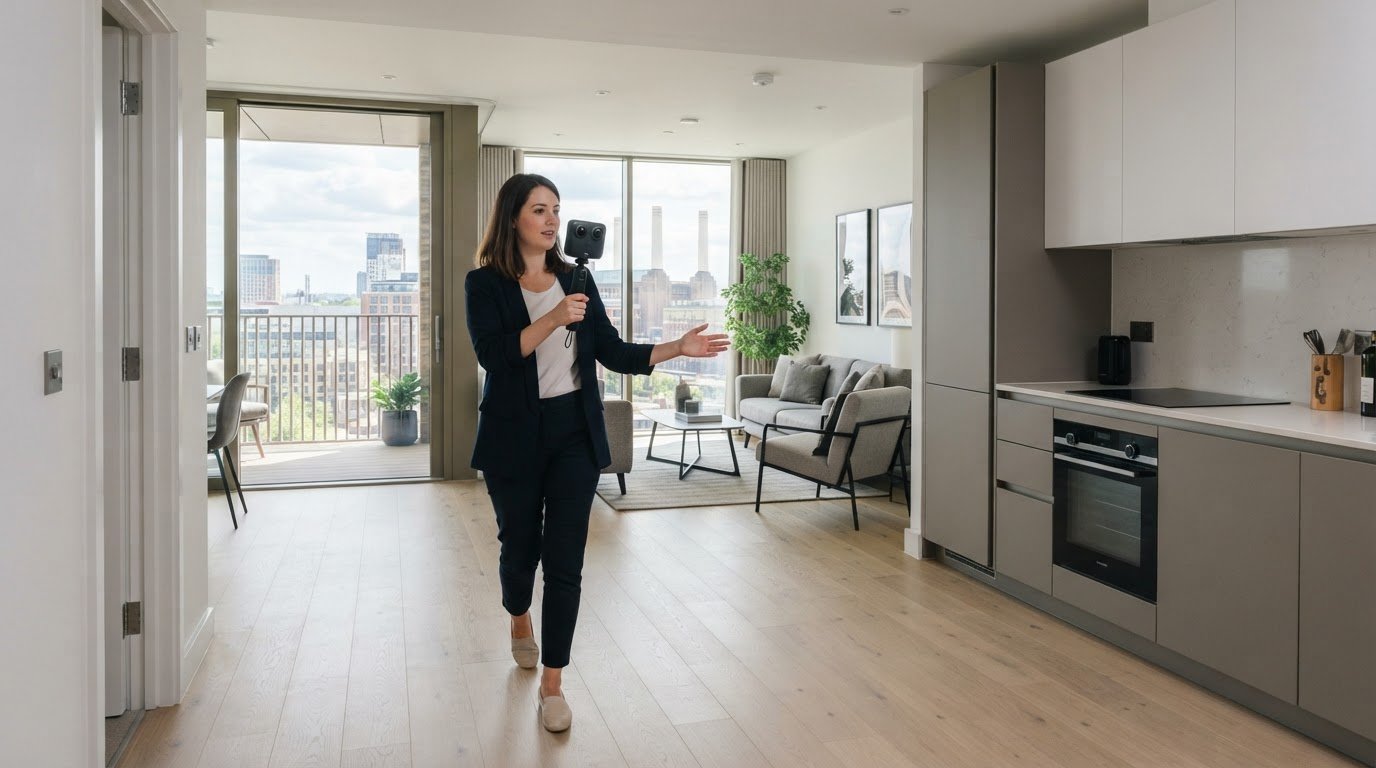
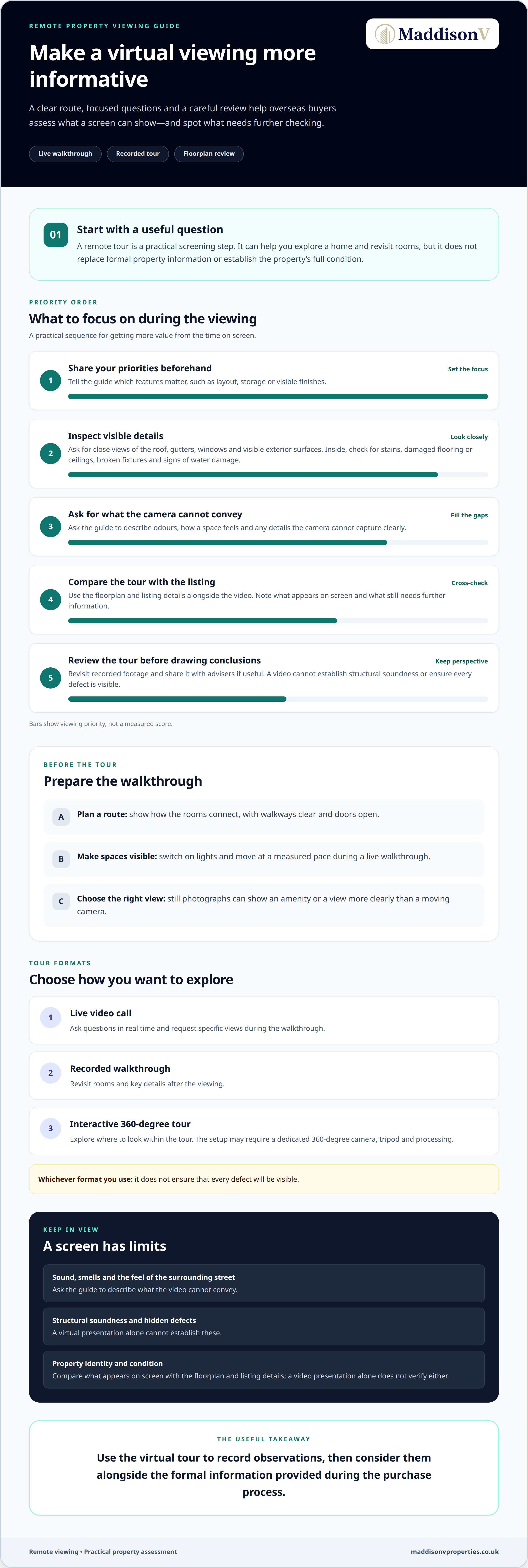
Preparation affects the quality of the viewing. Before filming, clear walkways, open doors, switch on lights, and plan a route showing how rooms connect. A tripod can steady 360-degree footage, while a measured pace helps viewers follow a live walkthrough. Still photographs can show amenities or a view more clearly than a moving camera.
During the tour, ask for close views of the roof, gutters, windows, and visible exterior surfaces. Inside, look for stains, damaged flooring or ceilings, broken fixtures, and signs of water damage. Video may not reveal odours or establish structural soundness, so ask the guide to describe sensory details and show areas the camera cannot capture clearly.
Compare platforms by useful features: live video, recorded playback, 360-degree navigation, floorplan access, and sharing options for advisers. A video call supports questions in real time; an interactive platform gives buyers more control over where they look. Neither format ensures every defect will be visible.
Tour equipment ranges from a standard phone camera to a dedicated 360-degree camera and tripod. The right setup depends on the presentation required: a live call may need only a steady camera and clear connection, while an immersive tour requires suitable capture equipment and processing. These choices affect the viewing experience, not the property’s condition.
Make the viewing more focused by sharing your priorities beforehand. An agent can then concentrate on relevant features, such as a Chelsea apartment’s layout, storage, or visible finishes. Specific questions help separate what the camera shows from details that need further review.
For a UK purchase, the virtual tour is separate from conveyancing and transaction documents. Relevant legal and disclosure requirements depend on the property’s location and the transaction. Use the viewing to record observations, then consider them alongside the formal information provided during the purchase process.
A remote purchase generally involves identifying a property, viewing it, progressing an offer, reviewing transaction information, and arranging completion. The exact steps and documents depend on the circumstances, so use the tour to inform your decision, not to replace the transaction process.
To reduce scam risk, use a live walkthrough, request specific views, and compare what appears on screen with the floorplan and listing details. Be cautious about pressure to commit before reviewing relevant information. A video presentation alone does not establish a property’s identity or condition.
No UK city or property type is universally best suited to virtual tours. Their usefulness depends on your investment priorities and the details you need to assess. A new-build London apartment may be straightforward to explore room by room, while a property with extensive grounds needs a viewing that also covers its outdoor spaces.
2. Understanding UK property tax as an overseas buyer
Tax is an important part of buying property in the UK from abroad. Before making an offer, identify which taxes may be relevant to the purchase, ownership, rental income, or a future sale. Stamp Duty, Council Tax, and Capital Gains Tax are among the areas overseas buyers may need to consider. Your circumstances and the property’s use can affect which rules apply, so avoid relying on assumptions or on another buyer’s experience.
Give each tax question a clear purpose. At the purchase stage, ask what Stamp Duty may mean for your transaction and what information is needed to assess it. If you plan to let the property, find out how rental income should be reported and whether your non-resident status affects your responsibilities. If you may sell later, ask how Capital Gains Tax could apply. Keep notes of the answers and the assumptions they depend on.
Before proceeding, agree on a simple process for checking your position with an appropriately qualified adviser. For example, gather details about the property, your residency, and your plans for it, then ask for advice that addresses those points. A further review can be useful if your circumstances change, the property’s use changes, or an important detail was not covered in the initial discussion.
- Before buying: Note the property details and ask which Stamp Duty considerations may apply.
- Before letting: Check how rental income and your non-resident status affect your tax responsibilities.
- Before a future sale: Ask whether Capital Gains Tax may be relevant to your circumstances.
- Before making decisions: Review the advice and clarify any points that remain uncertain.
International buyers may need to coordinate advice across different locations. Share relevant details about your residency and plans with your adviser, and clarify which country’s rules they are considering. If an accountant or family member is involved, provide them with the same property information and questions. This keeps the discussion focused and helps avoid repeated conversations based on different assumptions.
Accurate records matter, too. Keep purchase documents, property details, and tax correspondence together so you can refer to them when seeking advice. If a key detail is missing or unclear, make a note and ask for clarification. General information cannot determine your personal tax position, so use it to prepare focused questions rather than as a substitute for tailored advice.
For a property shortlist, keep each property’s details and tax questions together under its address or listing name. This makes comparison more orderly and helps you identify what needs checking before proceeding. If you’re assessing opportunities remotely, property sourcing support can help connect your priorities with the search process.
3. UK property investment for UAE investors
UK property investment can give UAE investors access to a market with a range of residential locations and property types. London is a key destination for international buyers, with established neighbourhoods and new build developments offering different options. The right choice depends on your investment goals, budget, and preferred approach to ownership.
Before you buy property in the UK from abroad, compare locations and property fundamentals. Consider the type of tenant a home may appeal to, its transport links, and the costs of owning and managing it. In London, areas such as Canary Wharf, Nine Elms, Battersea, and Westminster each have distinct housing and rental markets.
Rental yield and capital growth are separate measures, and neither is guaranteed. Rental yield compares expected rental income with the property’s price, while capital growth refers to a change in value over time. Review both alongside ongoing costs and local market conditions when assessing an opportunity.
Currency movements can also affect an overseas purchase. UAE investors should consider how exchange rates may influence the sterling cost of buying a property and transferring funds. Tax treatment is another important part of the decision, and may depend on your residence, ownership structure, and the property’s use.
- Before buying: Set your budget and identify the locations and property types that fit your investment objectives.
- When comparing options: Review potential rental income, ownership costs, and relevant local conditions.
- Before proceeding: Seek advice on UK tax, legal requirements, and currency considerations.
Keep your research specific and methodical. Compare properties using consistent criteria, such as location, asking price, likely rental demand, and estimated costs. A clear comparison can help you assess opportunities across London and other UK markets without relying on headline figures alone.
Overseas property investment in the UK also involves practical steps, including arranging finance, completing legal checks, and managing the property after purchase. Clarify what support you will need from local professionals, and make sure you understand the documents and costs involved before committing. A property’s advertised details cannot establish every aspect of its condition or investment potential.
For a focused assessment, finish by listing the strongest points of each option, any unanswered questions, and the next checks required. That structure can help UAE investors make a more informed decision about UK real estate and their London property investment plans.
4. Virtual tours and time on the market
A virtual tour can shape how buyers assess a listing, but it does not provide a reliable timetable for a sale. For an international investor considering London property, its practical value is showing the home remotely and clarifying which questions deserve attention. Time on the market also reflects factors such as asking price, local demand, property condition, and how clearly the listing presents the home.
The relationship between virtual tours and selling has shifted over time, particularly after COVID-19. A tour may be more useful in a competitive market, where buyers need to assess options efficiently. It may have less impact for a highly differentiated property, whose distinctive features need closer consideration than a standard walkthrough can provide.
Asking-price changes can provide useful context. Sellers using virtual tours tend to set higher initial prices, then lower them before a sale, a strategy that can leave listings on the market longer. That pattern does not prove the tour caused a delay. A price change may reflect the seller’s approach, buyer response, or a gap between expectations and demand.
For buyers, time on the market is a prompt for questions, not a verdict. If a London listing remains available as its asking price changes, compare the current presentation with earlier listing details, where available. Ask what has changed in the property or its marketing, then consider whether those changes affect your plans. A viewing can help you assess visible features, but it cannot explain the seller’s reasons.
Separate presentation from investment value. A polished video of a renovated living room may not show the building’s shared areas, the surrounding street, or maintenance needs. These details can influence an investment assessment even when the virtual presentation is compelling. Note which questions the tour answers and which need further review.
Market conditions also shape how much a tour can help. In a competitive market, remote viewing can make it easier to assess a property before travelling. For a distinctive home, however, a standard tour may not communicate the qualities that set it apart. Match the viewing format to the questions you need answered.
Use the tour as one part of a considered decision. A long listing period does not automatically make a property unsuitable, and a polished walkthrough does not establish its value. Weigh the asking price, visible condition, property information, and local market context together. This keeps the viewing useful without treating it as a forecast of selling time or investment performance.
5. Preparing to buy property in the UK from abroad
A focused property search starts with a clear investment brief. Before contacting an agent, write down what matters most: intended use, preferred location, property type, and features that could affect your decision. For example, an investor considering a flat for long-term letting might prioritise storage, room flow, and visible maintenance needs. Share those priorities with the agent so the search addresses them directly. For investors also exploring opportunities across North America, brokerages such as pinnaclerealty.ca provide residential and commercial guidance across the Greater Toronto Area.
Prepare your materials before discussing a property. Keep the listing, floorplan, and a note-taking page open together. Mark the rooms that matter, then prepare specific questions, such as asking about the view from a bedroom window or the route between the entrance and living space. A floorplan helps you compare the stated layout with the information provided.
Plan conversations around time zones. State your local time zone when arranging a call, and include any adviser or family member who needs to attend. Agree who will lead the questions so participants do not interrupt one another or ask the agent to repeat the same point. Decide who will review any notes or recording and how you will collect follow-up questions.
Check your arrangements before speaking with an agent. Make sure your device, microphone, and internet connection are working, then position the floorplan where you can read it without leaving the call. Use headphones if background noise makes the agent difficult to hear. Keep a charger nearby, especially if you plan to take notes and review property documents during the discussion.
- Before the appointment: Save the listing and floorplan, then write questions by room.
- At the start: Confirm the property address and agree the topics to cover.
- During the discussion: Note what you can confirm, what remains unclear, and where each point appears.
- After the call: Compare your notes with the listing and group follow-up questions by topic.
Keep an evidence trail that is easy to revisit. Save the property details, discussion date, agent’s answers, and relevant documents together under the listing name. Promotional material can provide context, but base your decision notes on the specific property information provided. Separate confirmed details from questions that still need answers.
Preparation also means defining a decision threshold before making an offer. Decide which issues would rule out a property, which would need further investigation, and which are preferences rather than requirements. For example, an unclear detail may call for further information, while a layout that conflicts with your investment brief may end the review. To align an overseas search with your priorities, explore property sourcing support.
MaddisonV Properties
MaddisonV Properties helps international investors navigate the UK property investment process. Property Sourcing can support your search for suitable London opportunities, while Mortgage Consultations can help you consider financing. For investors building a portfolio, Property Management and Facilities Management provide support beyond the initial purchase. These services can help you assess how a potential investment fits your objectives, from choosing a property to managing it. Contact MaddisonV Properties to discuss your plans and the support that could suit your next step.
Make your UK property investment decision with clarity
An investment decision made across borders benefits from a framework that extends beyond the property itself. For UAE investors considering UK property investment, the next step is to connect each opportunity with your objectives, intended ownership horizon, and plans for the property. This keeps each property in its proper role as one input into a broader decision.
Before advancing a shortlisted property, define what would make it suitable and which unresolved point could change your view. Apply those criteria consistently across opportunities, then revisit them as your priorities evolve. A measured process helps you assess each option deliberately rather than letting an appealing presentation set the pace.
To discuss the property decision ahead, contact MaddisonV Properties today. Bring the priorities shaping your search and the questions you’re weighing. You can begin with the next step that matters most to you, then move forward with greater clarity and confidence.
Frequently Asked Questions
What Can You Expect From Real Estate Virtual Tours?
Expect a visual introduction to the property, not a complete assessment of its investment potential. A tour can help you understand the layout, finishes, and visible features, then identify what needs further review. For example, seeing a compact second bedroom may prompt you to consider whether it suits your intended use. Treat screen-based observations as viewing notes, separate from your assessment of documents and other evidence.
What to Look For?
Look for consistency between the rooms shown, the floorplan, and the property description. For example, note whether a doorway, built-in cupboard, or window appears where the plan suggests. Watch for camera angles that hide corners or cut off ceiling and floor edges. A feature that looks attractive in a close-up may appear different in a wider view, so consider both the detail and its context.
What are virtual property tours, and how do they work for international investors?
Virtual property tours let investors view a property remotely through a recorded or live digital presentation. An international buyer can join from another country while a local representative shows rooms and answers questions. For instance, a buyer in a different time zone might review a recorded presentation first, then arrange a live conversation to clarify details. This supports remote evaluation without requiring immediate travel.
Which platforms offer virtual real estate tours for overseas buyers?
Overseas buyers may encounter tours on property listing pages, through interactive viewing software, or on live video meeting platforms. Instead of choosing by brand name alone, consider whether the format lets you view the whole property, share access with an adviser, and revisit relevant sections. Check that the presentation works on your device and that the property’s address or listing details are clearly linked to the viewing.
What is the difference between 360-degree tours, live video tours, and 3D walkthroughs?
A 360-degree tour lets you look around from fixed camera positions, while a live video tour follows a representative in real time. A 3D walkthrough presents connected spaces in a navigable digital model. For example, a 360-degree view may help inspect a room’s corners, while live video allows an immediate request to revisit a particular feature. Each format offers a different level of control and interaction.
How much do virtual property tours and remote buying services typically cost?
Tour costs depend on the production method, property size, and level of presentation. A basic self-produced tour and a professionally created tour for a large home involve different equipment and work, so quoting one typical fee would be misleading. Remote buying services are separate from tour production, and their costs depend on the service and transaction. Ask for a clear breakdown of what each charge covers before agreeing to it.
How can international investors verify a property’s condition during a virtual tour?
Use the tour to identify visible concerns, then compare your observations with property documents and written condition information. Ask for clear views of areas that appear worn, altered, or difficult to interpret, and note anything the camera cannot resolve. For example, a mark on a ceiling may prompt a direct question about its cause and any related documentation. A screen view alone cannot establish hidden conditions.

Sign Up Now
Want to read more great articles and blogs subscribe to our newsletter