
The real cost of UK property investment for overseas buyers can be hidden in the gap between recording an expense and paying it. A US$100,000...

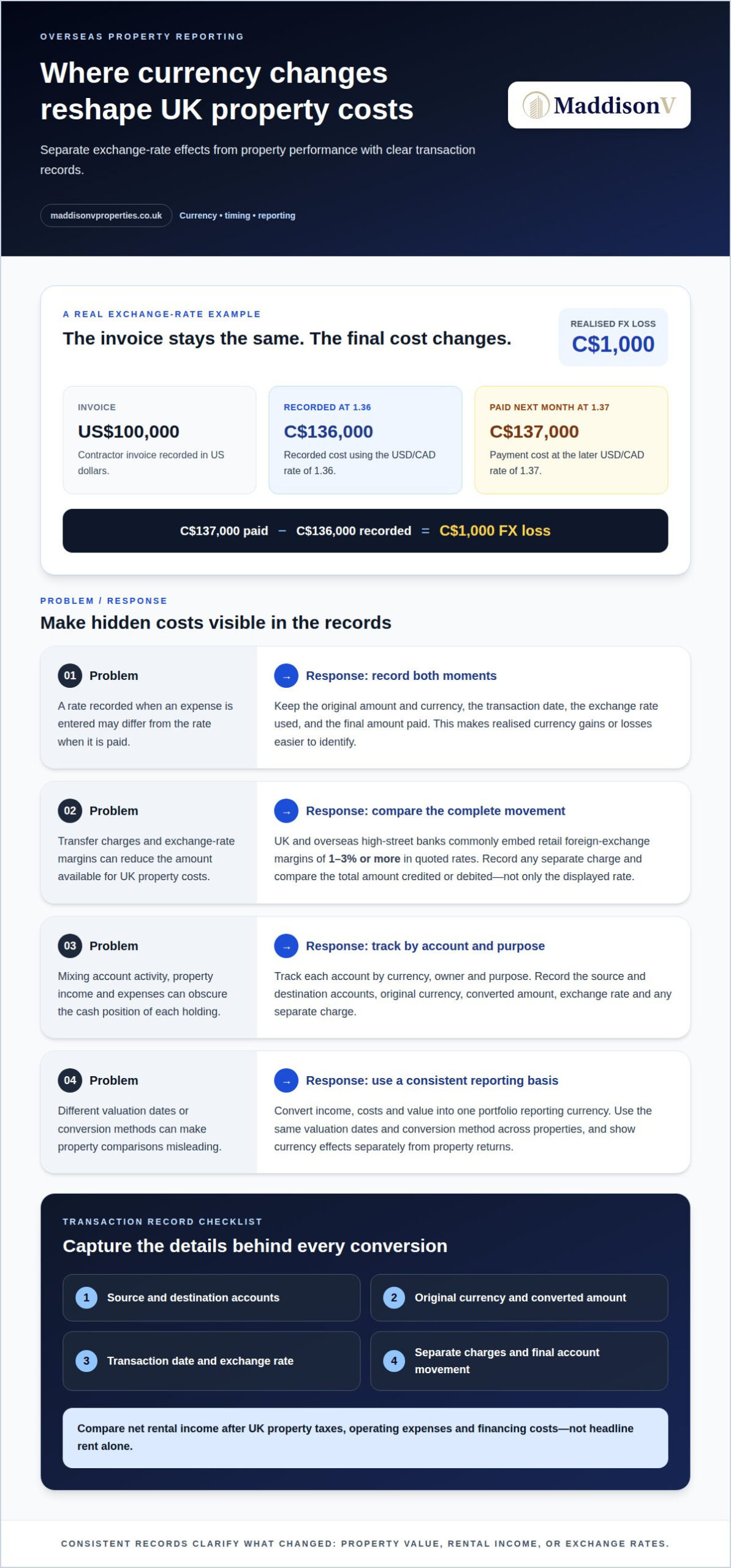
The real cost of UK property investment for overseas buyers can be hidden in the gap between recording an expense and paying it. A US$100,000 contractor invoice recorded at a USD/CAD rate of 1.36 is C$136,000; if it’s paid the following month at 1.37, the final cost is C$137,000, creating a C$1,000 realised foreign exchange loss.
It’s easy to focus on London property values and rental income while overlooking how account balances, exchange rates and payment timing affect the underlying figures. Without consistent records, currency movements can blur the difference between a property’s performance and the effect of exchange rates.
This guide explains how overseas investors can bring accounts into a clear reporting view, record conversions, value UK properties and assess how exchange-rate changes affect portfolio returns. It also covers how conversion costs and accounting treatment can shape the results, helping you evaluate your holdings with greater clarity and control.
Key Takeaways
- Keep UK property purchase documents organised to make transactions easier to review and report.
- Record purchase costs and transaction dates to distinguish the original price from later property value changes.
- Separate changes in property value from rental income to understand what is driving investment performance.
- Use consistent valuation dates and methods across properties to make comparisons and reporting clearer.
- Review rental income alongside property expenses and financing to see how they may affect returns.
What is the Real Cost of Managing UK Property Across Multiple Currencies?
For overseas owners, exchange-rate movements can affect the reported income and costs of UK property. Inconsistent records can also obscure cash balances, property performance and tax calculations. A clear system separates currency effects from changes in property value, supporting reliable UK property reporting and investment decisions.
Functional and Transaction Currencies
When managing a UK property investment from abroad, distinguish the currency used for a transaction from the currency used to assess the owner’s financial activity. Recording each transaction in its original currency and translating it consistently makes foreign expenses and realized gains or losses easier to understand. For example, a Canadian-dollar property can record a US$100,000 contractor invoice as C$136,000 at a USD/CAD rate of 1.36. If paid the following month at 1.37, it costs C$137,000, producing a C$1,000 realized foreign exchange loss. The same approach can help overseas investors track costs associated with UK property.
Portfolio Reporting Currency Choices
A portfolio reporting currency is the common currency used to present holdings and results together. Choose one that supports the owner’s financial decisions, while retaining each UK property entity’s local balances and transaction details. Useful accounting and property management tools connect local ledgers, property income and expenses, exchange-rate records and consolidated reporting. For financing, match the loan currency as closely as practical to the property’s income or available cash. Borrowing in a foreign currency can leave repayments mismatched with the owner’s income and assets, including income from UK property.
Local and Group Reporting
Local statutory reporting presents each entity’s records under the rules that apply in its jurisdiction; group reporting translates those records into a shared presentation currency. For an overseas owner, this means keeping UK property records distinct from any wider group reporting and applying a consistent conversion method. Foreign currency accounting may also be relevant when consolidating records under frameworks such as US GAAP, which is governed by ASC 830. UK property owners should also account for applicable UK tax rules. The UK annual CGT exemption is £3,000 in the 2026/27 tax year, according to HM Revenue & Customs.
Comparing UK Property Returns
To compare UK property with investments in other markets, convert income, costs and value into the same reporting currency, then apply consistent tax assumptions. Compare net rental income after UK property taxes, operating expenses and financing costs, rather than headline rents. Rental income and property taxes are governed by the rules that apply in the relevant country and ownership structure. For tax calculations, foreign purchases and sales are usually converted using the exchange rate on each transaction date, so currency movements can affect capital gains. Tax on overseas assets may also be affected by currency fluctuations and changes to tax treaties.
Use the same valuation dates and conversion method across properties, and report currency effects separately from UK property returns. This helps show whether a change came from rent, property value or exchange rates. Record the relevant country and ownership entity alongside each result’s tax assumptions. Without this consistency, an apparently stronger return from UK property may reflect a different conversion basis rather than better property performance. For corporate occupiers managing real estate across multiple jurisdictions, commercial advisory networks like Resolute Global can provide strategic guidance on cross-border portfolio positioning.
Tracking accounts for UK property
Track each UK property account by currency, owner and purpose, then reconcile its activity with property records. Separating rental income, operating costs and reserve cash makes London property balances easier to understand.
Cross-Border Fees and Exchange Spreads
For overseas investors, cross-border costs can include transfer charges and the difference between a provider’s exchange rate and the market rate; tracking both reveals the true cost of transferring funds for a UK property purchase or paying expenses. UK and overseas high-street banks commonly embed retail foreign-exchange margins of 1-3% or more in quoted rates. The final amount received can therefore differ from the apparent transfer amount.
For each transaction, record the source and destination accounts, original currency, converted amount, exchange rate and any separate charge. If an overseas investor transfers funds to cover London rent-related costs and a UK maintenance invoice is settled in pounds, record them as distinct transactions. This makes it possible to see how much income remained after conversion, rather than treating the exchange as one unexplained adjustment.
Compare the total amount credited or debited, not just the displayed exchange rate. Payment platforms and banks may show charges differently, so record both the quoted rate and the final account movement. This creates a useful transaction history and helps identify repeated conversions that reduce the cash available for UK property costs.
Reserves for UK Properties
Property reserves are cash set aside for insurance, maintenance and urgent repairs. Keeping them accessible for the relevant UK property can reduce delays when expenses arise. The appropriate reserve depends on each property’s condition, insurance terms, operating costs and access to funds. No single balance suits every property.
Keep a separate record for each property showing insurance payments, renewal dates, maintenance commitments and known upcoming work. For example, distinguish a scheduled building repair from an unexpected plumbing issue. This makes it clearer which funds are committed and which remain available for urgent expenses.
Show reserve balances by currency and account instead of combining them into one home-currency figure. A balance held in pounds can cover UK invoices directly, while converting it into another currency could add another spread and timing decision. Multi-currency bank accounts can support liquidity management and near-term spending, but they are not geared towards long-term growth.
Review the reserve record alongside rent receipts and paid invoices. Where a UK account funds recurring property costs, reconcile its statement against those transactions and flag unexplained movements. For an organised approach to local operations and property accounts, property management support can help keep oversight connected to each holding.
How currency movements affect investment returns
Exchange rates change the value of overseas rent, property and financing when measured in your reporting currency. A property can perform steadily in its local market yet show a different return after conversion. For owners managing a multi-currency property portfolio, separating these effects helps clarify performance.
For rental income, the effect appears when local receipts are converted or consolidated. If a property earns euros but the owner reports in pounds, a weaker euro means those receipts translate into fewer pounds, even if the rent is unchanged. The same currency movement can reduce translated costs, so net income depends on both sides of the property’s operating account.
Valuations are affected too. A property’s value in local currency may rise while its value in the owner’s currency falls if the exchange rate moves in the opposite direction. For a meaningful comparison, separate local property performance from the currency effect, then review both over the same period.
The S&P 500’s 2025 price-only return illustrates how the measurement currency changes the reported result: it returned +16.4% in US dollars, +8.3% in British pounds and +1.8% in Swiss francs. These figures describe an equity index, not property returns, but show why currency must be stated alongside every return.
Currency exposure can also affect borrowing. A loan in a foreign currency creates repayments in that currency, which may diverge from local rent or the owner’s income. If the repayment currency strengthens, the debt can cost more in the owner’s reporting currency, even if the loan balance is unchanged.
Hedging can reduce uncertainty in translated results, but it does not remove currency exposure without consequences. It replaces an uncertain currency impact with a certain one, and affects offshore returns through the interest-rate differential between currencies. That effect may either increase or reduce returns.
For foreign fixed-income investments, currency exposure should generally be hedged because exchange movements can have a greater effect than they do on foreign-equity performance. Property is different: rent, asset values, debt and future spending all shape the decision. Any hedge should reflect the portfolio’s actual cash flows rather than follow a fixed rule.
A 10% weakening of GBP against EUR sustained over 10 years can reduce the purchasing power of a GBP-denominated portfolio by 10% for retirement spending in Europe. This makes the spending currency relevant, not just the currency used for accounting.
To assess returns, report local performance, currency impact and financing effects separately. Then compare properties using the same reporting currency, valuation dates and return period. This shows whether an apparent gain came from stronger rent, property appreciation or exchange-rate movements. These distinctions are central to managing a multi-currency property portfolio with a clear view of underlying performance. For experienced real estate investors navigating these cross-border complexities, engaging with an elite peer network like The Boardroom Mastermind can offer valuable high-level discussions and strategic insights on portfolio growth.
UK property valuation and exchange rates
For an overseas buyer, a UK property valuation has two distinct components: the asset’s value in the UK market and its value after conversion into the buyer’s reporting currency. Keeping these separate helps distinguish a change in the property’s value from an exchange-rate effect. It also makes it easier to assess a London property in the context of the buyer’s finances.
Under the IAS 40 fair value model, investment property is a non-monetary asset, and its translated value uses the exchange rate on the valuation date. International Financial Reporting Standards’ foreign currency accounting is governed by IAS 21. These standards frame how UK property values and foreign exchange movements appear in reporting, so valuation dates and the relevant rate must be applied consistently.
Consider the euro reference-rate examples: the rate was 1.0389 on 31 December 2024 and 1.1750 on 31 December 2025. A UK property could retain the same sterling valuation across those dates yet produce a different translated amount in the buyer’s reporting currency. Presenting both the UK valuation and translated result shows which part changed and supports a clearer review of the investment.
For each reporting period, align the UK property valuation date with the exchange rate used to convert it. Keep the valuation, currency pair, rate date and rate source together in the property record. If a valuation date differs from the reporting close, that gap can affect the converted figure. Recording both dates makes the movement traceable rather than blending it into the property’s apparent market performance.
A consistent process can load exchange rates for each currency pair and rate type from an approved source. Apply the same documented method to each UK property, then retain the rate used for every reporting period. This creates a practical audit trail when the property is reviewed in sterling and in the buyer’s reporting currency, and helps explain differences between reports.
Valuation also matters when a UK property supports borrowing. Foreign-exchange movements can increase liabilities or reduce collateral value relative to those liabilities, potentially requiring additional collateral or liquidation. Review the converted property value alongside the debt currency and lending terms, rather than treating the valuation as an isolated figure. A reserve held in the relevant currency can also be assessed against near-term obligations.
For an overseas buyer of UK property, consistency is essential: preserve the sterling valuation, apply the exchange rate for the valuation date, and record the conversion method. This makes it easier to assess the property’s value without mistaking currency movements for changes in the UK market.
Recording UK property cash balances and currency conversions
Reliable cash reporting connects each UK property’s income and expenses to the bank balance that funds them. Record activity in its original currency, then convert it into the reporting currency using a consistent method. This lets owners distinguish property cash flow from movements caused by exchange rates.
To track UK property income, expenses and cash flow, assign each transaction to its property, account, currency and category. Record rent when received, expenses when paid, and the amount actually credited or debited. A separate reporting-currency view supports portfolio reporting without replacing the original transaction details.
For each transaction, retain the date, currency, amount, exchange rate, converted value and supporting bank or payment record. Include transfers between the owner’s accounts, but distinguish them from rental income and property expenses. This prevents an internal transfer from appearing as new income or an operating cost in the property’s results.
Cash held in a foreign-currency account is a monetary balance. Revalue open monetary balances at the month-end rate and record unrealized foreign-exchange gains or losses. For example, a euro balance can change in reporting-currency value even when no deposit or withdrawal occurs. Keep the original currency amount visible alongside its converted value.
Show interest earned on cash separately from rent and other UK property income. Record the interest currency, the account that received it and the credit date. If an account earns interest in euros while the property records are reported in pounds, both the local amount and the converted amount are useful.
At each reporting close, reconcile the ledger with the bank statement and investigate differences such as pending transfers, bank charges or timing gaps. Document exchange-rate sources and explain variances when reviewing and closing the period. This gives an auditor a clear trail from the source transaction to the reported balance and helps maintain accurate UK property records.
- Keep transaction currency and reporting-currency value together.
- Separate transfers, rent, expenses and interest.
- Revalue open monetary balances at the month-end rate.
- Retain rate sources and explanations for reporting differences.
Consistent records also help owners assess how much cash remains available for UK property obligations, rather than relying on a single converted total. If a holding supports upcoming costs, show its currency and account alongside those commitments. This makes it easier to review available cash, expected expenses and property assets together.
For support coordinating UK property records with local operations, discuss property management support as part of a considered portfolio approach.
MaddisonV Properties: London Property Portfolio Management
MaddisonV Properties provides Portfolio Management for owners seeking a coordinated view of their London property holdings and investment priorities. When overseas ownership, local operations and currency movements make oversight more complex, structured portfolio management can connect UK property decisions with the wider investment picture.
Property Management supports the day-to-day oversight of individual holdings, while Property Sourcing can help identify London opportunities that fit an investment strategy. Mortgage Consultations can also inform financing decisions, including how borrowing relates to property income and currency exposure. Each service addresses a different need, so the right starting point depends on whether your priority is existing UK properties, new acquisitions or financing.
If you’re looking for a more considered approach to your London property portfolio, contact MaddisonV Properties to discuss your priorities.
Shape your next UK property investment decision with clarity
The next step in managing a UK property portfolio is to connect financial oversight with the decisions ahead. Consider how each holding supports your objectives, which locations align with your rental and capital growth plans, and where financing or operational demands shape your plans. A clear view of these priorities can help you decide whether to retain, refine or expand your investments.
That perspective is especially valuable when a portfolio spans different UK markets. A decision about one property can affect cash flow and the balance of assets elsewhere, so assess each move within the wider strategy rather than in isolation. Keep your intended time horizon and investment objectives central to those choices.
If you’re ready to explore the right direction for your UK property holdings, contact MaddisonV Properties to discuss your portfolio. A considered conversation can help you bring your next property decision into sharper focus and move forward with purpose.
Frequently Asked Questions
What costs should overseas buyers consider when buying property in the UK?
Consider the purchase price alongside transaction and ongoing ownership costs. These may include Stamp Duty, legal and professional fees, mortgage costs, insurance, maintenance and property management. The costs that apply depend on the property and buyer’s circumstances. Prepare a budget before making an offer, and ask qualified UK legal and tax professionals to explain the costs relevant to your purchase.
Can overseas investors buy property in London?
Overseas investors can explore buying property in London, but the purchase process and financial arrangements depend on their circumstances. Before committing, consider the ownership structure, funding, legal checks and intended use of the property. A UK solicitor and other relevant advisers can explain the steps involved and help you understand the documents and obligations associated with the purchase.
How can overseas buyers manage currency risk when buying UK property?
Currency movements can affect the cost of a UK property when funds are held in another currency. Plan for the timing of payments, including the deposit and any later costs, and consider how exchange-rate changes could affect your budget. Compare available currency arrangements and their costs before making decisions. A currency specialist can explain the options, while your property adviser can help you keep purchase deadlines in view.
What UK taxes should overseas property investors consider?
UK property tax may include Stamp Duty when buying and tax on rental income or gains, depending on the circumstances. Tax treatment can depend on factors such as ownership, residence and the type of income or transaction. Keep clear records of purchase costs, rental income, expenses and any sale. Seek advice from a qualified UK tax professional about your obligations and any relevant rules in other countries.
What landlord and tenancy rules should overseas property owners check?
Before letting a UK property, check the landlord and tenancy requirements that apply to the property and its location. These may cover tenancy agreements, safety responsibilities, deposit handling, licensing and income reporting. Requirements can vary, so confirm which rules apply rather than relying on general guidance. Keep records of relevant documents, responsibilities and key dates, and consider using a UK property manager to help oversee the tenancy.
What property management services should overseas UK landlords consider?
Consider whether you need support with tenant communication, rent collection, repairs and property inspections. Compare the services, costs and reporting offered by providers, and agree who will handle urgent issues. Keep copies of statements, invoices and tenancy documents so you can monitor property income and expenses from abroad.
What reserves should overseas investors keep for UK property?
Plan for insurance, maintenance and unexpected repairs, and make sure funds can be accessed when needed. The amount depends on the property’s condition, ongoing costs and your arrangements for managing it. Review your budget when circumstances change, and keep property-related records and responsibilities organised for each investment.

Sign Up Now
Want to read more great articles and blogs subscribe to our newsletter