
Turning your home into a rental doesn’t automatically mean you need a buy-to-let mortgage. Consent to let from your mortgage lender may allow you to...

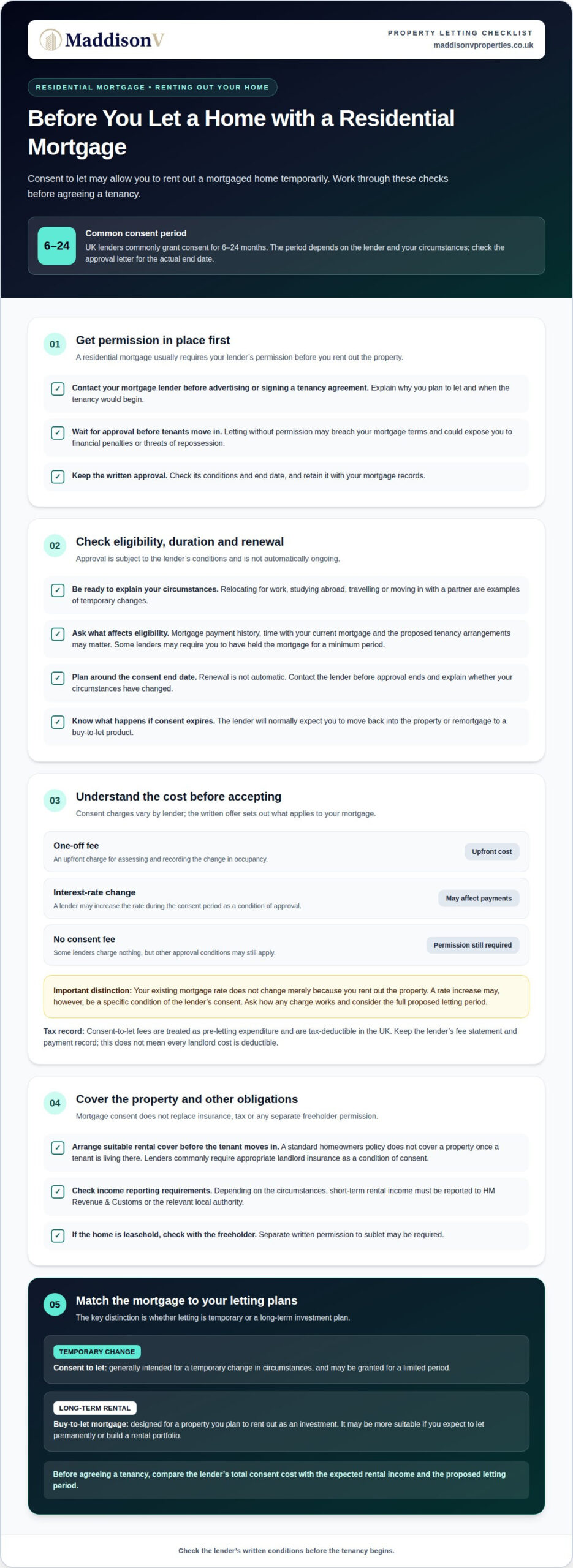
Turning your home into a rental doesn’t automatically mean you need a buy-to-let mortgage. Consent to let from your mortgage lender may allow you to rent out a home that still has a residential mortgage, usually for a limited period and subject to the lender’s conditions. Letting without permission may breach your mortgage contract, so understand the rules before agreeing to a tenancy.
If you’re relocating, studying abroad or moving in with a partner, you may be weighing a temporary let against changing mortgage products. The distinction matters: consent to let is generally intended for a change in circumstances, while a buy-to-let mortgage is designed for a property you plan to rent out as an investment.
This guide explains what consent involves, how to apply, which eligibility conditions and exemptions may matter, and how it compares with a buy-to-let mortgage. You’ll also learn what to consider when permission ends, so you can plan your next step before your circumstances or tenancy change.
Key Takeaways
- Get your lender’s written permission before letting a home with a residential mortgage, as renting without consent may breach your mortgage terms.
- Apply before agreeing a tenancy and allow time for the lender to assess your circumstances and application.
- Mortgage payment history, time with your current mortgage and the proposed tenancy arrangements can affect eligibility.
- Consider a buy-to-let mortgage if renting the property is a long-term plan rather than a temporary response to a change in circumstances.
Consent to let – can I rent out my home if I have a mortgage?
Yes, but a residential mortgage usually requires your lender’s permission before you rent out the property. Signing a tenancy agreement before consent is granted could put you in breach of your mortgage terms.
Risks of Letting Without Permission
Letting without permission means allowing tenants to occupy a mortgaged home before the lender has agreed. In the UK, this may breach your mortgage contract and expose you to financial penalties or threats of repossession. Those consequences can affect your finances and your ability to keep the property, even if you continue making mortgage payments.
Contact your lender before signing a tenancy agreement or advertising the home for rent. If you’re moving abroad for work, for example, explain the planned change in occupancy and ask what consent and conditions apply. Permission should be in place before tenants move in, not treated as paperwork to resolve afterwards.
Temporary and Long-Term Letting
Consent to let is generally intended for a temporary change, such as relocating for work, studying abroad, travelling or moving in with a partner. A buy-to-let mortgage is designed for a property you intend to rent out as an investment. The distinction matters because a lender may grant consent for a limited period rather than approve ongoing rental use.
If you expect to let the home permanently or build a rental portfolio, a buy-to-let mortgage may be more suitable than relying on temporary consent. Some lenders may require you to have held your existing residential mortgage for a minimum period before granting permission. Your reason for letting, mortgage history and plans for the property can all affect the options available.
Consent Duration and Renewal
UK lenders commonly grant consent for 6-24 months, depending on the lender and your circumstances. Some offer permission in shorter periods, while others may allow it to run until the end of a fixed-term mortgage. The approval letter sets the relevant end date and conditions, so use those terms to plan your tenancy.
Consent may be renewed, but an extension isn’t automatic. Contact your lender before the current approval ends and explain whether your circumstances have changed. If permission expires, the lender will normally expect you to move back into the property or remortgage to a buy-to-let product. Don’t misrepresent who occupies the home to avoid a renewal decision.
Insurance and Tax Implications
Renting can change the insurance cover your property needs. A standard homeowners policy doesn’t cover a property once a tenant is living there, so arrange landlord or rental-dwelling insurance before the tenant moves in. Lenders commonly require appropriate landlord insurance as a condition of consent, making cover a practical part of planning the tenancy.
Rental income can also create reporting obligations. Depending on the circumstances, short-term rental income must be reported to HM Revenue & Customs or the relevant local authority. Tell your lender about the letting and ask how its insurance requirements apply. Mortgage consent doesn’t replace insurance or tax obligations. For leasehold homes, the freeholder may separately require written permission to sublet.
Consent to let fees and exemptions
Consent charges vary by lender. Approval may involve a fee, an interest-rate change or no charge. Treat the lender’s written offer as the definitive record of what applies to your mortgage. A fee-free decision doesn’t remove the need for permission before renting; letting without approval may still breach your mortgage terms.
This may be a one-off cost for assessing and recording the change in occupancy. The lender may instead increase the mortgage interest rate during the consent period, or charge nothing. There isn’t one standard fee or universal exemption across lenders.
Ask how any charge works before accepting approval. A one-off fee and a higher interest rate affect your finances differently: the fee is an upfront cost, while a rate increase can affect payments throughout the consent period. If your lender offers approval with a revised rate, consider the full period you expect to rent, not just the initial administration cost.
Your existing mortgage interest rate doesn’t change merely because you rent out the property. However, a lender may make an interest-rate increase part of its consent terms. Read the approval carefully to distinguish a change caused by renting from a specific condition attached to permission. If the terms are unclear, ask the lender to explain the cost structure before proceeding.
Some lenders charge no consent fee, which is the clearest fee exemption. That doesn’t necessarily mean every part of the mortgage remains unchanged: approval conditions may still include a rate adjustment or other requirements. A no-fee decision also isn’t permission to rent without applying. Keep the written approval with your mortgage records, including its conditions and the period it covers.
Consent-to-let fees are treated as pre-letting expenditure and are tax-deductible in the UK. Keep the lender’s fee statement and payment record alongside documents for your rental income. This treatment concerns the consent fee, not every cost associated with being a landlord; don’t assume it makes all rental expenses deductible.
Before agreeing to a tenancy, compare the lender’s total consent cost with the expected rental income and the proposed letting period. Include any stated interest-rate change in that calculation. A Mortgage Consultation can help you understand how lender terms fit your property plans and financing options.
Applying directly to a mortgage lender
Apply to the lender that holds your residential mortgage, using its consent process. Explain how you plan to let, when the tenancy would begin and why you’re renting.
The Application Process
Applying directly means asking your current lender to approve the change from owner-occupation to renting. Make the request before signing a tenancy agreement, so the mortgage contract and proposed letting stay aligned. If you plan to rent in about a month, contact the lender promptly to allow time for its review and any follow-up.
Use the lender’s stated application channel and explain your circumstances clearly. Include the property address, mortgage account details, intended letting date, expected duration and reason for moving. If you’re relocating abroad for work, for example, describe the move and whether you expect to return. Keep a copy of your request and the lender’s written response.
Ask the lender to set out its decision in writing, including any conditions that affect your rental plans. Approval may specify a permitted term, an interest-rate change or requirements for the tenancy. Don’t treat a telephone conversation as final permission; wait for written confirmation before tenants occupy the property.
Supporting Evidence
Supporting evidence gives the lender context for its decision and helps it assess the proposed letting. The exact documents vary, so follow the lender’s application instructions rather than assuming every case needs the same pack. A clear explanation of your reason and expected timeline can make the request easier to assess.
Prepare relevant details about your circumstances, such as an employer’s relocation information if work is taking you abroad. Include proposed tenancy details when available, such as the intended start date and whether you expect a fixed or continuing arrangement. The lender may also ask about your mortgage payment history or the property’s occupancy.
Some UK lenders expect a formal tenancy agreement and appropriate landlord insurance as conditions of consent. If the agreement isn’t ready when you apply, explain when you expect to provide it. Don’t present a draft as an executed contract, and don’t arrange tenant occupation before permission and required cover are in place.
Before submitting, make sure the purpose and timing are consistent across your application and supporting documents. A request for temporary consent should explain the temporary change, while a plan to rent indefinitely may point towards a buy-to-let mortgage. If the lender requests further evidence, provide documents that address the specific question and keep copies with your mortgage records.
Lender eligibility conditions
Eligibility for consent to let depends on your mortgage account, property and reason for renting it out. Lenders set their own criteria, so meeting one condition doesn’t guarantee approval. Reviewing the main factors before applying can help you identify gaps and explain your plans clearly.
Mortgage payment record: lenders commonly expect no mortgage arrears or missed payments. A clean repayment history can support your application, while missed payments may affect the decision. If your account has had payment difficulties, explain the circumstances accurately and include any relevant details requested by the lender.
Time with your current mortgage: some lenders require you to have held the residential mortgage for a minimum period, often six months. Others may apply a longer waiting period, with some requiring 6-12 months before considering consent. If you recently completed a purchase or remortgage, the start date of that mortgage may matter.
Equity in the property: some lenders may expect around 25% equity in your home. Equity is the difference between the property’s value and the outstanding mortgage balance. For example, a lender may assess the current loan against its view of the home’s value, alongside your payment history and reason for letting. This is a possible criterion, not a universal threshold.
Reason and duration: lenders may distinguish a temporary change, such as moving abroad for work, from a plan to rent out your home permanently. Explain why you’ll be away, how long you expect the letting to last and whether you intend to return. A long-term rental plan may point towards a buy-to-let mortgage rather than temporary consent.
Tenancy and insurance: UK lenders commonly require a formal tenancy agreement and appropriate landlord insurance. The agreement should reflect the letting described in your application. If you intend to share the property with a lodger rather than rent it to tenants, describe the arrangement accurately; occupancy details can affect how the lender assesses your request.
Property and ownership terms: a lender may consider whether the home is suitable for the proposed tenancy and whether the mortgage contract permits the arrangement. With shared ownership, separate terms may govern subletting. For a leasehold home, the freeholder may require written permission independently of lender consent.
Build your application around these criteria: confirm the mortgage start date, state your reason and proposed letting period, and provide the tenancy and insurance details requested. The lender’s decision reflects its own conditions and your circumstances, so approval for one residential mortgage shouldn’t be treated as a precedent for another.
Consent to let compared with buy-to-let mortgages
Choose between consent to let and a buy-to-let mortgage by considering why you’re renting, how long you expect to let and what your lender permits. Consent keeps an existing residential mortgage in place for an approved change in circumstances. A buy-to-let mortgage is intended for property owners arranging a rental investment.
Consent to let may suit a temporary move, such as relocating for work or moving in with a partner. You retain your residential mortgage, but the lender’s approval applies to the letting arrangement and its stated conditions. If you expect to return after working abroad, for example, temporary consent may fit better than changing to an investment mortgage.
A buy-to-let mortgage may be more appropriate if renting is the property’s long-term purpose. It is structured for a landlord earning rental income, rather than an owner letting because personal circumstances have temporarily changed. If you plan to keep the property rented after a consent period ends, a buy-to-let mortgage can provide a route designed for continuing letting.
The financial requirements can differ. A UK buy-to-let mortgage usually requires a deposit of 25% or more of the property’s value. Lenders may also assess expected rent and the borrower’s ability to meet the mortgage payments. By contrast, consent to let concerns permission to rent under your existing mortgage contract, and the lender sets the conditions for that approval.
Consider the tenancy you intend to offer before choosing a route. A temporary tenancy during a work assignment may align with a short-term change in ownership plans. A continuing tenancy, or a decision to acquire more rental properties, points towards a longer-term investment strategy. Your expected rental income, mortgage balance, available deposit and future plans all shape the comparison.
Moving from consent to let to buy-to-let can involve a remortgage, so consider the timing alongside any fixed-rate period. If a fixed mortgage deal is nearing its end while you plan to keep renting, for instance, that may be a natural time to assess a longer-term product. Don’t assume temporary consent automatically converts into buy-to-let borrowing.
The practical distinction is purpose: temporary letting often starts with consent, while sustained rental investment generally calls for buy-to-let finance. A mortgage consultation can help you consider the financing route against your property plans and circumstances.
MaddisonV Properties: Mortgage Consultations
MaddisonV Properties offers Mortgage Consultation to help you assess mortgage options when temporary letting may become a longer-term investment plan. The discussion can focus on your existing mortgage terms, the lender’s consent conditions and whether a buy-to-let mortgage better fits your plans.
Bring the lender’s written decision, any proposed rate changes and your expected letting period to the discussion. This provides a clearer basis for weighing the financing route alongside your property plans. If you proceed with a rental, Property Management can support the ongoing oversight of the home.
For a considered discussion of your mortgage options, contact MaddisonV Properties.
Make your next property decision with clarity
A change in occupancy can reshape your plans for a home, so treat the decision as part of a broader property strategy. Before seeking consent to let from your mortgage lender, consider how renting fits your future: is it a temporary response to changing circumstances, or the beginning of a longer-term investment?
That distinction can influence whether you retain the property, move into a different mortgage arrangement or explore another investment. If your plans extend to acquiring another property, MaddisonV Properties’ Property Sourcing can support the next stage of your search. A considered approach keeps financing decisions connected to your wider objectives, rather than treating each property choice in isolation.
Every letting decision has its own context, from your plans for the home to the lender’s terms. Take time to weigh the options and choose a route that supports your next move.
Contact MaddisonV Properties today to discuss your property plans and take the next step with confidence.
Frequently Asked Questions
What is consent to let?
Consent to let is a mortgage lender’s permission for you to rent out a home financed with a residential mortgage. It can suit a temporary change, such as relocating for work or studying abroad, while you retain your existing mortgage. The lender sets the approval conditions, which may cover the permitted letting period, tenancy arrangements, insurance and any interest-rate change. It doesn’t automatically convert your loan into a buy-to-let mortgage.
Can my lender call the loan if I rent it out?
Renting without the lender’s consent may breach your mortgage contract and expose you to financial penalties or threats of repossession. That doesn’t mean every lender will immediately demand repayment, but ignoring the occupancy terms can put your home and finances at risk. Continue making payments while tenants occupy the property, but don’t treat payment history as a substitute for permission. Contact the lender before letting begins.
Can you let your property to friends and family?
You may be able to let your property to friends or family, but the relationship doesn’t automatically exempt you from mortgage conditions. If they’ll pay rent or occupy the home under a tenancy agreement, explain the arrangement to the lender before they move in. A relative staying while you work abroad may be treated differently from a friend renting the property, for example. The occupancy details and lender’s terms matter.
Do I need consent to let if I already have a residential mortgage?
Usually, yes. A residential mortgage is generally based on the owner living in the property, so renting it out can change the occupancy arrangement covered by your contract. Apply for consent to let from your mortgage lender before agreeing a tenancy or allowing a tenant to move in. If the property is leasehold, the freeholder may also require written permission to sublet, separate from the lender’s approval.
Does renting out my house change my mortgage interest rate?
Your existing mortgage interest rate doesn’t change solely because you rent out the property. However, a lender may make a rate increase or fee a condition of consent to let, so read the approval terms carefully. Distinguish a one-off administration charge from an ongoing rate adjustment. Ask the lender to explain how any change affects your payments and when it would start.
How do I apply?
Apply directly to the lender that holds your mortgage before tenants occupy the property. Explain why you need to let, when the tenancy is expected to begin and how long you expect it to last. Have your mortgage account details and proposed tenancy information ready. The lender may request supporting evidence, such as details about a work relocation, and may require landlord insurance or a formal tenancy agreement.
What fees do I need to pay?
Consent-to-let charges depend on the lender. Ask whether a quoted amount is a one-off charge or whether the rate change continues during the consent period. Consent fees are treated as pre-letting expenditure and are tax-deductible in the UK; retain the lender’s fee record for your accounts.
What is the difference between consent to let and a buy-to-let mortgage?
Consent to let usually accommodates a temporary change while you keep your residential mortgage. A buy-to-let mortgage is designed for a property intended as a rental investment, particularly where letting will continue long term. For instance, an owner moving abroad temporarily may seek consent, while someone building a rental portfolio may consider buy-to-let finance. A UK buy-to-let mortgage usually requires a deposit of 25% or more of the property’s value.

Sign Up Now
Want to read more great articles and blogs subscribe to our newsletter