
The practical question is how to build a 1 million pound property portfolio through rental cash flow: select properties with sound income potential,...

The practical question is how to build a 1 million pound property portfolio through rental cash flow: select properties with sound income potential, finance them carefully and reinvest profits with a clear plan.
It’s understandable to focus on the headline value, but portfolio growth depends on more than property prices. Rental performance, financing costs, running expenses and available equity all shape whether a portfolio can grow sustainably. Cash flow can support the next purchase, while careful debt management helps keep the strategy resilient.
This guide covers how to set a realistic investment objective, assess financing and property opportunities, improve rental performance, and track the measures that matter.
Key Takeaways
- Set a clear investment objective and assess how financing costs, available equity and debt risk affect your growth plan.
- Improve rental performance by managing operating costs, occupancy and tenant processes, then reinvest suitable profits strategically.
- Compare cash flow, cap rate, return on investment and loan-to-value to assess a property’s performance and financing exposure.
- Research local rental demand, vacancy patterns, property values and regulations before choosing a market or property.
- Track property equity alongside income and expenses to understand your portfolio’s net worth and make informed decisions about its next stage.
Financing portfolio growth
Finance can help you acquire property sooner, but repayments also affect cash flow. Build your plan around clear goals, evidence of affordability and a lending structure that can withstand changing costs.
-
Set Financial Goals
Decide whether your priority is rental income, long-term capital appreciation or a considered combination. These measures differ because mortgage debt reduces the equity you own. Set a growth sequence, such as putting surplus rental income towards a future deposit, and assess whether each purchase supports your objective rather than simply increasing the portfolio’s value.
Keep your target aligned with your investment horizon and cash reserves. An income-focused portfolio needs properties that can cover operating costs and mortgage payments; an appreciation-led strategy may require a different balance. Don’t treat projected rent or future price growth as guaranteed funds for your next purchase.
-
Prepare Finances and Build a Mortgage Track Record
Review your income, existing commitments, savings and the costs of owning a rental property before applying for finance. Lenders assess affordability and a property’s rental prospects, so organise your financial records and present a clear picture of income and obligations. A record of managing credit and meeting payments can support an application, although each lender applies its own criteria.
UK buy-to-let mortgage rates and loan-to-value limits vary by lender, product, borrower and property. There is no single rate or limit for every investor. Changes in interest rates can affect financing costs and returns, so test whether rental income could still cover payments if borrowing costs rise.
-
Use Financing and Leverage
Borrowing can expand your purchasing power, but assess repayments against realistic rental income and operating costs. Equity released from an existing property may contribute towards another deposit. Portfolio loans or debt-service coverage ratio loans may suit some growth plans. Mortgage consultations can help clarify available structures and their implications before you commit.
Assess each purchase on its ability to support debt. Compare expected income with mortgage payments, maintenance costs and periods without rent. Partnerships or private lending may offer alternative capital, but create obligations that need clear terms. Don’t take on more debt simply to acquire properties faster.
-
Plan Reinvestment and Tax Considerations
Direct suitable rental surpluses towards reserves first, then consider whether reinvesting them could fund another deposit or improve an existing property. A practical sequence is to retain cash for costs, review performance, and only then allocate available funds to growth. This bases reinvestment on actual income rather than optimistic projections.
In the UK, Stamp Duty relates to property purchases, income tax to rental income, Capital Gains Tax to gains on disposal, and corporation tax to company profits. The applicable treatment depends on ownership and transaction details. Account for these tax considerations when estimating cash available for reinvestment, alongside mortgage costs and property expenses.
Improving rental property performance and cash flow
Rental cash flow depends on managing income, occupancy and operating costs together. Consistent buying standards, deliberate improvements and a clear reinvestment process can support each subsequent acquisition.
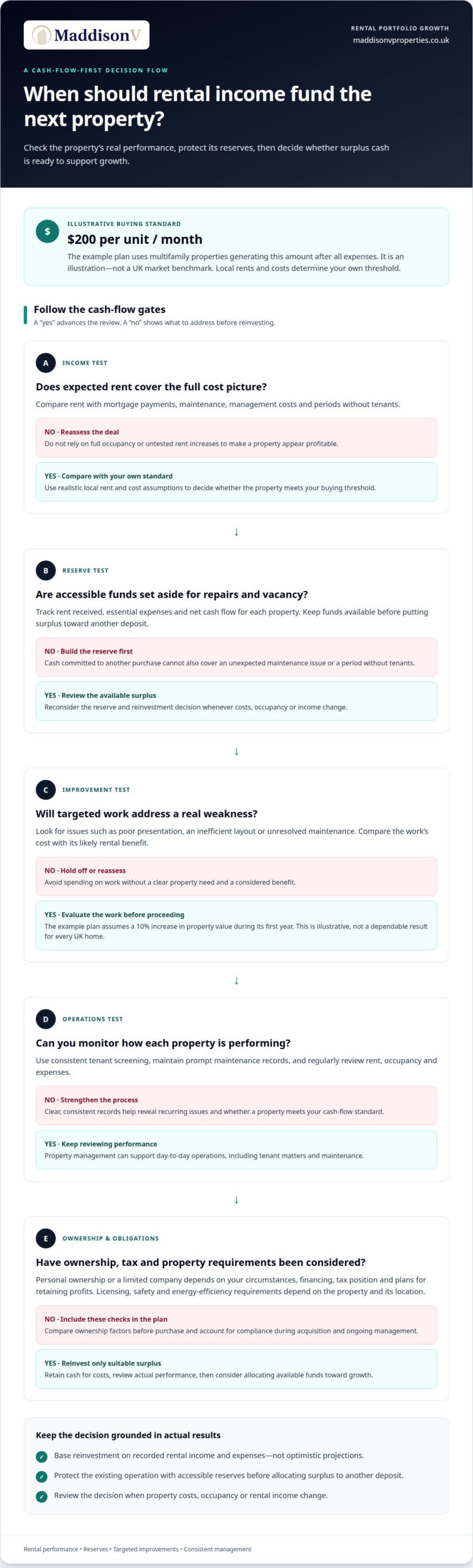
- Set a cash-flow standard before buying. Assess expected rent against mortgage payments, maintenance, management costs and periods without tenants. The example plan uses multifamily properties generating $200 per unit per month after all expenses as its buying standard. Treat that as an illustration, not a UK market benchmark; local rents and costs determine whether a property meets your own threshold. Reject deals that rely on full occupancy or untested rent increases to appear profitable.
- Build a reserve before reinvesting rental income. Record rent received, essential expenses and net cash flow for each property. Keep enough accessible funds for repairs and vacancy periods before putting surplus towards a future deposit. This protects the existing rental operation: money committed to another purchase cannot also cover an unexpected maintenance issue. Review your reserve and reinvestment decision when costs, occupancy or income change.
- Improve performance through targeted work. Identify changes that address a property’s actual weaknesses, such as poor presentation, inefficient layouts or unresolved maintenance. The example plan assumes improvements can increase a property’s value by 10% during its first year, but that is an illustrative assumption, not a dependable result for every UK home. Compare the cost and likely rental benefit of each improvement before proceeding.
- Standardise operations across properties. Use consistent tenant screening, keep prompt maintenance records, and review rent, occupancy and expenses regularly. These routines make recurring issues easier to spot as your portfolio grows. Property management can help with day-to-day operations, including tenant matters and maintenance. Clear reporting also shows whether each property meets the cash-flow standard you set for purchases.
- Choose an ownership structure and meet property obligations. Buying personally or through a limited company depends on your circumstances, financing, tax position and plans for retaining profits. Compare these factors before purchasing, as the structure affects administration and financial outcomes. UK rental licensing, safety and energy-efficiency requirements depend on the property and its location. Include compliance checks in acquisition and ongoing management rather than treating them as optional upgrades.
- Use proven performance to plan the next acquisition. Once rental income, costs and occupancy are recorded, assess whether retained surplus can contribute towards another deposit. Reinvest only after accounting for reserves and the new property’s expected operating costs. A property management service can support consistent oversight as the number of rental properties grows, helping keep maintenance, tenant processes and portfolio records organised.
Analyzing cap rate, cash flow, ROI, and LTV
Compare property opportunities using four measures: cap rate, cash flow, return on investment (ROI) and loan-to-value (LTV). Together, they help you assess operating performance, potential profit and borrowing exposure before committing.
- Calculate cap rate to compare operating performance. Divide a property’s annual net operating income by its value, then express the result as a percentage. Net operating income accounts for operating expenses but excludes mortgage payments, so cap rate helps compare properties before financing. For a UK rental, use realistic rent and costs, including maintenance and periods without tenants. A higher cap rate alone doesn’t establish that a property is suitable: tenant demand, condition and financing also matter.
Apply the same method to each potential purchase. Consistent assumptions make comparisons meaningful; optimistic rent estimates or omitted expenses can make an attractive figure misleading.
- Model cash flow after property expenses and debt. Start with rental income, subtract operating costs, then account for mortgage payments to estimate what remains. Review the result across different occupancy and financing scenarios rather than assuming full occupancy every month. Cash flow shows whether rental income can cover ongoing costs and leave funds for reserves or future investment.
The plan’s year-seven example projects an apartment property generating $57,000 USD per year in passive income. Treat this as an illustration, not a UK forecast. For your own property, calculate income and expenses using its specific rent, costs and loan terms.
- Measure ROI against the cash you invest. Compare the return generated with the money committed, including the deposit and relevant purchase or improvement costs. Specify whether you’re measuring rental income, value change or both. This distinction matters: a property may produce modest cash flow while its equity changes, or the reverse. It also shows how financing affects the amount invested and therefore the ROI calculation.
- Check LTV and equity before scaling. Calculate loan-to-value by dividing the mortgage balance by the property value. A higher LTV means more borrowing relative to the asset’s value, so review repayments alongside cash-flow resilience. The figures illustrate how purchase price, debt and equity relate; they aren’t UK lending terms. Assess each property and its rental income before expanding.
Choosing a property and researching its market
Use evidence about demand, value and local conditions to select locations and properties. Research every purchase carefully: a discounted price alone doesn’t establish investment quality.
-
Research Local Markets
Compare local property values, rental demand, vacancy rates and economic conditions before buying. Consider how these factors differ between neighbourhoods, not just between cities. Secondary and tertiary markets may have lower entry points and potentially higher returns than primary cities, but local demand still matters. Consider whether employment, transport and amenities support the tenant market you intend to serve.
Apply the same criteria across locations. Attractive asking prices can mask weak rental demand or higher vacancy, affecting income prospects and the pace at which an investment may build wealth.
-
Identify Below-Market-Value Properties
Compare a property’s asking price with similar local properties, then investigate why it may be priced lower. The example plan assumes each property can be bought for 80% of its normal value. Treat this as an illustrative plan assumption, not a typical discount or guaranteed opportunity in the UK market.
Before buying, assess the property’s condition, required work and likely rental appeal. A lower price may reflect issues that take time or money to resolve. Use property inspections and market analysis to distinguish genuine value from costs that could erode the expected advantage.
- Match the property to the investment plan. Decide whether a smaller property or a multi-unit building better fits your objectives, available finance and capacity to manage tenants. The plan advises considering buildings with 2 to 4 units as one way to scale. Compare each unit’s rental prospects and condition rather than assuming multiple units automatically mean stronger returns.
- Test local evidence against the specific property. Consider comparable properties, achievable rents, vacancy patterns and the wider economic landscape together. A property may look affordable, for example, but weak tenant demand could mean longer periods without rent. Assess the specific street and property type, as broad city-level trends can hide important local differences.
- Complete practical checks before committing. Arrange a property inspection and review applicable local regulations and zoning considerations. These checks can reveal physical or use-related issues that affect suitability. Involve relevant professionals when their expertise can help assess condition, legal obligations or market assumptions. Base your decision on the full evidence, not the headline discount.
Portfolio equity and net-worth calculations
Track property value, mortgage debt and equity separately to understand your portfolio’s position. The number of properties needed to reach a target depends on their values and borrowing, not on a fixed property count.
-
Use Equity and Refinancing
Calculate equity by subtracting the outstanding mortgage balance from a property’s current value. Add the equity across your holdings, then subtract other relevant liabilities to estimate net worth. Refinancing may release capital for another purchase, but it also increases borrowing and repayments. Before using released equity, compare the proposed loan with rental income, costs and your ability to manage higher debt.
Base valuation assumptions on local market evidence. A higher estimate on paper doesn’t create spendable capital unless a lender accepts the valuation and agrees to the borrowing.
-
Estimate the Property Count Needed
Work backwards from your target by estimating the value of each property you might acquire. The plan states that investors don’t need to own 100 properties to be successful; the right number depends on property values, debt and investment objectives.
Distinguish gross portfolio value from net worth. Track both figures to understand the capital you actually hold.
- Account for downside and seller circumstances. Falling values can reduce equity, while selling costs and mortgage balances affect the proceeds available. This is why the purchase price alone doesn’t determine the outcome.
A seller’s circumstances can shape a transaction, but a motivated sale doesn’t automatically make a property good value. Assess its condition, local demand and price against comparable homes rather than relying on a discount to build wealth.
- Review net worth at each portfolio milestone. Record property values, mortgage balances and available equity consistently, then compare changes over time. The illustrative plan estimates total net worth of $744,800 USD at the end of year seven, before its final trade-up. Its final apartment purchase produces $1,300,000 USD in net worth from property equity. These are plan-specific examples, not forecasts for a UK investor.
For an orderly review as holdings grow, discuss portfolio management focused on tracking assets, debt and equity together.
MaddisonV Properties: Portfolio Management
MaddisonV Properties provides Portfolio Management for investors seeking a coordinated view of property performance, equity and growth decisions. As holdings expand, consolidated oversight can bring rental income, operating costs and financing considerations into clearer focus.
Investors preparing to acquire another property can use Property Sourcing to identify opportunities aligned with their objectives, or Mortgage Consultations to discuss financing. Property Management supports the day-to-day operation of rental assets, including tenant matters and maintenance. These services can be particularly useful when handling each decision separately starts to take time away from reviewing the portfolio as a whole.
For a considered discussion of your portfolio goals and the support that suits them, contact MaddisonV Properties.
Shape your next investment decision
Building a substantial property portfolio is a sequence of decisions, not a race to acquire the next asset. Adapt your strategy as rental performance, financing conditions and priorities evolve. Before each purchase, ask whether it strengthens the portfolio you want to hold, not simply whether it increases its headline value.
If you’re considering how to build a 1 million pound property portfolio, a clear next step is to turn your objectives into a practical investment plan. MaddisonV Properties can help you consider property opportunities and the management needs of a growing portfolio. A focused conversation can help bring your priorities and possible next steps into sharper view.
Discuss your property investment plans with MaddisonV Properties, and take the next step with clarity and confidence.
Frequently Asked Questions
Is This Possible?
If you’re considering how to build a 1 million pound property portfolio, first decide whether your target means gross property value or your equity. Then assess each proposed purchase against income, costs and borrowing. The pace depends on your capital, lending access and investment decisions.
Equity is the value remaining after secured borrowing is deducted. State which measure you’re tracking, especially when comparing progress or planning a sale.
There’s no single starting-capital figure because deposits depend on purchase prices and mortgage terms. In the property context covered here, a typical buy-to-let deposit is around 30%. For anyone planning how to build a 1 million pound property portfolio, starting capital must also account for purchase-related expenses, immediate work and reserves for vacancies or repairs. Estimate those needs for each property, then consider how much accessible cash remains after completion.
What rental yield and cash flow can UK buy-to-let properties generate?
Rental yield and cash flow vary with local rent, property value, borrowing costs, occupancy and operating expenses. Yield compares rental income with a property’s value; cash flow shows what remains after costs and mortgage payments. Assess both: an appealing gross yield may leave limited cash after expenses. For a useful comparison, apply consistent assumptions to each candidate and model periods without rent.
Which UK locations offer the best rental yields and property growth?
No location leads on both measures for every investment strategy. Secondary and tertiary markets may offer lower entry points and potentially higher returns than primary cities, while local demand and economic conditions shape each property’s prospects. Compare rental demand, vacancy rates, property values and economic conditions in the specific area. The best fit is the location whose income potential and growth prospects align with your investment priorities.
What are the main risks of building a leveraged property portfolio, including vacancies, repairs, and interest-rate rises?
Leverage magnifies the impact of lower rental income, unexpected repairs and higher borrowing costs. During a vacancy, rent falls while mortgage and operating costs continue; urgent maintenance can divert funds from planned investment. Interest-rate changes can also affect repayments and returns. Keep reserves separate from deposit money, review each property’s performance regularly, and don’t rely on uninterrupted occupancy or unchanged financing costs.
What are current UK buy-to-let mortgage rates, loan-to-value limits, and lending criteria?
Rates and loan-to-value limits vary by lender, product, borrower and property. Lenders assess affordability and rental prospects. Review your income, commitments, savings and ownership costs, and test whether rent could cover payments if borrowing costs rise.

Sign Up Now
Want to read more great articles and blogs subscribe to our newsletter