A well-run building depends on the details being handled before they disrupt daily life. Facilities management in Brixton brings property upkeep,...

A well-run building depends on the details being handled before they disrupt daily life. Facilities management in Brixton brings property upkeep, heating and cooling, building automation and emergency support into a coordinated approach for homes and businesses.
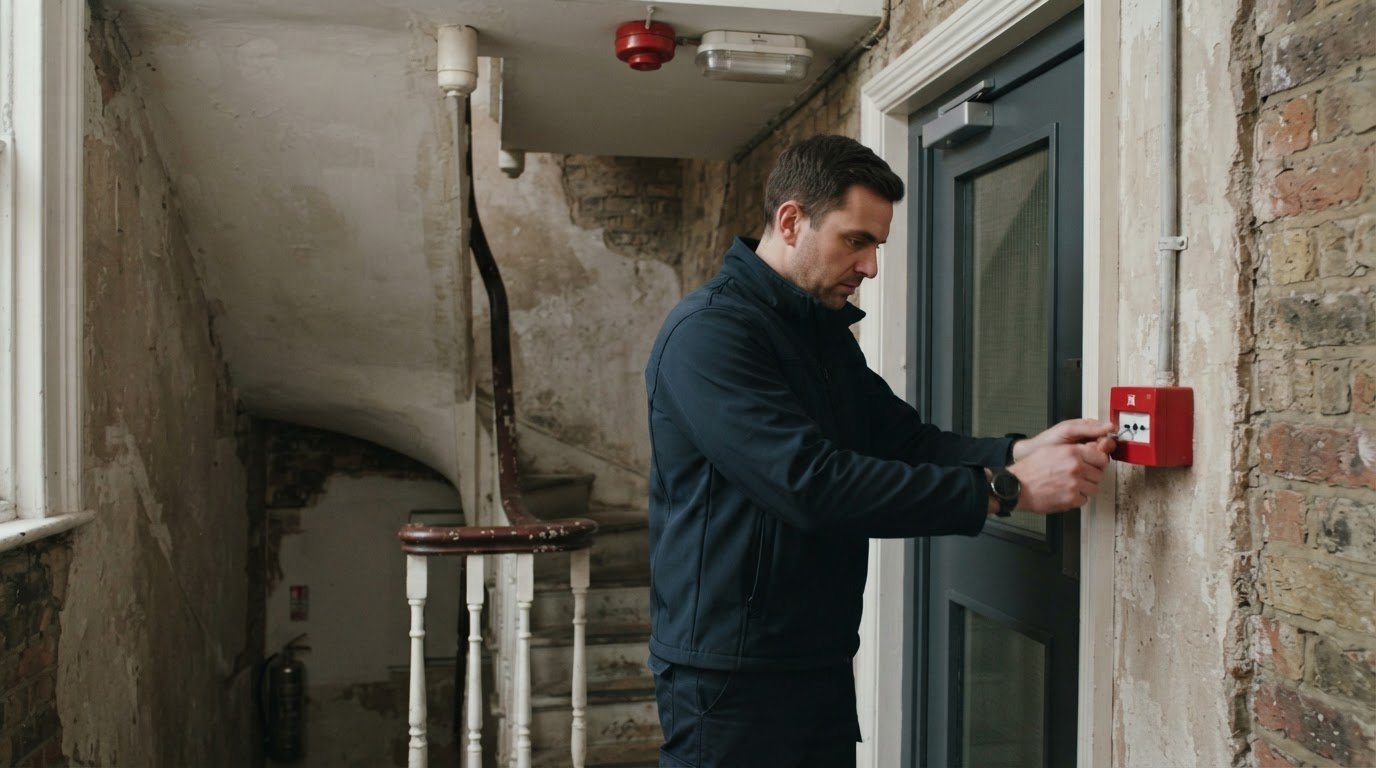
Whether you’re responsible for a private residence, a rental property or a business premises, you need more than occasional repairs. Regular inspections, including weekly fire alarm tests and emergency lighting inspections, help keep essential building routines in view.
This guide explains what facilities management can cover, how responsibilities differ for landlords, managing agents and businesses, and which factors shape a practical plan. You’ll also learn how to think about service costs and provider fit, so you can make a considered decision for your Brixton property.
Key Takeaways
- Set the facilities plan around the building’s use, condition and occupants, with clear priorities for routine upkeep and repairs.
- Consider boilers, chillers, HVAC and building automation as connected parts of the property, so issues can be assessed in context.
- Review heating, ventilation and cooling together to support comfortable, functional indoor spaces throughout the year.
- Define how urgent building problems are reported, prioritised and followed through to reduce uncertainty when disruption occurs.
- Clarify responsibilities between landlords, managing agents and businesses, and keep inspection findings and next steps easy to track.
Tailored facilities management for residential and commercial properties
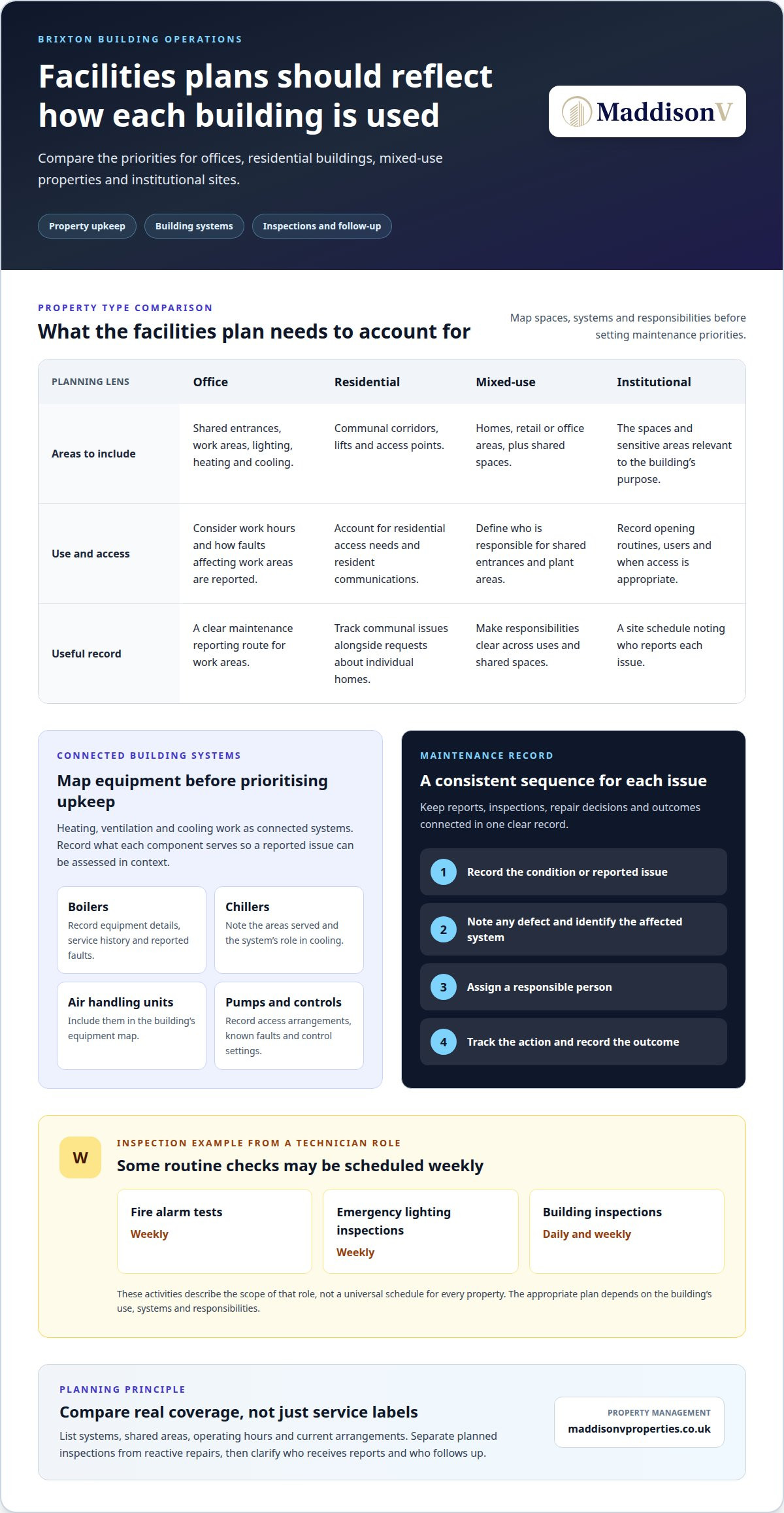
A Brixton building’s facilities plan should reflect how people use it, from office hours to residential access needs. Start by mapping its spaces, systems and responsibilities, then prioritise maintenance around day-to-day operations.
Property types served
Office facilities management may cover shared entrances, work areas, lighting, heating and cooling, alongside clear maintenance reporting. In residential buildings, priorities can include communal corridors, lifts, access points and resident communications. Mixed-use properties need both approaches, with responsibilities clearly defined for homes, retail or office areas, and shared spaces.
Institutional properties also need plans that reflect their purpose. A school, clinic or community building may have specific opening routines, users and sensitive areas. Record these details in a site schedule, along with who reports each issue. This gives maintenance teams a practical guide to where attention is needed and when access is appropriate.
Integrated multifamily asset and property management
Managing a multi-unit residential building means connecting building operations with the condition and use of individual homes. A reported leak, for example, may affect an apartment, a shared corridor and building services. Track each impact rather than treating the complaint in isolation. A single maintenance log can link the report, inspection, repair decision and follow-up.
For a portfolio with several Brixton properties, use a consistent record for each address while keeping its individual needs visible. Include equipment details, inspection findings, recurring issues and outstanding work. Comparing records helps owners and managing agents identify repeat faults, plan maintenance and distinguish a one-off repair from a wider building concern.
Inspections and service planning
Routine inspections turn general upkeep into a defined process. A facilities management technician role in Brixton includes daily and weekly building inspections, weekly fire alarm tests and weekly emergency lighting inspections. These activities describe the scope of that role, not a universal schedule for every property. The appropriate plan depends on the building’s use, systems and responsibilities.
Across sites, a clear sequence helps staff act consistently: record the condition, note any defect, assign a responsible person and track the outcome. One local technician role involves work across various sites five days a week, illustrating why accurate handovers matter. For a building in SW9 6DE, site-specific records can help ensure that outstanding actions remain visible between visits.
Choosing the management approach
Before agreeing a scope, list the property’s systems, shared areas, operating hours and current maintenance arrangements. Separate planned inspections from reactive repairs, then identify who receives reports from residents, employees or other building users. This makes it easier to compare proposals by their actual coverage and responsibilities, not just service labels.
For an office, this may mean a clear way to report faults affecting work areas. For a residential block, it may mean tracking communal issues alongside requests relating to individual homes. In a mixed-use building, specify how shared entrances and plant areas are handled. A tailored facilities plan gives owners and managing agents a structured view of routine tasks, building concerns and follow-up.
HVAC, boilers, chillers, and building automation
Heating, ventilation and cooling work as connected systems, not as isolated units. In a Brixton office, for example, a boiler may provide heat while mechanical ventilation moves fresh air through occupied rooms. A clear maintenance plan records how each component supports the building’s daily use.
Start with a system map
Identify the main equipment before setting maintenance priorities. List boilers, chillers, air handling units, pumps and controls, and note which areas each system serves. In a mixed-use building, record whether residential and office spaces share plant or operate separately. This map helps staff trace a comfort complaint to the relevant equipment instead of adjusting unrelated controls.
Next, record system condition, access arrangements and known faults. A recurring report of a cold room might relate to a control setting, a blocked filter or a heating distribution issue. The observation alone doesn’t establish the cause, so distinguish reported symptoms from inspection findings and completed work in the maintenance record.
Plan boiler and chiller upkeep
Boilers and chillers meet different needs, but both require attention suited to their role. A residential block may rely on a boiler for communal heating, while an office may use chilled water for cooling. Record equipment identifiers, service history, reported faults and affected areas. This gives maintenance staff useful context when assessing a breakdown or planning routine work.
Follow a practical sequence: record the issue, identify the affected system, arrange an inspection, document the action and note the outcome. If several rooms feel unusually warm, for example, record their locations and operating conditions before changing controls. This information can help distinguish a local issue from a wider plant or distribution problem.
Use automation with clear oversight
Building automation can bring system controls and operating schedules into one interface. Depending on the installation, it may manage heating, cooling, ventilation or lighting. Set schedules to match actual occupancy. An office that opens later on some days may need a different start time from a residential building in continuous use.
Record schedule changes, control settings and recurring alerts. If occupants report inconsistent temperatures, compare the affected rooms with system schedules and sensor readings. An automated alert is not proof that a repair has been completed; it flags a condition that needs interpretation and follow-up.
Coordinate maintenance decisions
For each system, assign responsibility for reporting issues, approving work and recording completion. A shared log can connect a boiler inspection with a heating complaint, or a chiller alert with cooling problems in particular rooms. Clear records make handovers easier and help property teams spot repeat faults.
Owners reviewing broader building oversight can explore integrated property management as part of their planning. For HVAC decisions, begin with equipment records, site use and reported problems; these details help shape a coherent maintenance approach.
Heating, ventilation and cooling systems
Comfort depends on heating, fresh-air movement and cooling working together. A useful management plan links occupant reports with system checks and documented follow-up.
Heating system management
Start with the equipment serving each area, such as radiators in flats or fan-coil units in an office. Before arranging an inspection, record the affected rooms, reported symptoms and control settings. A cold meeting room, for example, may point to a local control issue or a wider heating distribution problem.
Keep equipment records alongside inspection findings and repair history. If reports recur at the same Brixton property, compare their locations and timing before deciding on the next maintenance step. This helps distinguish an isolated fault from a pattern affecting several rooms.
Ventilation system management
Ventilation management covers the route air takes through a building, from intake points and filters to fans and outlets. In a ground-floor office with enclosed meeting rooms, note which spaces feel stuffy and whether airflow changes during occupancy. Compare these observations with system checks rather than relying on a single complaint.
Log filter condition, unusual fan noise and restricted vents as separate observations. Weak airflow in one room, for example, may have a different cause from a fan fault affecting several areas. Clear records help maintenance staff decide where to investigate and track what action followed.
Cooling also calls for a location-specific approach. In a Brixton workspace, record which rooms become warm, when the issue occurs and whether nearby spaces show the same pattern. A localised complaint may involve a room control, while broader discomfort may point to shared equipment or air distribution. These are clues to investigate, not diagnoses.
In mixed-use buildings, distinguish residential and commercial operating patterns. An office may need cooling during working hours, while homes have different occupancy routines. Map each space to the equipment serving it, then record schedules and reported comfort issues. This makes it easier to assess whether settings match actual use.
Controls should support the building’s routine, not obscure it. Document who can adjust thermostats, ventilation schedules or shared controls, and record meaningful changes. If occupants report inconsistent temperatures after a schedule adjustment, compare their reports with the settings and affected areas. This helps establish whether the change contributed to the problem.
Use a consistent maintenance record for heating, ventilation and cooling. Include the date and location of each observation, the system involved, the action taken and follow-up status. A report of poor airflow near reception, for instance, becomes more useful when staff can see whether an inspection or adjustment followed.
When assessing facilities management in Brixton, look for a process that connects occupant feedback, system records and completed actions. Clear ownership at each step helps prevent a temperature complaint from remaining an informal note. The result is a more considered view of comfort, equipment condition and outstanding maintenance.
24/7 Emergency support
A 24/7 emergency-support arrangement defines how urgent building incidents are reported, assessed and escalated outside routine hours. Its value depends on clear responsibilities, accurate site information and a documented route from first report to follow-up. For a Brixton property, agree these steps before a burst pipe, power failure or access fault occurs.
Set clear incident priorities
Not every fault needs the same response. A leak affecting electrical equipment, for example, calls for a different priority from a dripping tap inside a flat. Create an incident guide that records the affected area, immediate risks, building users involved and steps already taken. This helps the person receiving the report understand the situation quickly.
Define what counts as urgent for each site. A residential block might prioritise a failed main entrance lock, while an office may focus on heating loss across occupied work areas. The building’s use, system dependencies and potential impact on occupants should shape these priorities.
Make reporting practical
Give residents, staff or managing agents one clear reporting route and explain what details to provide. Useful information includes the property address, exact location, visible symptoms and whether the issue is worsening. A report stating “water is leaking beneath the kitchen sink in Flat 4” gives more direction than “there’s a plumbing problem.”
Keep current site records accessible to the people handling incidents. Include access arrangements, plant locations, isolation points and relevant maintenance history. In a mixed-use building, distinguish residential entrances from office or retail areas so responders can identify the right route and avoid unnecessary delays.
Agree escalation and follow-up
Record who receives the first report, who decides what happens next and who updates the property representative. If a power fault affects shared lighting, note the affected spaces, actions taken and any remaining restrictions. Clear handovers help ensure an incident is tracked from report to repair.
Once the immediate issue is controlled, document its cause, completed work and any follow-up inspection. A recurring leak may require attention to the affected pipework as well as repairs to damaged finishes. Recording both helps property teams track whether the underlying problem was addressed.
Review the arrangement
Check that the agreed coverage matches the building’s actual needs. A property with occupied homes, shared access and central plant has different incident pathways from a small office with one entrance. Review contact roles, reporting instructions and site records whenever occupancy or building arrangements change.
A clear 24/7 arrangement describes its operating hours, covered incident types, escalation process and response responsibilities. Read those terms alongside the building’s maintenance plan, then note who owns each action. This gives landlords and managing agents a practical framework for handling urgent reports without assuming every fault receives identical treatment.
Facilities management for landlords, managing agents and businesses
Landlords, managing agents and business owners each need a clear view of their building responsibilities. In a Brixton residential block, a landlord may focus on shared areas and building systems, while a managing agent coordinates reports and access. An office manager may prioritise equipment faults that interrupt work. Define these roles before maintenance begins.
A business can hire a facilities management company in Brixton by defining its property needs, listing required maintenance tasks and setting out reporting responsibilities. Compare proposed coverage with the building’s systems, occupied areas and operating routines. Then document who handles inspections, reported faults and follow-up.
Match responsibilities to the property
For landlords, distinguish tasks relating to individual homes from those involving communal areas. A report about a hallway light, for example, belongs in a different record from a fault inside an apartment. Managing agents can coordinate access, log reports and track outcomes, while owners maintain a clear view of outstanding work.
Businesses should match maintenance records to their operations. An office may log a heating fault by room and note its effect on staff. A mixed-use building needs separate records for residential, commercial and shared spaces so reports reach the right person and tasks remain clear.
Make inspections and records useful
Daily and weekly building inspections form part of the Facilities Management Technician role in Brixton. The role also includes weekly fire alarm tests and weekly emergency lighting inspections. For landlords and managing agents, inspection records make it easier to track findings, assigned actions and follow-up across a property.
Use a consistent record for each inspection: note the area visited, the observation, any assigned action and whether it remains open. A failed light in a shared stairwell, for example, should remain visible until its status is recorded. This gives property representatives a practical handover instead of an untracked verbal update.
Coordinate across sites and teams
A Facilities Management Technician position in Brixton involves working across various sites five days a week. Where buildings have different users or systems, concise site notes help staff distinguish one property’s open tasks from another’s. Record access arrangements and equipment locations alongside each building’s outstanding actions.
Agree who receives reports, authorises work and updates occupants or employees. A managing agent might log a resident’s report, while a business contact records an office issue. Clear ownership helps prevent duplicated requests and makes the person responsible for follow-up easy to identify.
Set a practical scope before hiring
Prepare a concise scope covering property type, shared areas, known equipment, inspection expectations and reporting routes. Compare each proposed arrangement against that list. For a Brixton office, include work areas and building systems; for a residential property, distinguish communal maintenance from issues reported inside individual homes.
Ask how inspection findings and outstanding tasks will be documented, and how handovers work across sites. The answers should make responsibilities clear to landlords, agents and building users. A well-defined scope also gives everyone a reference point when priorities or building needs change.
For a structured conversation about the needs of your property or portfolio, discuss your building requirements and the oversight you want in place.
MaddisonV Properties: Property Management
MaddisonV Properties supports property owners seeking a coordinated approach to building and investment responsibilities. Its Property Management and Facilities Management services are relevant when support needs to cover property administration as well as the practical upkeep of a home or building.
For owners considering a purchase, Property Sourcing can help shape a search around their requirements, while Mortgage Consultations provide a way to discuss financing. Portfolio Management is relevant when oversight spans multiple properties. The right starting point depends on whether your priority is maintaining a property, sourcing an investment or coordinating a portfolio.
If you’re planning property support in Brixton, contact MaddisonV Properties to discuss your requirements, or visit maddisonvproperties.co.uk.
Set a confident direction for your Brixton property
Decide what effective building oversight should make possible for you. A property’s needs can change with its use, occupancy or ownership, so treat your priorities as a working plan rather than a fixed checklist. Identify what matters most now, what may need attention later and how you’ll know when to review the arrangement.
A considered approach to facilities management in Brixton starts with clarity about the experience you want residents, employees or visitors to have. That direction can guide future decisions without adding unnecessary complexity to day-to-day oversight. If you’re ready to discuss the right property support for your circumstances, contact MaddisonV Properties. A clear next step can help you move forward with greater confidence and focus.
Frequently Asked Questions
Which Brixton facilities management providers serve residential buildings and blocks?
MaddisonV Properties provides London-focused facilities management, including support for residential buildings and blocks. For facilities management in Brixton, owners and managing agents can discuss needs such as communal-area upkeep, maintenance coordination and reporting. Before agreeing a scope, identify the property’s shared spaces, access arrangements and key operational priorities. This helps shape a service plan around the building, rather than relying on a generic checklist.
Are there 24/7 emergency facilities management and maintenance services in Brixton?
Yes, MaddisonV Properties lists maintenance and repairs with a 24/7 emergency response. This is relevant when an urgent fault, such as a serious leak or loss of essential building services, needs attention outside routine hours. Clarify which incidents fall within emergency maintenance and how reports should be submitted for the property. Keeping the building address, access details and a concise description of the fault ready can help communicate the situation clearly.
What building safety and compliance rules apply to facilities management in Brixton?
The technician role described includes weekly fire alarm tests, weekly emergency lighting inspections, and daily and weekly building inspections. This is the stated scope of the role, not a universal schedule for every property.
How do facilities management companies in Brixton compare on services and reviews?
Compare providers by their coverage and responsibilities, including planned inspections, reactive repairs, reporting and follow-up. Make sure the proposed plan fits the building’s systems, shared areas, operating hours and occupants.

Sign Up Now
Want to read more great articles and blogs subscribe to our newsletter