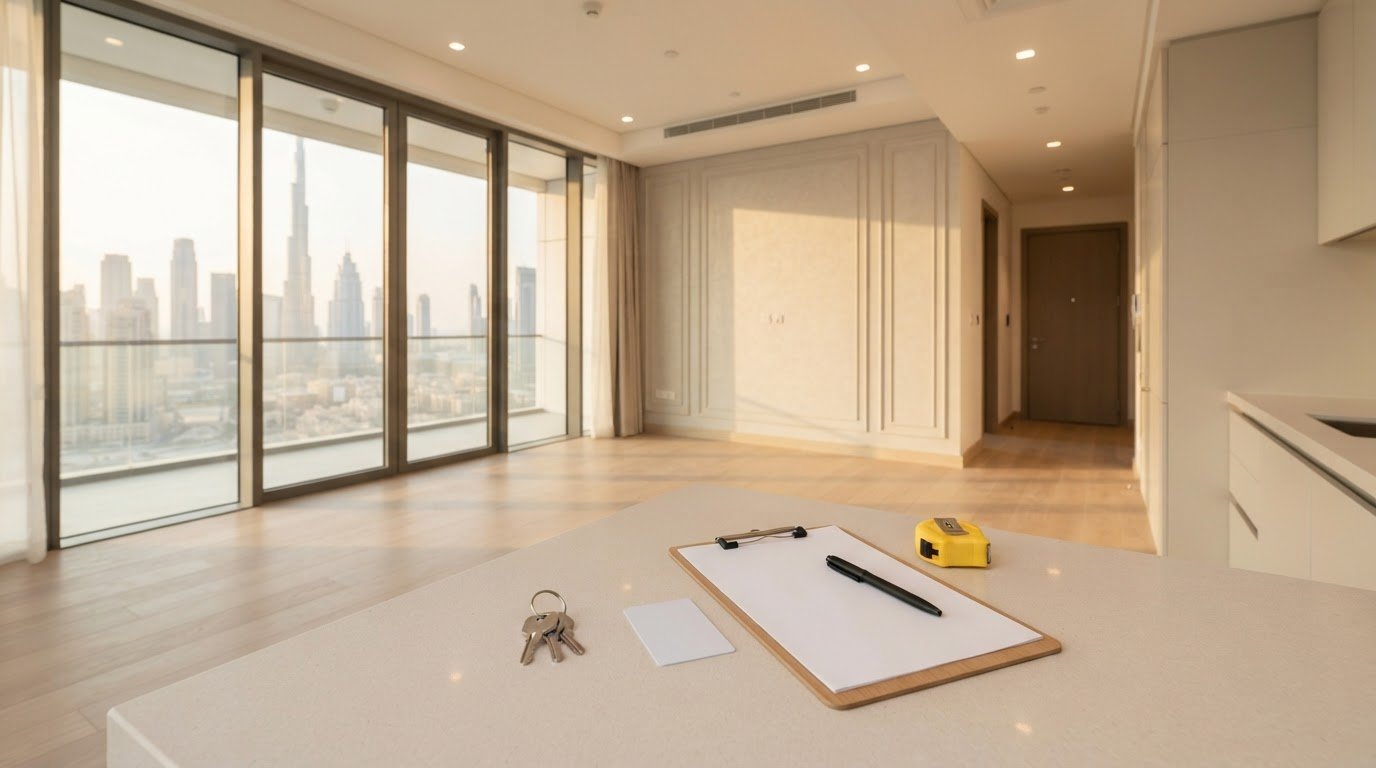
A completion notice starts the handover clock; it isn’t simply a cue to collect the keys and move in. In Dubai, buyers typically have 30 days from...

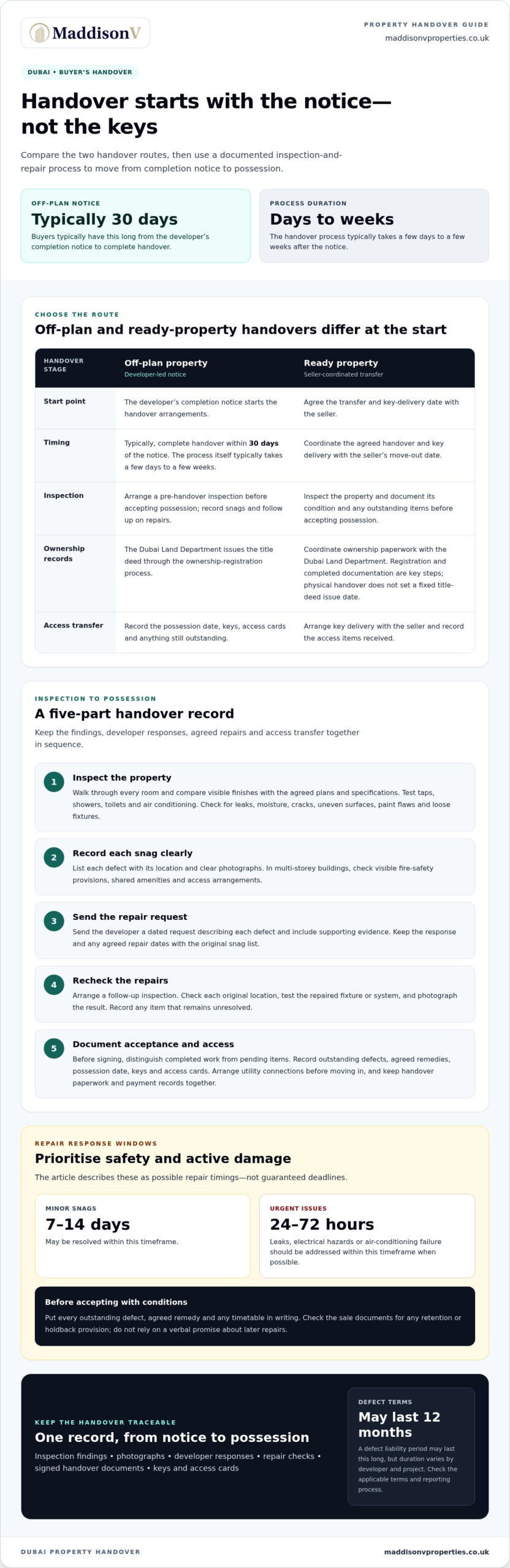
A completion notice starts the handover clock; it isn’t simply a cue to collect the keys and move in. In Dubai, buyers typically have 30 days from the date the developer issues a completion notice to complete the property handover process. The process itself typically takes from a few days to a few weeks after the notice.
A smooth handover matters whether you’re preparing a new home or an investment property for its next chapter. A thorough inspection and clear records make the transition more orderly and give you a practical reference for defects and responsibilities.
This guide explains when handover takes place and how to manage each stage. You’ll learn how to inspect the property, document snags for the developer, clarify what has been agreed, and arrange keys and access cards. It also covers utility connections and the documents to prepare, helping you move from the completion notice to possession with greater clarity.
Key Takeaways
- Start planning as soon as the developer issues the completion notice; buyers typically have 30 days from that date to complete handover.
- Inspect the property carefully and give the developer a clear snag list, with each defect recorded so repairs can be tracked.
- Put the property’s condition, outstanding work and maintenance responsibilities in writing to create a useful record of the handover.
- Before moving in, arrange utility connections and confirm that keys, access cards and relevant documents are transferred.
- Keep payment records and handover paperwork together so you can follow each step from completion notice to possession.
When Does the Property Handover Happen?
Timing depends on whether you’re buying off-plan or a completed home. Treat the completion notice, inspection and transfer of access as separate steps, rather than assuming they happen in one appointment.
- Start with the completion notice and identify the route. For an off-plan property, the developer’s completion notice begins the handover arrangements; buyers typically have 30 days from its issue to complete the process. For a ready property, agree the transfer and key-delivery date with the seller and coordinate ownership paperwork with the Dubai Land Department. Dubai Law No. (26) of 2007 is titled as regulating the relationship between landlords and tenants in the Emirate of Dubai, according to Dubai Legislation Portal.
The Dubai Land Department issues the title deed through the ownership-registration process. Physical handover does not establish a fixed issue date; registration and completed documentation are key steps.
- Arrange a pre-handover inspection before accepting possession. Walk through every room and compare visible finishes with the agreed plans and specifications. Test taps, showers, toilets and air conditioning. Look for leaks, moisture, cracks, uneven surfaces, paint flaws and loose fixtures. Record each issue with its location and clear photographs so the developer can identify the work required.
In multi-storey buildings, check visible fire-safety provisions, shared amenities and access arrangements. These checks can surface practical issues, such as water damage, faulty fixtures or incomplete finishes, before you accept the property.
-
Review Snag Rectification and De-Snag Findings
Send the snag list to the developer and keep a copy with your photographs. Ask for each issue to be addressed, then arrange a follow-up inspection to review the repairs. Recheck the original locations instead of relying only on a completion message. If any item remains unresolved, document its condition and agree in writing how it will be handled before signing acceptance.
-
Transfer Keys and Access
Collect keys and access cards as part of a documented handover. Confirm how many you receive, test them at the relevant doors or entry points, and record anything missing. Include the possession date and any outstanding access items in the handover record. For an occupied, completed property, coordinate key delivery with the seller’s agreed move-out date.
- Keep the inspection report, repair records and signed handover documents together. The property handover process in Dubai is easier to track when inspection findings, developer responses, agreed repairs and access transfer are recorded in sequence. Read the handover paperwork carefully before signing, distinguishing completed work from pending items. If the property is not ready to occupy or has major functional defects, document the reasons, photographs and snag list in writing before deciding whether to accept possession.
Defect rectification and conditional acceptance
After inspection, turn each defect into a written repair request and track its status. Before accepting the property, separate completed work from items that remain outstanding.
-
Identify Defect Responsibilities
Check the developer’s warranty or defect terms for each issue before deciding who is responsible for repairs. The developer may cover construction defects identified during completion or within the defect liability period, depending on the warranty and agreed terms. Read the sale documents carefully, because responsibility depends on the defect and the project’s stated coverage.
A defect liability period may last 12 months, but its duration varies by developer and project. Note the applicable period and the process for reporting issues, so a later concern is directed to the right party rather than treated as routine property management.
-
Arrange Developer Defect Repairs
Send the developer a dated repair request that describes each defect, identifies its location and includes supporting evidence. For example, list a leak beneath the kitchen sink separately from a loose door handle, and attach clear photographs. Keep the developer’s response and any agreed repair dates with the original snag list.
Minor snags may be resolved within 7 to 14 days. Urgent issues, such as leaks, electrical hazards or air-conditioning failure, should be addressed within 24 to 72 hours when possible. Prioritise safety and active damage, then arrange a follow-up inspection to confirm each repair.
- Check repairs against the original report instead of relying only on a completion notice. Test the repaired fixture or system and photograph the result. If the fault remains, update the snag record with the inspection date and a clear description of what still needs attention. This gives the developer a record of incomplete repairs and keeps unresolved items visible.
Record new defects and recurring faults separately. If a replaced tile is still loose, for example, note its location and current condition. Prioritise hazards and active leaks, then follow up on finish issues. Clear evidence helps distinguish a completed repair from work that needs further attention.
- If you accept the property subject to conditions, spell them out in writing. List every outstanding defect, the agreed remedy and any timetable provided by the developer. Keep the signed record, photographs and correspondence together. Do not rely on a verbal promise to complete repairs later; the handover documents should identify what remains unresolved.
Review the sale and purchase agreement for any retention or holdback provision before treating money as security for repairs. Check its stated amount, release conditions and timing where the contract sets them out. Don’t assume that retention is automatic or that you can deduct funds unilaterally. For owners planning ongoing oversight after repairs, property management support can help organise property responsibilities.
Documenting property condition and handover responsibilities
A clear handover file connects the completion notice, payment records, property condition and ownership documents. Prepare it before the appointment so unresolved obligations don’t become difficult to trace later.
-
Prepare Required Documents and Clearances
Gather your original passport and Emirates ID, or passport where applicable, along with the Oqood or Title Deed and payment receipts. Include the sale and purchase agreement, developer NOC, and proof that fees and charges have been paid. Keep digital copies together and bring any requested originals to the appointment.
Developers handle handover notices by informing buyers that the property is ready and setting out completion arrangements. Buyers typically have 30 days from the completion notice to complete handover. Organise the final payment, appointment and key collection against the notice, then retain a copy for your records.
-
Complete Final Payments and Collect Keys
Compare the final statement with your payment schedule before settling the balance. It may include outstanding purchase instalments, late-payment or administrative fees, title deed or Oqood charges, service charges and utility registration fees. Match each item to its supporting record and keep the receipts with your handover documents.
After payments are cleared and the appointment is completed, sign the handover documents and receive the keys and access cards. Record the collection date and any missing access items in writing. The handover readiness check should confirm that the payment schedule has been reviewed and any outstanding balance is understood.
- Document the property’s condition and the responsibilities accepted at transfer. The handover note should describe the unit’s condition, maintenance obligations and compliance responsibilities. List outstanding items separately from resolved matters, and keep photographs or correspondence to support each entry. This provides a useful reference if questions arise after possession.
For example, note which maintenance tasks belong to the owner and which are handled by the developer or homeowners’ association. Review maintenance schedules and related charges, then keep relevant contact and service details in the property file. Clear records help distinguish a new issue from a responsibility assigned at handover.
- If the property is occupied, clarify the tenancy obligations. A buyer generally takes over the existing tenancy contract and its associated rights and responsibilities. Notify the tenant of the ownership change, and document the security deposit and any outstanding payments between the former and new landlords. Keep the tenancy information with the Title Deed and handover note.
Check that the completion record, payment evidence and ownership paperwork reflect the same buyer and property. If an NOC is required, allow time for processing; issuance often takes 2 to 3 working days when documents and payments are complete. Unpaid service charges or additional approval requirements can delay it, so record the clearance status before finalising your file.
Keys, access cards, and utility connections
Arrange access and utility activation alongside the ownership transfer, rather than waiting until after moving in. Keep the handover agreement, completion notice and property details together.
-
Collect Keys and Access Cards
Collect every key and access card listed for the unit, building entrance and shared facilities. Test each item before leaving the appointment, including the main door and any parking access. Record missing or faulty items in writing, along with the date and the person who receives your report.
Ask for relevant utility clearance letters and keep them with the handover record. The completion notice should include the Property Index Number (PIN), which is needed for Ejari registration and utility connections. Check that the PIN matches the property documents before using it to set up accounts.
-
Check Utility Meters
Locate the electricity and water meters before activating services. Record their readings and meter identifiers, compare them with the handover documents, and photograph the displays. This creates a clear starting record for usage and helps distinguish your consumption from earlier charges.
Check whether the property has small or large meters, as the listed DEWA activation fees vary by meter type. Keep the meter details with your ownership records.
-
Register Utilities and Ejari
Arrange Ejari registration and utility connections using the property details required for each service. Set up a DEWA account and ensure electricity and water are connected before moving in. For a rented property, coordinate the Ejari details with the tenancy agreement so the registered occupancy and utility arrangements align.
Registration also includes a AED 10 cost, a AED 10 knowledge fee and a AED 10 innovation charge. Keep the payment record, account details and connection confirmation together for future reference.
- Before confirming activation, check each utility charge against the account holder and property details. Match the address and PIN, confirm the meter type corresponds with the property, and retain the DEWA confirmation. If another utility connection is needed, use the same property details and keep its activation record with the DEWA documents.
After activation, test the electricity and water at the property. Switch on lights, run a tap and check that the readings are recorded correctly. Keep access-card details separate from passwords, and store keys securely after testing. These final checks connect physical possession with working utilities and a documented ownership record.
Completion notification and handover deadline
Treat the completion notice as the start of a practical deadline, not simply an invitation to collect keys. Buyers typically have 30 days from its issue to complete handover.
-
Receive the Completion Notice
Save the developer’s completion notice and note its issue date immediately. Read the stated handover arrangements, required actions and appointment details, then compare them with your sales agreement. If the notice gives a proposed key-delivery date, record it alongside your inspection and payment plans.
Keep the notice with your buyer checklist and correspondence. This makes it easier to establish when the handover period began and what instructions the developer provided.
-
Note the Handover Deadline
Calculate the deadline from the notice date, then work backwards to schedule each task. Allow time for final payment, document preparation, inspection and signing instead of leaving them until the proposed collection date. Dubai handover typically takes from a few days to a few weeks after the developer issues the completion notice.
Use a checklist to track each requirement, marking it complete only when you have the relevant record. If an appointment or payment is still pending, contact the developer promptly and keep the response with the notice.
-
Address Delayed Handover and Compensation
Record any delay against the handover and key-delivery date agreed in your sale agreement. Compensation for delayed key handover is not standardised; it may depend on the length of the delay and costs incurred. Keep evidence of relevant losses, such as temporary accommodation costs, and document communications about the revised date.
A buyer may seek compensation for losses caused by delayed handover. Keep receipts and a dated record of the period affected, rather than relying on estimates or verbal discussions.
- Compare the completion notice with the sale agreement before signing the final handover documents. Check that the property, buyer details and agreed key-delivery date match, and record any changes in writing. If the notice and agreement show different dates, retain both documents and ask for the discrepancy to be addressed in writing before treating the timeline as settled.
Track the final payment separately from other completion tasks. Save the payment confirmation, appointment correspondence and signed handover record in one file. This sequence shows what was completed, when it happened and whether access followed the agreed schedule.
- Use a simple timeline to track the process: notice received, deadline calculated, inspection arranged, final payment made, documents signed and keys collected. Add the date beside each completed action. If a delay affects your moving plans, record the revised date and any resulting accommodation costs alongside the original agreement.
For an organised handover plan, plan your property handover with the next steps in view.
MaddisonV Properties: Property Management
After handover, MaddisonV Properties provides Property Management for owners who want ongoing oversight. With the keys, documents and utility arrangements in place, the focus shifts to maintaining the property, coordinating responsibilities and protecting its condition over time.
If you’re considering a London property alongside your Dubai purchase, MaddisonV Properties can also help with Property Sourcing. This can be a practical next step when assessing suitable opportunities and fitting property ownership into a broader investment plan.
Choose Property Management for structured support after completion, or Property Sourcing if you’re exploring a London acquisition. Contact MaddisonV Properties to discuss your property plans or visit maddisonvproperties.co.uk.
Make ownership work for you after handover
A well-managed property handover process in Dubai marks the start of ownership, not the end of planning. Once possession is complete, consider how the property will serve your goals: as a home for personal use, an investment prepared for tenants, or an asset in a broader portfolio.
Decide what you want the property to achieve, then build an ownership plan around that purpose. Clear priorities can guide decisions about upkeep, future investment and how actively you want to oversee the asset. If you have interests across markets, aligning property decisions with your wider portfolio can clarify your next move.
If you’re ready to discuss your property plans and the support that fits them, contact MaddisonV Properties. Take the next step with a clear direction and a considered plan for what comes after handover.
Frequently Asked Questions
How long does the property transfer take in Dubai?
A Dubai property transfer commonly takes 1 to 2 weeks once documents are complete and appointments are scheduled. This refers to the transfer itself, not necessarily the full handover of a new development. Missing signatures, payment evidence or appointment availability can affect progress. Keep a dated record of submitted documents and booked appointments so you can identify which step is outstanding and follow up on that specific item.
What is Property Snagging?
Property snagging is a detailed inspection to identify defects or incomplete work before you accept a property. It may involve checking finishes, fixtures, plumbing and air conditioning, then documenting issues for the developer. For example, record a scratched cabinet panel and a dripping tap as separate items. A clear list gives both parties a shared reference for repairs and follow-up checks.
What steps are involved in the handover process?
Start by reviewing the completion notice and arranging an inspection. Record defects, submit them to the developer, review repairs, and organise the required documents and payments. Complete the ownership and handover paperwork, collect access items, and arrange utility connections. Keep a separate record for each stage, such as a dated inspection report or payment receipt, so pending tasks are not confused with completed ones.
Can I do snagging myself?
You can inspect the property yourself and note visible defects, such as a loose handle or paint flaw. Work methodically through each room and test fixtures instead of relying on a quick walkthrough. Professional snagging inspectors may bring specialist expertise and tools to identify issues you might miss. Either way, use photographs, precise locations and clear descriptions to make your report useful to the developer.
Can I refuse handover?
You may refuse handover if the unit is not legally ready for occupation or has major functional defects. Record your reasons in writing and include photographs and a snag list instead of relying on a verbal objection. For example, document a serious leak or a non-functioning essential system. Keep copies of the refusal and related correspondence to create a clear record of the property’s condition and your concerns.
How long does snag fixing take?
Minor property snags may be resolved within 7 to 14 days. Urgent defects, including leaks, electrical hazards or air-conditioning failure, should be addressed within 24 to 72 hours when possible. The time required depends on the defect and repair work involved. Once the developer says an item is fixed, inspect that specific area or system again and record whether the repair has resolved the original issue.
How to Report Snags to the Developer?
Send the developer a written snag list with each issue described separately. Include its exact location, a concise description and a clear photograph. For example, identify a bathroom leak by the affected fixture and surrounding area. Keep a copy of the report and the developer’s response. When repairs are complete, refer to the same entries during your follow-up inspection and note anything still unresolved.
Is snagging mandatory?
Property snagging is not legally mandatory in Dubai, but it is a standard step before accepting handover. An inspection gives you a structured opportunity to identify visible defects and incomplete work while documenting the property’s condition. Even if you inspect the property yourself, record your findings in writing and keep photographs. This provides a practical reference for discussing repairs with the developer and checking whether reported issues have been addressed.

Sign Up Now
Want to read more great articles and blogs subscribe to our newsletter