Targeted bathroom and kitchen refreshes, durable flooring, efficient appliances and a well-maintained exterior are more likely to support rental...

Targeted bathroom and kitchen refreshes, durable flooring, efficient appliances and a well-maintained exterior are more likely to support rental yield than an expensive full renovation. When upgrading a rental property for better yield, match each improvement to local renter expectations and the home’s condition. Finishes beyond what the market values may be difficult to recoup through rent. A clear scope and budget keep the work focused on improvements residents will notice.
A larger renovation does not automatically deliver a stronger return. Practical, well-chosen changes can improve a property’s appeal without transforming every room. This guide covers bathroom, flooring, appliance and exterior upgrades, and how to weigh their likely value against cost and upkeep. It also explains how renovation planning and property management support can help owners coordinate work and make considered investment decisions.
Key Takeaways
- Prioritise practical bathroom refreshes, such as replacing tired fixtures, before committing to a full renovation.
- Choose durable, easy-to-maintain flooring that suits the property and its expected wear.
- Consider efficient appliances and lighting for modern appeal and potential utility savings.
- Keep the exterior welcoming with focused maintenance, clean outdoor areas and thoughtful landscaping.
- Plan renovations around a clear scope, budget and timeline; property management support can help coordinate the work.
1. Bathroom fixture improvements
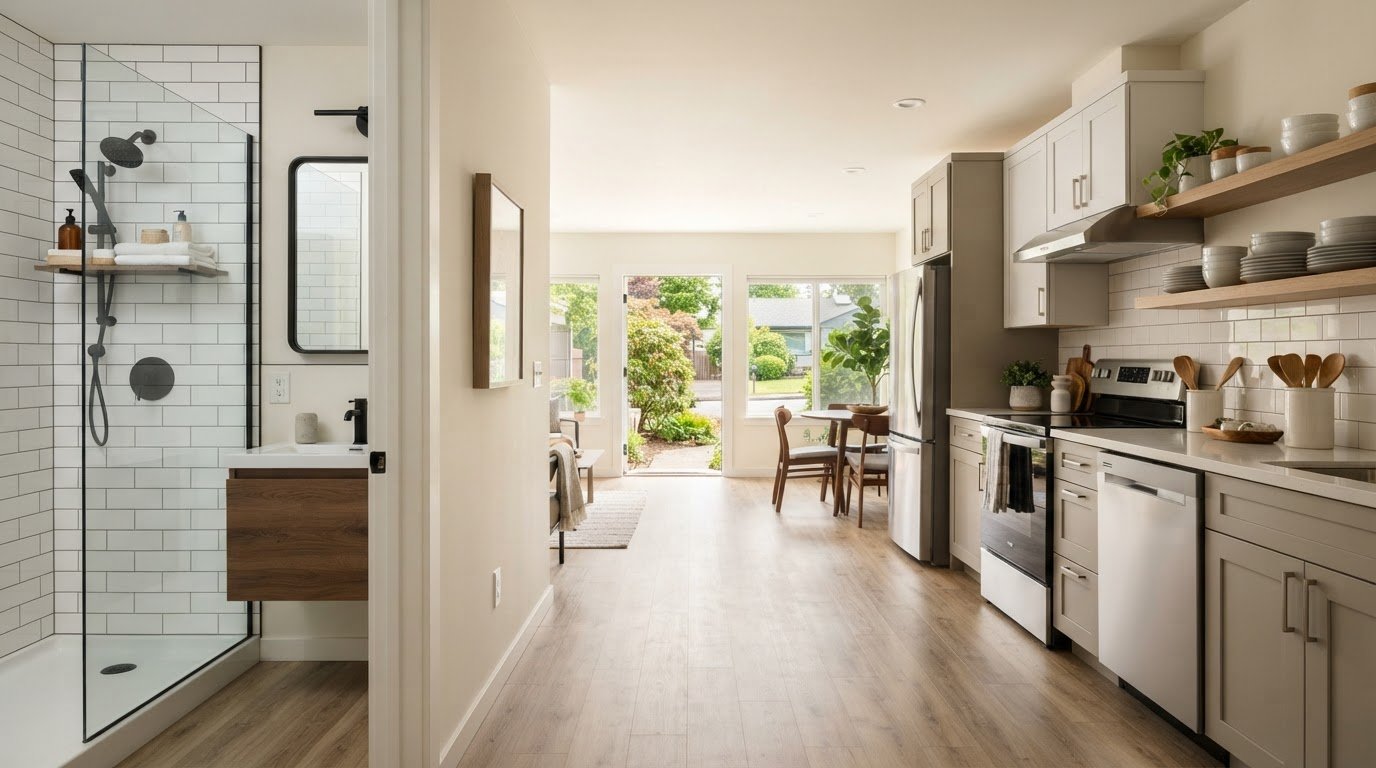
A bathroom refresh can improve a rental’s appeal without a complete renovation. Start with visible, frequently used fixtures: replace worn taps and showerheads, update lighting, re-grout stained tile, and fit a clean, well-sized mirror. These focused improvements make the room feel cared for while keeping durability and practical maintenance in mind.
For U.S. rental property, the Internal Revenue Service says improvement costs may not be deducted as an expense. Keep invoices and distinguish improvement costs from routine repairs in your tax records.
To see more ideas for rental upgrades, watch “8 Best Rental Property Improvements for Higher Rents”:
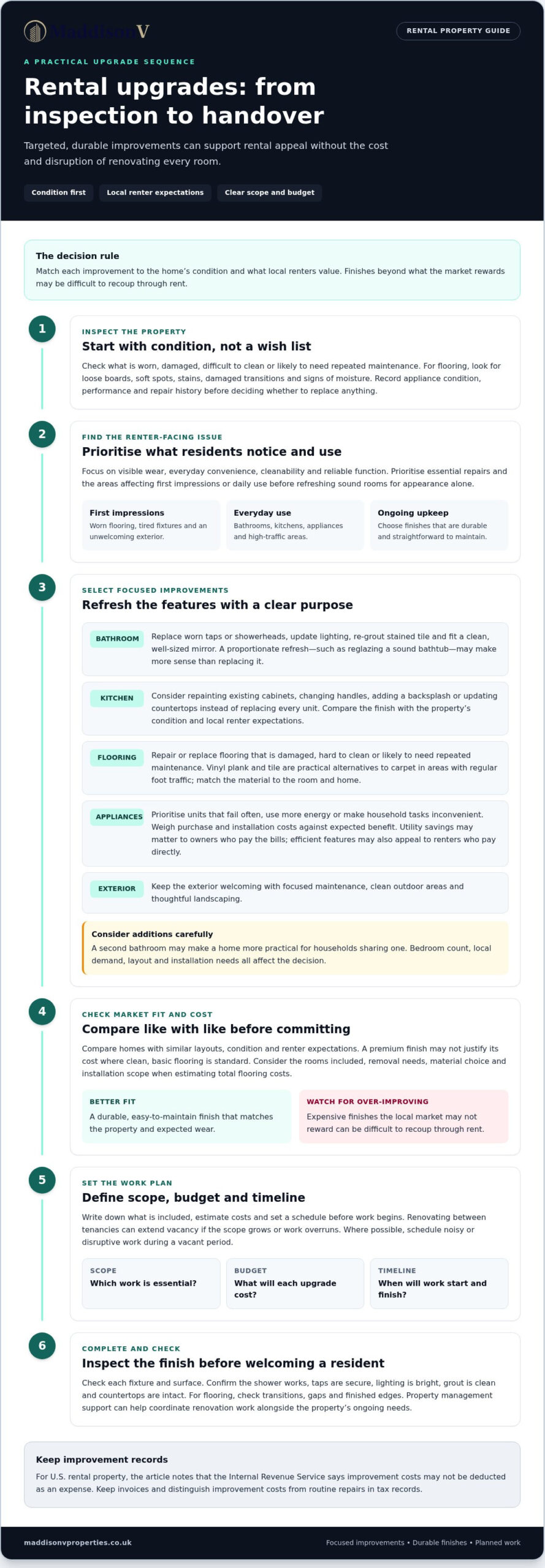
Choose the work in this order: assess the condition, identify the tenant-facing problem, then compare the upgrade’s cost with local rental expectations. For example, reglazing a sound bathtub may be a more proportionate refresh than replacing it.
Kitchen and bathroom updates attract attention because residents use these rooms every day. A kitchen refresh might involve repainting existing cabinets, changing handles, installing a backsplash or updating countertops, rather than replacing every unit. Compare the costs with the property’s condition and the finish level renters expect nearby—while high-specification fittings are standard in luxury apartments to rent Liverpool, general rental properties often benefit most from targeted, cost-effective refreshes.
Adding a second bathroom can make a home more practical, especially for households sharing one bathroom. Treat any figures as an individual example, not a forecast for every property. Bedroom count, local demand, layout and installation needs all affect the decision.
Over-improving can leave owners paying for finishes the local market will not reward. Where renters resist higher rents, the Board of Governors of the Federal Reserve System notes that raising rents to offset increased costs may lead landlords to lose tenants. Renovating between tenancies can also extend vacancy if the scope grows or work overruns its schedule. Set the scope, timeline and cost estimate before work begins, and prioritise essential repairs over cosmetic upgrades.
Use vacant periods strategically: complete noisy or disruptive work while the unit is empty, then inspect each fixture before welcoming a new resident. A working shower, secure taps, bright lighting, clean grout and intact countertops create a functional finish. Judge each improvement by its condition, usability, maintenance needs and fit with the property’s target market.
2. Durable, low-maintenance flooring
Flooring affects how a rental feels at a viewing and how it performs between tenancies. Worn carpet can make clean rooms look tired, while damaged boards create visible maintenance concerns. Durable finishes can support a polished presentation and reduce how often flooring needs replacement. Vinyl plank and tile are practical alternatives to carpet in areas with regular foot traffic. Luxury vinyl plank is water-resistant, scratch-resistant, easier to clean and designed for rental use. Tile is another durable option, particularly where spills or frequent cleaning are expected.
Let local rental conditions guide your material and finish choices. Compare homes with similar layouts, condition and renter expectations. A premium finish may not justify its cost where clean, basic flooring is standard. In a market where renters value easy cleaning and contemporary interiors, vinyl plank may attract interest. In a home with a more traditional finish, a neutral, consistent floor may feel more appropriate.
Assess each room before choosing materials. Check for loose boards, soft spots, stains, damaged transitions and signs of moisture. A hard-wearing surface can handle repeated foot traffic in a busy hallway better than carpet. In bedrooms, consider how the flooring feels underfoot and whether it suits the property’s overall presentation. Using the same finish across connected spaces can also create a more cohesive look.
On a limited budget, prioritise repairs and flooring that affect first impressions or daily use. Replace flooring that is damaged, difficult to clean or likely to need repeated maintenance before upgrading sound rooms for appearance alone. Total cost depends on the rooms included, removal needs, material choice and installation scope. A room-by-room plan directs spending toward the most pressing issues.
Durable rental flooring can also simplify turnover. Vinyl plank and tile are easier to clean than traditional carpet, and their surfaces resist damage from routine use. This can make preparation between residents more straightforward, particularly in kitchens, entryways and living areas. Installation quality still matters: uneven transitions, gaps or poorly finished edges can undermine even a durable material.
Before work begins, document the existing floor condition, select a consistent finish, and define which rooms need replacement. Schedule installation during a vacancy where possible, so work doesn’t disrupt residents. For owners balancing flooring choices with wider rental operations, property management support can help coordinate renovation decisions alongside the property’s ongoing needs.
3. Energy-efficient appliances
Modern, efficient appliances can improve a rental’s everyday appeal and reduce utility use. A refrigerator, washing machine or dishwasher that works reliably also presents better than an ageing unit with visible wear. Before replacing anything, record its condition, performance and repair history. Prioritise appliances that fail often, consume more energy or make routine household tasks inconvenient. This measured approach ties updates to residents’ needs, not appearance alone.
Utility arrangements matter. When the owner pays tenant utility bills, energy-efficient appliances may reduce ongoing costs while helping support the case for higher rent. When residents pay directly, lower utility use can still make the home more attractive to renters seeking modern, efficient features. Compare the expected benefit with purchase and installation costs, and consider whether local renters value upgraded appliances enough to justify the investment.
Inspect each appliance before choosing a replacement. Check seals, controls, unusual operating sounds, leaks and visible damage. A refrigerator that struggles to maintain a steady temperature or a washer that repeatedly needs attention may be a higher priority than a functioning appliance with dated styling. Reliable, newer appliances can reduce the likelihood of repair requests, while a written maintenance record helps owners identify recurring problems.
Review lighting just as practically. Brighter, energy-efficient fixtures can improve visibility and make kitchens, hallways and bathrooms more functional. For example, replace a dim kitchen ceiling light and check that work surfaces are clearly lit. LED lighting and water-saving fixtures can lower long-term utility bills while supporting sustainability. Choose fittings that are easy to clean and replace, then test each one before showing the property.
Small hardware updates can complete the look without replacing an appliance. Replacing loose cabinet handles or worn drawer pulls can make a kitchen feel more considered alongside clean countertops and functioning appliances. Keep the style consistent throughout the room. Coordinated handles and bright fixtures create a stronger first impression than mismatched finishes, while practical landscaping can reinforce that sense of care outside.
Plan the work around the property’s condition and turnover schedule. List each appliance, note whether it works reliably, then rank replacements by safety, function, running costs and resident appeal. Bundle compatible updates during a vacancy if that limits disruption, but avoid replacing equipment solely to follow a trend. A well-maintained fridge and efficient lighting may serve residents better than decorative changes that leave essential appliances unreliable.
After installation, test appliances and fixtures, record operating instructions, and keep purchase and maintenance documents together. Clear records make future servicing easier and help track which updates are performing well. Review resident feedback and recurring repair requests before the next upgrade cycle. These practical checks keep energy-conscious improvements aligned with reliable operation, household comfort and the property’s rental position.
4. Exterior curb appeal and maintenance
A rental’s exterior shapes the impression before prospective renters reach the front door. Start with basic upkeep: clear walkways, clean the entrance, repaint a tired front door and remove weeds. These focused curb-appeal improvements make the property look cared for without requiring a complete exterior renovation. A clean, welcoming approach can help a home stand out at viewings and support leasing.
Fresh exterior paint can do more than sharpen appearance. Market estimates associate it with an average 5% increase in property value, although the result depends on the building and its local market. Address peeling or faded areas before choosing a new colour. A restrained, well-maintained finish usually presents more consistently than a striking shade that clashes with nearby homes.
Landscaping can enhance appeal without creating a high-maintenance garden. Mulch beds, drought-resistant plants and clean edging define the entrance while keeping upkeep manageable. Trim overgrown shrubs that obscure windows or paths, and remove dead plants before photographs or viewings. In a small front garden, neat borders and a clear path can make the space feel orderly and accessible.
Maintenance protects value as well as presentation. Inspect the roof for visible damage, clear the gutters and check that rainwater drains away from the building. Sound roofing and clean gutters help prevent water damage and support stronger appraisals. Replacing outdated or damaged siding can refresh the exterior and add insulation value. Prioritise these repairs over decorative additions when the building shows signs of wear.
Lighting around entryways and walkways can enhance safety and make evening arrivals more welcoming. Check that exterior fittings work, paths remain visible, and entrances aren’t hidden by landscaping. A new garage door may also improve street-facing presentation; market estimates report an average return upwards of 75%. Consider its condition and visibility before making it a priority, since the door’s contribution depends on the property.
Set a clear order for exterior work: address water or structural concerns, clean and repair visible surfaces, then add modest presentation improvements. Replacing a worn front door or repairing damaged siding may matter more than adding a decorative feature. Compare the home with nearby rental listings, noting the entrances, gardens and façades of competing properties. This local comparison helps owners choose upgrades renters are likely to notice.
Curb appeal and leasing meet at the first viewing. Clean windows, an uncluttered entrance, trimmed planting and working outdoor lights make it easier to picture the home as a place to live. Keep the exterior consistent with the interior’s condition rather than polishing the façade while leaving basic repairs unfinished. A practical maintenance schedule can preserve that first impression between tenancies and help maximise the value of each improvement.
5. Property management support for renovations
Renovation results depend on more than attractive finishes. Owners need a defined scope, a realistic timeline, coordinated trades and a record of spending. Property management support can bring these moving parts together, helping align proposed work with tenant expectations and the property’s rental position. The aim is a considered improvement plan, not simply a longer list of upgrades.
Begin with a property inspection and a prioritised schedule. Separate urgent repairs from optional presentation work, then identify which improvements may affect rentability, maintenance or running costs. For example, a leaking pipe needs attention before decorative painting. If lower utility use is a goal, assess relevant fixtures and appliances before selecting replacements. This sequence keeps essential work from being crowded out by cosmetic choices.
Clear coordination matters once work begins. A property manager can help arrange contractors, align access, monitor progress against agreed timelines, and track the budget. Owners should establish the scope and cost estimate before work starts, then record changes as decisions arise. A written schedule can also show which tasks depend on others, such as completing electrical work before final painting.
Permit, building-code and landlord requirements depend on the property’s location and renovation scope. Structural alterations, plumbing and electrical work may require local approvals or compliance with applicable codes. Rental housing rules can also affect safety and habitability. Set out the work and property details early so relevant requirements are considered before contractors begin.
There is no single average cost for common renovations and repairs because scope and property condition vary. Use examples to structure a project budget, not as a substitute for a property-specific estimate. Include labour, materials, preparation, disposal and any work needed to address underlying damage. For investors managing substantial turnaround projects or seeking short-term capital to protect their equity, private lenders like AHL HardMoney can provide flexible financing options to fund necessary improvements.
Measure success through the property’s performance, not just the finished work. Record the initial condition, project scope, expenditure and completion date. After tenants move in, review maintenance requests, feedback, vacancy periods and achievable rent against comparable local properties. These indicators help show whether the work supported stronger returns or future investment should focus elsewhere.
Renovations also need a practical handover. Collect invoices, appliance instructions, warranties and contractor details in one property file. Record paint colours and finish specifications so repairs can be matched later. For multiple units, a consistent log helps owners compare outcomes across the portfolio and plan future work more clearly.
For owners who want renovation decisions and ongoing rental operations managed together, explore property management support as a practical next step.
MaddisonV Properties: Property Management
MaddisonV Properties provides Property Management for owners seeking a coordinated approach to rental property improvements and ongoing oversight. This can help when planning upgrades across a property or portfolio, particularly when maintenance, resident needs and investment decisions need to align.
Property Management and Facilities Management can support the practical oversight of rental homes, while Portfolio Management helps owners consider decisions across their holdings. A sound improvement plan starts with the property’s condition, its target renters, and the costs and operational demands of each upgrade. This keeps decisions focused on durable standards and a considered approach to returns.
If you’re weighing renovation priorities or need ongoing rental property support, contact MaddisonV Properties to discuss your requirements.
Make your next property decision with confidence
Give each future upgrade a clear purpose in your investment plan. Before committing capital, consider how long you expect to hold the property, the residents you want to attract, and whether an improvement supports lasting usability or only short-term presentation. This broader perspective can make decisions about upgrading a rental property for better yield more coherent as maintenance needs and market expectations change.
Turn your observations into a prioritised plan. Identify the property’s most important needs, set a sensible sequence for the work and review how each decision fits your investment objectives. A considered approach can help protect the asset’s quality while keeping its long-term role in your portfolio in focus.
For support with your next property investment decision, speak with MaddisonV Properties. Thoughtful planning can help you move forward with clarity and confidence.
Frequently Asked Questions
What Are the Best Upgrades to Boost Your Rental Property’s Value?
Kitchen and bathroom improvements are generally strong places to start, followed by flooring and exterior presentation. A disciplined approach to upgrading rental property for better yield begins with the home’s actual needs, not a trend. Address a leaking tap or damaged counter before adding decorative finishes. Compare similar local rentals and note which features look better maintained. Prioritise work that addresses visible wear or makes daily use easier for residents.
Which rental property upgrades provide the highest return on investment in the United States?
In the United States, kitchen and bathroom updates are often reported among the stronger rental-property investments, with flooring and curb appeal also worth considering. For owners upgrading rental property for better yield, returns depend on whether work addresses a genuine weakness or adds an expensive finish. Refreshing worn cabinet fronts, for example, can improve a kitchen while retaining functional cabinetry. Compare planned work with the property’s condition and local rental expectations.
How much can upgrades such as a new kitchen, bathroom, flooring, or HVAC increase rent?
There is no single rent increase that applies to every renovation. Treat any rate as a local example, not a universal figure. A new kitchen, bathroom, floor or HVAC system affects rent through its condition, usefulness and fit with nearby rental options. Compare the renovated property with similar local homes.
Which low-cost improvements can increase rental income and tenant appeal?
Small, visible refreshes can improve presentation without changing a room’s layout. Consider replacing worn cabinet handles, refreshing paint, re-grouting tile, updating mirrors or improving dated light fixtures. Before spending, photograph the room and list what looks damaged, difficult to clean or inconsistent. Address the most noticeable issue first, then review the result from a renter’s perspective. A clean, functional finish can make a stronger impression than decorative additions.
Which upgrades improve energy efficiency and lower utility costs for rental properties?
Efficient appliances, LED lighting, water-saving fixtures and programmable thermostats can support lower energy or water use. A programmable thermostat also lets residents adjust temperature settings. First identify who pays each utility bill, since savings may benefit the owner or renter differently. Then assess which appliances or fittings are outdated or unreliable, and prioritise replacements that improve everyday performance as well as efficiency.
How do I calculate rental property upgrade ROI, payback period, and cash-on-cash return?
Compare an upgrade’s cost with its expected rental benefit and local renter expectations.

Sign Up Now
Want to read more great articles and blogs subscribe to our newsletter