
The most generous way to help your child buy a home may not be the right one for your family. A cash gift can feel straightforward, while buying...

The most generous way to help your child buy a home may not be the right one for your family. A cash gift can feel straightforward, while buying together or supporting a mortgage can offer a different balance of ownership and control. If you’re considering buying property for your children in the UK, the right structure depends on more than the deposit: tax, mortgage requirements and your family’s long-term intentions all matter.
It’s understandable to want your support to make homeownership easier without creating uncertainty about who owns what, or what happens later. This guide compares the main options, including gifting money, lending funds, joint ownership, trusts and mortgage arrangements. It also highlights the questions to discuss with legal, tax and mortgage professionals before making a decision. With a clearer view of the choices, you can identify the guidance you need and plan a purchase that reflects your family’s priorities. Property search, mortgage consultations and conveyancing guidance can also help organise the buying journey.
Key Takeaways
- Buying property for your children in the UK can involve a gift, loan, joint purchase, or a trust or company structure. Each has different implications for ownership and control.
- Start by agreeing who will contribute funds, who will own the home, and what each family member expects over time.
- Consider tax, mortgage and family circumstances together. The implications can depend on your individual situation.
- Before committing funds, clarify your goals, likely funding route, property requirements and proposed ownership arrangements.
- MaddisonV Properties can support the buying journey through property search, mortgage consultations, conveyancing guidance and solicitor referrals.
Buying Property for Your Children in the UK: Start with the Family’s Goal
Helping a child buy a home is a generous decision, but clear expectations about ownership and responsibilities can help protect family relationships as well as finances. Before discussing deposits or mortgage arrangements, agree what the support is meant to achieve. Is the priority to help your child get onto the property ladder, retain a say in the home, or combine both aims?
This guide focuses on supporting a child’s residential purchase in the UK. It isn’t a complete guide to property investment, and the right approach can depend on your family’s finances, the buyer’s circumstances and the home you have in mind. Start with three questions: who provides the funds, who owns the property, and who makes decisions about it? Keep them in view as you compare arrangements.
What does ‘buying property for your child’ mean?
The phrase can describe several arrangements. A parent might contribute money towards a purchase while the child owns the home, lend money that the child is expected to repay, or buy a property jointly. A trust or company structure may also be considered, but each brings questions that need individual advice.
Providing funds and becoming an owner aren’t the same thing. Discuss the contribution, intended ownership and decision-making arrangements separately rather than assuming they align. A child’s age also matters, and arrangements for a minor may raise different considerations from those for an adult buyer. Before relying on assumptions about the legal or financial effects, discuss the proposed structure with appropriately qualified advisers.
Agree what the family wants the arrangement to achieve
Begin with an open conversation about priorities. Is your main aim to help your child secure a suitable home, retain influence over important decisions, or support the purchase while protecting your own financial plans? One arrangement may not achieve all of these aims equally well. Being candid about the trade-offs helps set realistic expectations before money is committed.
Tax deserves attention, but it shouldn’t be the only measure of success. A structure that appears attractive from a tax perspective may not match the family’s preferred ownership, level of involvement or future plans. For background reading, the overview of Inheritance Tax in the UK can introduce relevant concepts, but it isn’t a substitute for advice tailored to your circumstances.
Before moving forward, consider agreeing these points together:
- Purpose: Is the support intended as a gift, a loan, an ownership contribution, or a combination?
- Responsibilities: Who will handle decisions and ongoing financial commitments connected with the home?
- Future plans: What does the family expect if circumstances change or the property is eventually sold?
Write down the answers and identify any points of disagreement. This gives the family a clearer brief for comparing funding and ownership options, and helps ensure that a decision about buying property for your children in the UK reflects shared intentions rather than assumptions.
The Main Ways to Help a Child Buy a UK Property
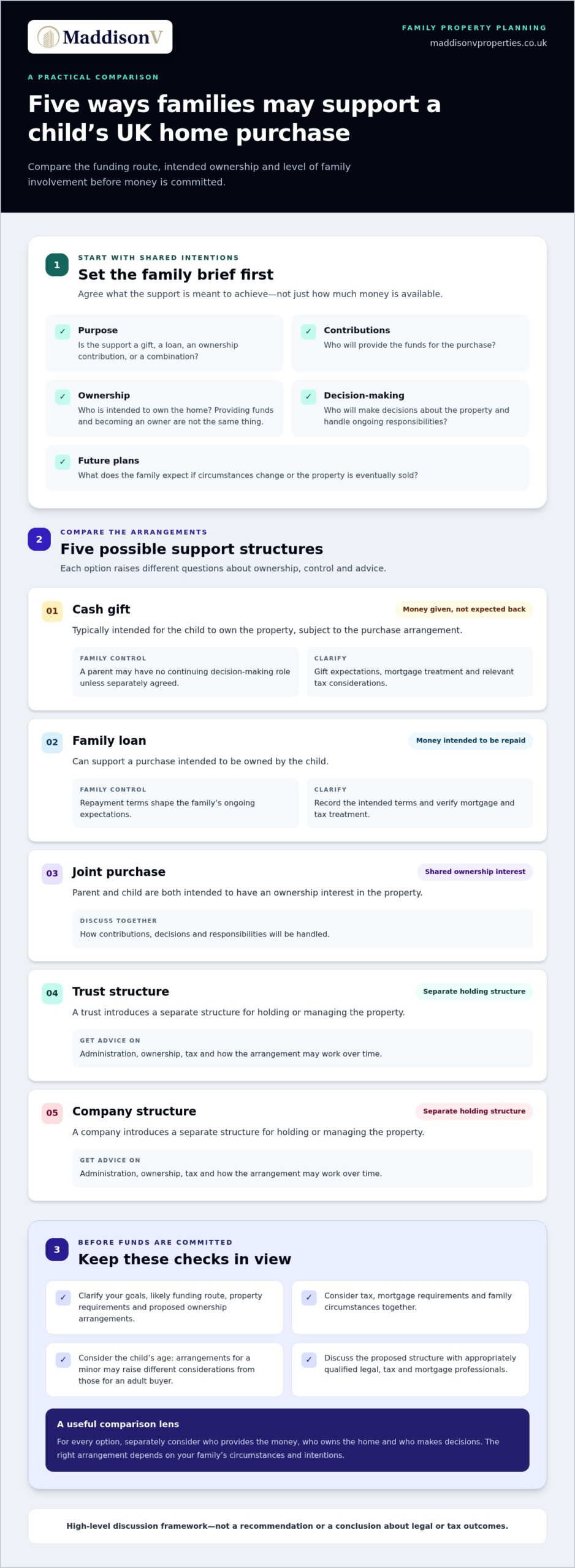
Once your family has agreed what the support should achieve, compare arrangements by looking beyond the amount contributed. The key distinctions are who provides the money, who is intended to own the home, and how much influence each person expects to have. The options below are a starting framework, not a recommendation. Tax, mortgage and legal consequences depend on the details and should be considered for your circumstances.
Gifting or lending money towards the purchase
A gift is money provided without an agreed expectation of repayment. A loan, by contrast, is intended to be repaid, so the family should discuss and record the proposed terms, including how repayment is expected to work. In either case, be clear about whether the child is intended to own the property and whether the parent expects any say in future decisions. Before transferring funds, establish how the chosen arrangement will be treated for tax and mortgage purposes. For general background, consult the Official UK Inheritance Tax Guidance.
Buying jointly or using a trust or company structure
In a joint purchase, parent and child are both intended to have an ownership interest. The contributions, decisions and responsibilities need careful consideration. A trust or company is different because it introduces a separate structure for holding or managing the property. Neither label alone explains who controls decisions or how the arrangement will work over time. Get advice on administration, ownership, tax and future changes before choosing a structure.
The table offers a high-level comparison. Its questions are prompts for discussion, not conclusions about legal or tax outcomes.
| Arrangement | Intended ownership | Family control | Complexity and advice questions |
|---|---|---|---|
| Cash gift | Typically intended for the child to own, subject to the purchase arrangement. | Parent may have no continuing decision-making role unless separately agreed. | Clarify gift expectations, mortgage treatment and relevant tax considerations. |
| Family loan | Can support a purchase intended to be owned by the child. | Repayment terms shape the family’s ongoing expectations. | Record the intended terms and verify mortgage and tax treatment. |
| Joint purchase | Parent and child are both intended to own an interest. | Decisions and responsibilities need to be agreed between owners. | Take advice on documenting interests, future decisions and tax implications. |
| Trust or company | Ownership or holding arrangements involve a formal structure. | Control depends on how the structure is established and administered. | Understand governance, administration and tax treatment before proceeding. |
For families buying property for their children in the UK, the most suitable route is the one whose ownership and responsibilities match their shared intentions, not simply the one that appears easiest at first glance. A property search and mortgage consultation can help bring the purchase requirements and funding discussions into focus. MaddisonV’s property buying assistance also includes conveyancing guidance and solicitor referrals.
How to Compare the Options Without Overlooking Tax, Control, or Family Risks
A useful comparison starts with the family’s priorities, not an assumption that one arrangement is always best. Set out who is expected to contribute, who should own the property, who will live there, and who should make decisions. Then consider how each arrangement fits those aims. This makes trade-offs visible before funds or ownership are transferred.
Ownership, funding and tax treatment are separate questions, and each needs to be considered on its own terms. A parent might provide funds without becoming an owner, while a particular ownership structure may bring responsibilities beyond the original contribution. Details matter: the same broad arrangement can raise different questions depending on the family’s circumstances and intentions.
Which tax questions should parents raise?
Ask a qualified tax adviser to review Stamp Duty, Capital Gains Tax and inheritance tax in light of the proposed funding and ownership structure. These areas can be affected by individual circumstances and current rules, so avoid relying on a general summary or assuming that a gift, joint purchase or other route produces a particular outcome. Tax considerations should inform a decision about buying property for your children in the UK, but shouldn’t determine it in isolation.
Bring the adviser a clear account of who will contribute money, who is intended to own the property, and whether the child will live there. Those details help frame questions for current, tailored advice. If borrowing is involved, discuss mortgage treatment separately, as the proposed support may be relevant to the lender’s assessment.
How could ownership affect family expectations?
Ownership can shape expectations about the home, so discuss practical matters as well as the initial purchase. Who will live in the property? Who will make decisions about it, and how should the family handle a proposed sale or change in use? If the child’s circumstances change, or family members disagree, a clear record of the original understanding can provide a useful reference point.
These are planning questions, not predictions that a relationship change or dispute will occur. The aim is to make responsibilities and intentions clear while everyone has the opportunity to discuss them calmly. Appropriate legal and financial guidance can help the family understand how to record the arrangement and what consequences may follow from the proposed structure.
Before settling on an option, compare it against these questions:
- Contribution: Is the support a gift, a loan, or part of a shared purchase?
- Ownership: Who is intended to hold an interest in the property?
- Decision-making: Who will decide how the home is used or what happens if plans change?
- Advice: Which tax, mortgage and legal questions need a current answer for this family?
A well-considered decision balances family intentions, financial commitments and the practical responsibilities of ownership. That is more dependable than choosing a structure on the assumption that it will automatically deliver the lowest tax cost or the greatest control.
A Practical Decision Process Before You Commit Funds
A considered purchase begins with a clear brief, not a property listing. Before committing money, bring your family’s intentions, likely funding route and requirements for the home into one plan. This helps show what’s agreed, what still needs advice, and whether the proposed purchase suits the child’s needs as well as the family’s expectations. A structured approach makes buying property for your children in the UK a more informed decision from the outset.
- Write down the family’s priorities. Record who intends to contribute, who expects to own the property and what the support is meant to achieve. Note expectations about repayment, involvement in decisions or future plans. If family members understand the arrangement differently, resolve that before progressing.
- Set out the funding picture. Identify the intended contribution and whether a mortgage may be part of the purchase. If borrowing is under consideration, a mortgage consultation can help frame questions about the proposed route. Don’t assume a lender will treat every contribution or ownership arrangement in the same way. Confirm the requirements for your specific circumstances.
- Define the property brief. List the location, type of home and practical requirements that matter to the child. Consider how the property will be used. A home for the child to occupy has a different purpose from a property intended to be rented out. If letting is part of the plan, explore relevant mortgage considerations separately rather than treating the two purchase purposes as interchangeable.
- Gather questions for professional advice. Make a concise list of unresolved tax, ownership, repayment and mortgage questions. Include Stamp Duty, Capital Gains Tax or inheritance tax where relevant, and seek advice based on current rules and your circumstances. Broader information about the UK property market can provide context, but keep the decision grounded in the specific purchase.
- Review the property and transaction arrangements. Assess the chosen property’s details and proposed ownership arrangements before proceeding. Conveyancing guidance can help you understand the transaction journey, while a solicitor can advise on legal matters. Keep records of the family’s agreed intentions and any professional advice received.
Once the brief is clear, property search, mortgage consultations, conveyancing guidance and solicitor referrals can help organise the purchase. Due diligence will depend on the individual property and transaction, so a general checklist may not answer every question. A buy-to-let mortgage guide may be useful if the intended use is rental, but the financing route should reflect the actual plan for the home.
For families planning to buy property for their children in the UK, turning agreed priorities into a focused search can be a helpful next step. Explore MaddisonV’s buying assistance for support with property search and transaction guidance.
Buying Property for Your Child with MaddisonV Properties
Once your family has clarified its goals, compared possible arrangements and prepared a purchase brief, practical support can help bring the property search and transaction into focus. MaddisonV Properties provides buying assistance, with over 50 years of combined experience across the team. The service can help organise the steps involved, from identifying suitable properties to understanding the mortgage and conveyancing questions that arise along the way.
What support can help organise the purchase?
Property search support can be shaped around the family’s agreed requirements, such as the intended location, property type and the child’s needs. A clear brief helps keep the search aligned with the purpose of the purchase, rather than letting the choice of home drive decisions about ownership or funding.
Mortgage consultations offer an opportunity to explore financing considerations in the context of the proposed purchase. MaddisonV also provides conveyancing guidance and solicitor referrals. The guidance can help you understand the transaction journey, while a solicitor can advise on legal matters. Together, these services can bring more structure and clarity to buying property for your children in the UK.
Take the next step with a clear understanding of the fee
The Premium and In-Depth Consultation Service fee is £300. This fee is refunded only when a property is purchased and closed through MaddisonV’s sales team. Understanding the fee and refund condition in advance helps you decide whether the consultation suits your plans.
Before a consultation, bring your agreed purchase criteria, intended funding route and any outstanding questions about the property or transaction. That preparation gives the discussion a useful focus, whether you’re at the early planning stage or refining a property search. It also helps connect the family’s priorities with practical next steps, without assuming that one structure or financing route will suit every buyer.
For families seeking a considered, well-organised buying journey, MaddisonV can bring property search, mortgage consultations and conveyancing guidance into a coordinated process, supported by solicitor referrals. Book a consultation to discuss your property-buying requirements and the support that may suit your family’s plans.
Turn Your Family’s Plans into a Clear Next Step
The next step doesn’t need to be a commitment to a particular structure or property. Start with a shared brief: what the home needs to provide, how the purchase may be funded, and which questions still need professional advice. For families considering buying property for their children in the UK, this preparation creates a thoughtful foundation while leaving room to adapt as circumstances evolve.
A focused conversation about your requirements can help clarify the property search and the guidance that may be useful along the way. Taking time to plan can make the decisions ahead feel more deliberate and manageable.
If you’re ready to discuss your family’s plans, book a consultation with MaddisonV Properties. A clear first step can bring confidence and purpose to the decisions ahead.
Frequently Asked Questions
Can I buy a property in the UK in my child’s name?
The answer depends in part on your child’s age and the ownership arrangement. Arrangements involving a child under 18 can raise distinct questions about how the property is held. For an adult child, clarify who will be named as owner and how any parental contribution is intended to work. Legal and tax details can vary with the circumstances, so get advice on the proposed arrangement before proceeding.
Is it better to gift my child a deposit or buy a property jointly?
Neither option is automatically better. The choice depends on whether you want to contribute funds or also have an ownership interest. A gift may support a purchase intended to be owned by your child, while a joint purchase involves shared ownership intentions and decisions. For example, consider whether you expect a say if your child later wants to sell. Compare mortgage, tax and ownership implications for your circumstances before choosing.
Can parents lend their child money to buy a house?
Parents can consider lending money, but everyone should understand the repayment expectations before the purchase moves ahead. Agree whether repayments are expected regularly or at another agreed point, whether interest is intended, and what the family expects if the property is sold before the loan is repaid. Put the understanding in writing and discuss it with relevant professional advisers. The proposed loan may also need to be disclosed and assessed for mortgage purposes.
What happens if my child wants to sell the property later?
The process depends on who owns the property and any arrangements made when it was purchased. If your child is the sole owner, their plans may differ from those for a jointly owned property, where the other owner’s position also needs to be considered. Before funds are committed, discuss how a sale would be approached, including how the family would handle disagreement. Ask a solicitor for advice on recording any agreed terms.
Can my child get a mortgage if I help with the deposit?
Possibly, but the lender will assess the application and may ask how the deposit funds are provided. Be ready to explain whether your contribution is a gift or a loan, and provide information or documents requested during the application. A loan could affect the child’s financial commitments, so don’t assume it will be treated like a gift. Mortgage consultations can help you prepare questions, but only the lender can assess its requirements.
Do parents need a solicitor when helping a child buy property?
Whether a solicitor is legally required depends on the transaction, but independent legal advice is valuable where ownership, repayment or a formal structure is involved. A solicitor can advise on legal documents and the implications of the proposed arrangement, rather than relying on informal family understandings. For a straightforward deposit contribution, ask what documentation is needed for the transaction and mortgage application. Conveyancing guidance is not a substitute for legal advice from a solicitor.
How should parents discuss property ownership with their child?
Choose a calm time before a specific property or deadline creates pressure. Talk through what the support means to each of you, including whether it is a gift, a loan or linked to ownership. Then discuss practical situations, such as a move, sale or change in financial circumstances. Invite your child to raise concerns, record points you agree on, and identify questions that need professional advice before anyone commits funds.

Sign Up Now
Want to read more great articles and blogs subscribe to our newsletter