
A fully furnished flat can be the wrong choice for a tenant who wants to make a long-term London home their own. Choosing furnished vs unfurnished...

A fully furnished flat can be the wrong choice for a tenant who wants to make a long-term London home their own. Choosing furnished vs unfurnished buy-to-let london is less about following a market-wide rule and more about matching the property to the tenants you want to attract and the level of management you’re prepared to take on.
It’s worth weighing the appeal of a move-in-ready home against the cost of furnishing it and caring for those items over time. The right approach can make your listing clearer and your investment easier to manage, but the best fit depends on the property, likely tenant profile and investment plan.
This guide compares furnished and unfurnished lets across tenant appeal, setup and ongoing responsibilities. You’ll learn what each option can include, why an inventory matters, and how furniture affects maintenance and tenant changeovers. We’ll also consider how tenant sourcing, leasing, inspections and reporting fit into the wider management plan, so you can choose an approach and set clear expectations from the outset.
Key Takeaways
- For furnished vs unfurnished buy-to-let london, match the letting approach to the property and intended tenants rather than assuming one option suits every investment.
- Furnishing can create a move-in-ready first impression, but it also adds items that need to be documented and maintained.
- An unfurnished let can require less setup, but the property still needs to be presented clearly and completely.
- Use a practical decision process: define your target tenant, assess the property, compare setup needs and review local comparables.
- Tenant sourcing, leasing, rent collection, maintenance and reporting all contribute to oversight, whatever furnishing approach you choose.
Furnished vs Unfurnished Buy-to-Let in London: What the Choice Really Means
Choosing how to present a London rental affects more than its appearance. Furnishings shape the experience a tenant can expect, the items you’ll be responsible for maintaining and the way the property is positioned in the market. There’s no universal answer to furnished vs unfurnished buy-to-let london. The right decision depends on the home, its likely audience and your priorities as a landlord.
Furnishing changes how a property is presented, not the underlying quality of the investment. A considered setup can suit one property and tenant profile, while a simpler arrangement may work better for another. Treat the choice as part of your wider buy-to-let plan, not as a shortcut to stronger performance. The Buy-to-let property overview provides general context for this investment model; your furnishing decision still needs to reflect your property and plans.
What does furnished or unfurnished mean in a rental listing?
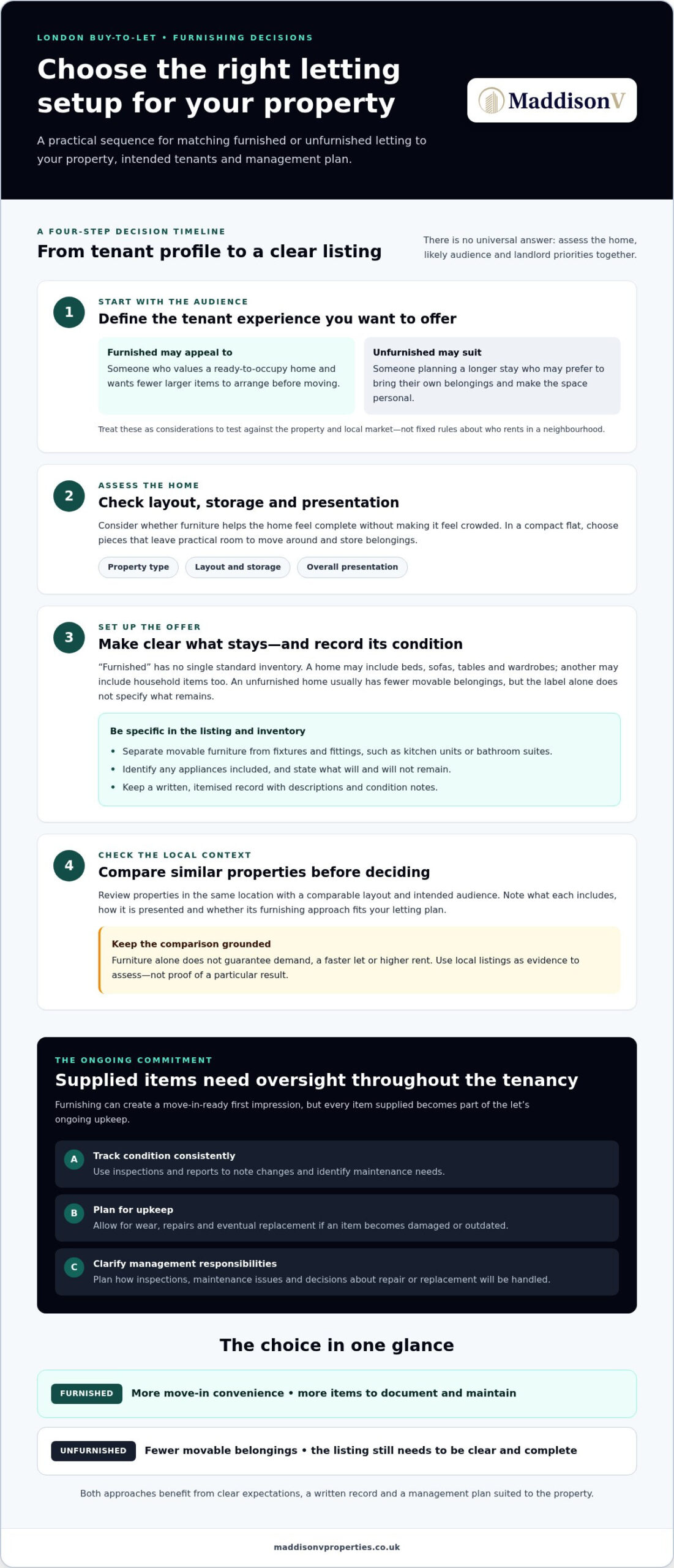
These terms describe what a landlord intends to leave for the tenant, but they don’t define one standard inventory. A furnished home might include beds, sofas, tables and wardrobes; another listing may also include household items. An unfurnished home usually has fewer movable belongings, but the label alone doesn’t tell prospective tenants exactly what will remain.
Make the offer specific. Distinguish movable furniture from fixtures and fittings, such as kitchen units or bathroom suites, and identify any appliances included. State what stays and what doesn’t in the listing, then keep a written record of the supplied items and their condition. This gives applicants a clearer picture and provides a shared reference during the tenancy.
Why the decision matters to a London buy-to-let investor
London’s rental market includes varied homes and tenant audiences, from compact apartments to larger family properties. A tenant looking for a ready-to-occupy home may value furniture already in place. Someone planning a longer stay may prefer to bring their own belongings. These are considerations to test against the property and local market, not fixed rules about who rents in a particular neighbourhood.
Think about the experience your listing promises. A furnished property can look complete and reduce the number of items a tenant needs to arrange before moving in. An unfurnished option leaves more room for personal choices. Each approach also creates different expectations about the condition and ongoing care of items supplied.
Compare like with like before deciding: look at similar properties in the same location, with a comparable layout and intended audience. Check what each listing includes, how the property is presented and whether its furnishing approach appears relevant to your letting plan. This is more useful than assuming furniture alone will command a higher rent or attract a particular tenant.
The aim is a consistent offer: a property presented to suit its likely occupants, with responsibilities understood from the start. The following sections weigh the practical advantages and commitments of each setup.
Furnished Buy-to-Let: What Landlords Gain and Take On
A furnished home can present a more complete, ready-to-use living space. For a prospective tenant who doesn’t want to source larger items before moving, that convenience may make the property worth considering. For the landlord, every item provided becomes part of the let’s ongoing upkeep. Furnishing adds tenant convenience and landlord responsibilities for the items supplied.
That balance matters when deciding between furnished and unfurnished buy-to-let in London. Furniture can help create a cohesive look in photographs and viewings, but it doesn’t guarantee demand, a faster let or higher rent. Consider the full life of the furnishings, not just the first impression they create.
When a furnished London rental may suit the investment
Start with the intended tenant experience. A home aimed at someone who values a move-in-ready setup may be more compelling with key furniture already in place. Consider the property’s layout, storage and presentation. In a compact flat, for example, choose pieces that leave practical room to move around and store belongings.
Then compare similar local listings with the same property type and audience. See how they describe their contents and whether furnished homes appear to fit the expectations of prospective tenants in that specific market. Treat listings as evidence to assess, not proof that furnishing will produce a particular result. A considered selection can support a clear letting proposition; an overfilled or mismatched interior may distract from the home itself.
The ongoing responsibilities of supplying furniture
Furniture needs attention during a tenancy and between occupants. Build a simple management routine around the items supplied:
- Record what’s included. Keep an itemised inventory with descriptions and condition notes.
- Review condition consistently. Use inspections and reports to track changes and identify maintenance needs.
- Plan for upkeep. Account for wear, repairs and eventual replacement, including when an item becomes damaged or outdated.
These tasks take time. If you manage the property yourself, plan how you’ll coordinate inspections, respond to maintenance issues and decide when an item needs repair or replacement. If management is handled on your behalf, clarify how furniture condition is recorded and how reported issues are managed. A reliable record helps distinguish ordinary wear from new damage and makes communication clearer for everyone involved.
Before furnishing, weigh the setup against your investment plan: does the tenant appeal and presentation justify the ongoing attention you’re willing to provide? MaddisonV’s facilities management includes maintenance and repairs, inspections and reporting, helping owners organise practical oversight of a let. Explore London property management support as part of planning how the property will be managed.
Unfurnished Buy-to-Let: When a Simpler Setup May Fit Better
An unfurnished let can suit a landlord who wants to provide a well-presented home without supplying movable furniture. It isn’t necessarily an empty property: fixtures, fittings and selected appliances may remain. Define exactly what the tenant receives, then make sure the property’s condition and listing tell the same story.
Fewer supplied items can mean fewer furniture-specific responsibilities, but not fewer responsibilities for managing the tenancy and property. This distinction matters when weighing furnished versus unfurnished buy-to-let in London. A simpler furnishing arrangement may reduce the number of landlord-owned items to track, while day-to-day oversight still needs a clear plan.
Which tenant and property situations may suit unfurnished letting?
Some prospective tenants already own furniture or prefer choosing their own pieces, particularly if they expect to settle into the property with belongings of their own. Treat this as a possibility to test against current comparable listings, not an assumption about every tenant or London neighbourhood.
Assess the home as a complete proposition. A property with functional fixtures, a clean finish and enough space for tenants to arrange their furniture may present well unfurnished. Consider how the rooms will look in photographs and viewings without movable pieces, and whether the available appliances support the intended audience. If an empty room looks stark or makes its proportions difficult to understand, thoughtful presentation can help prospective tenants picture how it might be used.
Use local evidence to guide the choice. Compare similar properties by location, layout and likely tenant profile, and note what each listing actually includes. Don’t infer demand from the unfurnished label alone. Preferences can differ between properties, even within the same part of the city.
What landlords still need to manage in an unfurnished let
Fewer furniture items don’t remove the need for organised property management. Tenant sourcing, leasing, rent collection, maintenance, tenant relations, inspections and reporting remain relevant to a well-managed let. The work goes beyond monitoring furniture: the property’s overall condition and the tenant relationship still need attention.
Be specific about what stays. If appliances or other household items are provided, name them in the listing and keep an accurate record of their condition. Avoid describing the property simply as “unfurnished” if that could leave applicants unsure whether key items are included. Clear information helps prospective tenants assess whether the home suits their needs before arranging a viewing.
Separate the furnishing decision from the management model. Consider who will handle maintenance requests, coordinate repairs, record inspection findings and communicate with tenants. A leaner inventory may simplify one part of oversight, but it shouldn’t be mistaken for a hands-off investment. Match the property’s presentation, tenant profile and your capacity to manage the whole letting, then compare that plan with the furnished alternative.
How to Choose Between Furnished and Unfurnished Letting in London
A sound decision comes from weighing the tenant experience against the work and resources required to deliver it. Use this five-step process to assess the property, the letting proposition you want to offer and the evidence available for its specific London location. This gives you a practical basis for choosing furnished vs unfurnished buy-to-let london without relying on assumptions about demand or returns.
- Define the intended audience. Write down who the property is designed to appeal to and what they may value in a home. Tenants who already own furniture might prefer room to bring their own; others may appreciate a ready-to-use setup. Treat these as ideas to test against current local listings, not fixed rules.
- Assess the property. Review the layout, storage, existing fixtures and overall presentation. Consider whether furniture would make the rooms more functional or risk crowding them. Note what the property already offers, then identify what a tenant would need to provide to make it feel like home.
- Compare the setup required. For a furnished option, list the items to source and the records needed to track their condition. For an unfurnished option, identify any appliances or other items that will remain and how the home will be presented without movable furniture. Separate initial preparation from ongoing upkeep.
- Plan the management. Consider the time needed for inspections, maintenance coordination, tenant communication and reporting. A furnished let adds furniture-specific condition checks and replacement planning; either approach still requires oversight of the tenancy and property. Decide how those responsibilities fit your capacity and management arrangements.
- Review evidence and assumptions. Compare current listings for similar properties in the same location and property type. Record asking rents, stated contents and presentation, while remembering that listings show what is being marketed, not confirmed rental outcomes. Revisit your target audience and furnishing plan as you gather relevant evidence.
Then compare the financial picture without treating advertised rent as guaranteed income. Set out the expected rental income you’re using for each option alongside furnishing, upkeep and management considerations. Mark assumptions clearly and avoid relying on a projected difference unless relevant comparable evidence supports it. A broader London rental income guide can help frame the income side of your assessment.
Keep financing in view as part of the wider investment plan, rather than treating it as separate from how the property will be let. If you are looking to acquire new residential assets across the UK or abroad, international real estate agency Konradian helps buyers navigate property purchases to build a strong investment portfolio.
Once your preferred approach is clear, align the listing, inventory and management plan so tenants know what to expect and responsibilities are easier to track. For support with the practical oversight of a London rental, explore MaddisonV property management.
Managing a Furnished or Unfurnished London Buy-to-Let with MaddisonV
Choosing how to furnish a property is one part of preparing it for the market. The next is making sure the letting and management plan reflects what will be provided, who the property is intended to attract and what ongoing oversight it needs. Furnishing alone doesn’t guarantee rental returns; clear processes help keep the property, tenancy and records aligned.
How property management can support either furnishing choice
MaddisonV Properties facilities management covers tenant sourcing and screening, leasing and contract management, rent collection, maintenance and repairs, tenant relations, inspections and reporting. For a furnished let, inspections and reporting can help record the condition of supplied items. For an unfurnished home, the same oversight supports attention to the property’s wider condition and the tenancy.
Day-to-day coordination matters, too. Online portals support rent payments, maintenance requests and financial tracking, while MaddisonV Properties provides a 24/7 emergency maintenance response. These tools and services help organise routine communication and property oversight, whether or not furniture is included.
Plan the next step for your London investment
Bring the decision back to three practical considerations: the audience you want to reach, how the property should be presented and the management capacity available to you. A furnished home may call for records and attention to additional items; an unfurnished one still needs clear leasing, responsive maintenance coordination and consistent reporting. In both cases, define what tenants can expect and how the property will be managed.
For a broader view of how ongoing oversight fits into an investment, the property management guide explores the role of management across a rental property’s lifecycle. It can help connect your furnishing choice with tenant relations, maintenance and reporting rather than treating presentation as a standalone decision.
With a considered plan for furnished vs unfurnished buy-to-let london, you can move from weighing options to setting out a clear letting proposition and management approach. For support with the wider investment and management journey, discuss your London property investment with MaddisonV Properties.
Set a Clear Plan for Your London Rental
Turn your furnishing decision into a practical standard for the property: define what tenants can expect, keep the listing aligned with what’s provided, and include the chosen setup in your ongoing investment plan. That way, furnished vs unfurnished buy-to-let london becomes more than a styling choice. It becomes a considered part of how you prepare and manage the asset.
As your plans develop, revisit the assumptions behind your decision. Tenant expectations and comparable listings can change, while the property’s condition and your management priorities may shift over time. A clear process helps you respond deliberately rather than make furnishing decisions in isolation. MaddisonV brings over 50 years of combined experience across its team to property investment and management in London.
For a considered conversation about your next steps, discuss your London property investment with MaddisonV. With a thoughtful plan and the right oversight, you can move forward with greater clarity and confidence.
Frequently Asked Questions
Does a furnished buy-to-let in London always achieve higher rent?
No. Don’t assume a furnished property will achieve higher rent. A ready-to-use home may appeal to some prospective tenants, but that alone doesn’t establish a rent premium. Compare current listings for similar homes in the same area and note differences in size, condition and what’s included. Then weigh the rental expectation against furnishing, upkeep and management responsibilities, rather than treating the furnished label as a measure of investment performance.
What should a landlord include in a furnished London rental?
There’s no single inventory for every furnished rental. Decide which furniture, appliances and household items to provide based on the property and its likely audience. For example, specify whether the listing includes major appliances as well as beds and seating. Describe the included items clearly, and record their condition before the tenancy begins. This makes the offer easier to understand and gives you a useful reference if questions arise later.
Is an unfurnished buy-to-let easier to manage?
It may involve fewer furniture-specific tasks, but it isn’t automatically easier overall. A landlord still needs a workable approach to tenant communication, repairs, rent administration and property oversight. Consider where the work falls during a tenancy and at a changeover, then compare that with the furniture checks and upkeep a furnished let may require. The better fit depends on your available time, how responsibilities are organised and the needs of the particular property.
Can I let a London property partly furnished?
Yes. You can provide a defined selection of furniture rather than presenting the home as fully furnished or completely unfurnished. For instance, you might leave larger pieces while allowing the tenant to supply other items. Make the arrangement clear in the listing, including what stays and what will be removed, and keep a consistent condition record. Specific descriptions help applicants judge whether the setup suits them before arranging a viewing.
How should I compare furnished and unfurnished buy-to-let returns?
Compare expected rental income for similar local properties, then set out the preparation, upkeep and management demands of each option alongside it. For a furnished vs unfurnished buy-to-let london assessment, use comparables with a similar property type and location, and distinguish advertised rents from confirmed outcomes. A simple side-by-side calculation can show which assumptions drive your forecast. Include the time and coordination required, not only potential income.
Does furnishing affect property management workload?
It can add furniture condition checks, maintenance coordination and eventual replacement planning, while an unfurnished let has different presentation and tenant setup considerations. The broader workload also includes managing rent, repairs and communication with tenants. Map each task to the person handling it, then identify how updates will be recorded and followed through. This helps you assess whether the furnishing choice fits your management arrangements.
What should I consider before furnishing a new-build London buy-to-let?
Start by checking the layout, room dimensions and storage, then decide whether furniture will support the way you want to present the property. Review which appliances or other items are already included so you don’t plan around assumptions. Compare current listings for similar new-build homes in the same location, treating them as market context rather than a promise of performance. Finally, consider how supplied items will be recorded and maintained throughout the tenancy.

Sign Up Now
Want to read more great articles and blogs subscribe to our newsletter