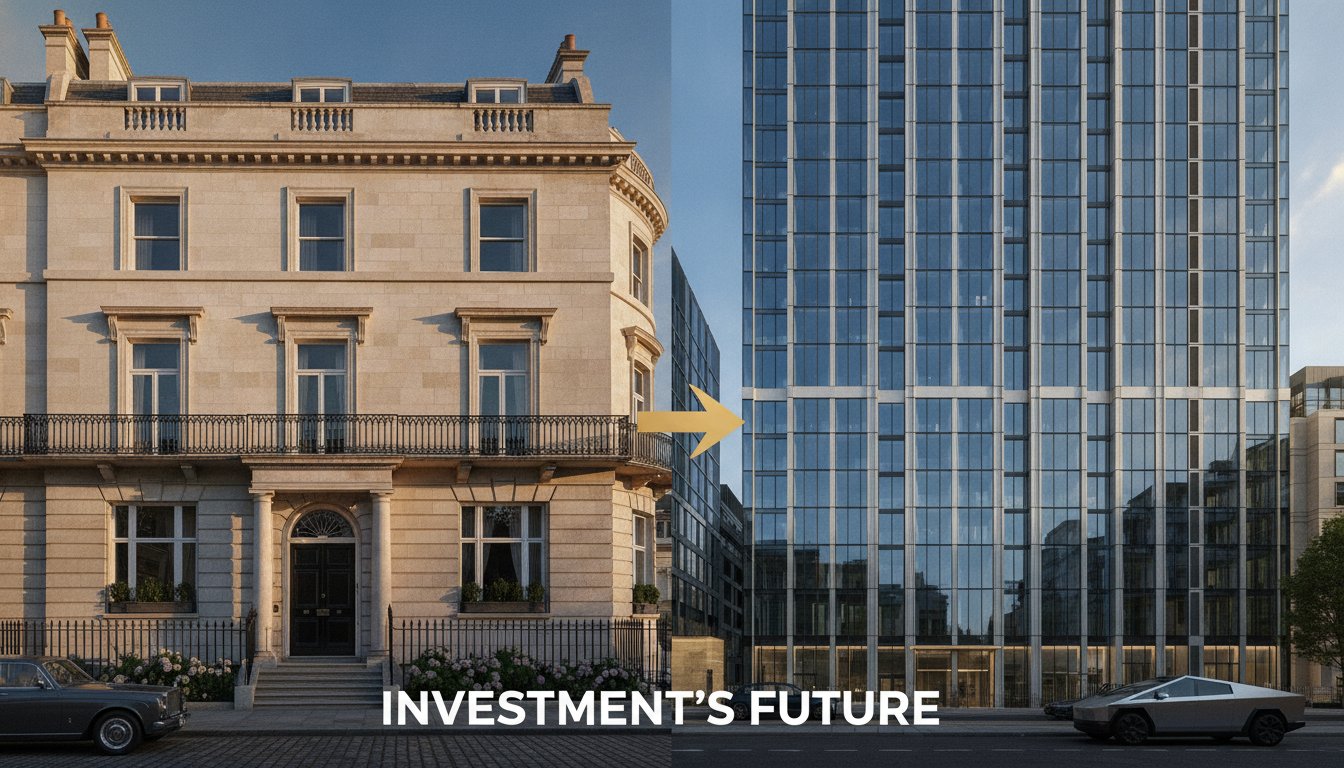
The heritage charm of a Mayfair townhouse might actually be your greatest liability in 2026. While the prestige of Prime Central London remains...

The heritage charm of a Mayfair townhouse might actually be your greatest liability in 2026. While the prestige of Prime Central London remains undisputed, the reality of the 2030 EPC deadlines and shifting tax landscapes is forcing a re-evaluation of the classic portfolio. You’ve likely felt the weight of the 2026/27 property income tax rates, which currently sit at 20%, 40%, and 45%. When you’re considering investing in London new build developments, you aren’t just buying a floor plan; you’re securing a future-proofed asset that sidesteps the maintenance anxieties of heritage conversions. We understand that for an international investor, the choice between modern precision and historic prestige is rarely simple.
You deserve a strategy that balances financial security with the lifestyle requirements of the global elite. This guide provides the definitive framework to help you choose the right path for your capital, ensuring your next acquisition offers both mental tranquility and superior returns. We will examine the impact of the 3.75% Bank Rate, the shift toward commonhold, and the specific tactics required to maximize yields near the capital’s elite schools and private clubs.
Key Takeaways
- Understand why the UK remains a premier safe haven for global capital, balancing modern technological precision against established architectural prestige in the 2026 market.
- Evaluate the strategic financial benefits of investing in London new build developments, focusing on early-stage off-plan capital growth and the security of 10-year build warranties.
- Assess the ‘Net Zero’ advantage and how upcoming 2030 EPC regulations impact the long-term liquidity and retrofitting costs of your property portfolio.
- Compare gross versus net yields across Prime Central London, factoring in the 2026 tax landscape and the varying maintenance requirements of heritage assets.
- Determine your ideal investment scenario by aligning your property choice with specific 2030 goals, from yield-focused modern assets to legacy-driven heritage estates.
Navigating the 2026 Property Landscape: New Build or Existing Asset?
In July 2026, the London market remains a beacon of stability for global wealth. With the Bank of England holding rates at 3.75%, the UK continues to serve as a premier safe haven for capital from the UAE, USA, and Singapore. Investors today face a sophisticated choice between the modern precision of a new development and the timeless allure of London’s architectural heritage. While heritage homes offer irreplaceable prestige, the operational ease of investing in London new build developments provides a level of financial security that is increasingly difficult to ignore.
Identifying undervalued assets in this mature market requires more than just a glance at a brochure; it demands deep market intelligence that weighs immediate rental yields against long-term capital appreciation. The decision often hinges on whether an investor prioritizes the historical narrative of a Mayfair mansion block or the seamless, concierge-led lifestyle of a modern Battersea tower. As international buyer priorities shift, the demand for properties that offer effortless oversight and mental tranquility has never been higher.
To better understand the current value proposition in the capital, watch this helpful video:
Shifting Market Dynamics in Prime Central London (PCL)
From the gleaming skyscrapers of Canary Wharf to the historic corridors of Westminster, the geography of value is undergoing a subtle transformation. Supply constraints in 2026 have created a significant premium on both new developments and well-maintained resale homes. We’ve seen ‘Build-to-Rent’ standards become the new benchmark for luxury acquisitions. Investors now expect the same high-tier amenities and fluid management processes in their private portfolios that were once reserved for institutional developments. While Marylebone remains a bastion of capital growth, those investing in London new build developments within regeneration zones like Nine Elms often see more immediate lifestyle-driven returns and superior energy efficiency ratings.
The UHNW Shift Toward Wellness and Integrated Technology
The Allure of New Build Developments and Off-Plan Opportunities
Securing capital growth through early-stage off-plan acquisitions remains one of the most effective entry points for the sophisticated investor. In the 2026 market, the strategic advantage of investing in London new build developments lies in the ability to lock in current valuations while the asset appreciates during construction. This approach provides a significant hedge against inflation and supply shortages. Unlike the resale market, these opportunities often come with staged payment structures. This allows you to maintain capital liquidity for other global ventures while securing a foothold in Prime Central London’s most competitive neighborhoods.
London’s newest residential towers now integrate global standards that rival the luxury offerings of Dubai or Singapore. We see a deliberate shift toward holistic environments that combine residential life with high-tier service. Recent expert analysis on the new homes market highlights how supply constraints are driving demand for these high-specification assets. For the international buyer, these developments offer a turnkey solution that eliminates the typical anxieties of UK property ownership, such as hidden structural defects or complex renovation permissions. If you are looking to refine your portfolio, our off-plan sourcing expertise can help identify the most promising opportunities before they reach the open market.
Advanced Energy Efficiency and Future-Proofing
The 2026 regulatory landscape has placed an undeniable premium on sustainability. With the October 1, 2030, deadline approaching for all private rented properties to achieve an EPC rating of ‘C’ or higher, the ‘Net Zero’ advantage of new builds is a critical factor in long-term liquidity. You won’t face the costly retrofitting expenses that plague 52% of the current private rented sector. These modern assets deliver lower operational costs and higher net rental yields, making them the preferred choice for ESG-compliant estate planning. International investors prioritize these future-proofed buildings because they offer a seamless path to compliance and mental tranquility.
Bespoke Personalisation and Modern Amenity Suites
The value of an investment is often found in the details. Purchasing in the early construction phases allows for a level of bespoke personalization that suits specific UHNW tastes, from custom cabinetry to curated stone finishes. These developments function as vertical private members’ clubs, offering 24-hour concierges, private cinema rooms, and expansive spas. These lifestyle amenities aren’t just luxuries; they’re essential drivers of tenant retention and premium rental rates. For a deeper dive into the technicalities of these contracts, consult The Sophisticated Investor’s Guide to Off-Plan Property Investment in 2026. This level of integrated technology and service ensures your asset remains competitive in a market that increasingly values ease of use and aesthetic excellence.

The Timeless Appeal of Existing Mansion Blocks and Heritage Homes
While we’ve explored the technological superiority of investing in London new build developments, the heart of Prime Central London (PCL) still beats within its historic mansion blocks and period townhouses. The most prestigious addresses in Mayfair, Chelsea, and Knightsbridge are almost exclusively existing assets. These locations offer an irreplaceable geography that modern developments simply cannot replicate. For the global investor, these properties represent more than just square footage; they’re a stake in London’s enduring narrative. The 50-year growth trajectory of Georgian and Victorian architecture has proven remarkably resilient, providing a stable foundation for long-term capital appreciation that often outpaces the broader market.
Mansion blocks, in particular, offer a unique advantage by combining high-ceilinged elegance with established community prestige. These buildings often feature grand proportions and architectural details that modern regulations make difficult to recreate today. For families, the choice is frequently driven by proximity to the UK’s elite educational institutions. Being within a short radius of Westminster School, or maintaining a base for weekend visits from Eton and Harrow, remains a non-negotiable priority for many international buyers. This connection to heritage and lifestyle ensures that demand for these classic assets remains consistently high, regardless of broader economic shifts.
Architectural History as a Value Driver
The demand for period features among ultra-high-net-worth tenants remains a significant driver of rental premiums. There’s a specific ‘Scarcity Premium’ attached to Grade II listed properties in Prime London, as the supply of these historic homes is finite and strictly protected. Architectural heritage serves as a resilient hedge against market volatility by providing a finite asset class that cannot be replicated by modern construction. Buyers are often willing to trade the initial ease of a new build for the aesthetic excellence and cultural weight of a home with a documented history. This emotional and historical value translates into a robust exit strategy for those looking to preserve wealth across generations.
The Sourcing Challenge: Finding Off-Market Gems
Navigating the heritage sector requires a different lens than investing in London new build developments, as the finest assets are often held within private family offices. The best existing properties rarely reach public portals like Rightmove or Zillow; they circulate within a ‘grey market’ accessible only through deep industry connections. A dedicated sourcing agent is essential to filter these high-yield off-market opportunities and manage the complexities of historic conveyancing. To understand how to access these exclusive listings, consult our guide on Property Sourcing Agents London: The Investor’s Guide to Prime Acquisitions in 2026. This bespoke approach ensures that you’re presented with assets that offer both aesthetic beauty and sound financial security.
Comparative Financial Intelligence: Yields, Taxes, and Maintenance
The financial success of a London acquisition in 2026 rests on the distinction between gross potential and net reality. While Prime Central London (PCL) assets are often prized for capital preservation, investing in London new build developments typically offers a more streamlined path to higher net yields. Gross yields in modern developments often range from 3.5% to 4.5%, but it’s the reduction in operational leakage that secures the investor’s return. In a market where the Bank Rate remains at 3.75%, every basis point of efficiency matters. We analyze these figures through a lens of long-term portfolio liquidity, ensuring your capital works with maximum precision.
Maintenance Reserves vs. Build Warranties
Owning a piece of London’s history comes with a specific set of financial obligations. Heritage assets, particularly Victorian townhouses or Georgian conversions, require meticulous budgeting for ‘Hidden Costs’ like roof repairs, historic masonry restoration, and window refurbishment. Established luxury mansion blocks mitigate these risks through Sinking Funds, where residents contribute to a collective maintenance reserve. However, these service charges can be substantial, often impacting the net yield by several percentage points. Professional facilities management is essential here to prevent deferred maintenance from eroding asset value.
Contrast this with the peace of mind provided by investing in London new build developments. New assets benefit from a defect liability period and a 10-year NHBC or equivalent build warranty. This protection effectively caps your maintenance expenditure for the first decade of ownership. When combined with modern energy systems that lower utility overheads, the net income profile of a new build becomes significantly more predictable. For the international investor seeking a passive income stream with minimal operational friction, the warranty-backed model offers superior mental tranquility.
Stamp Duty and Tax Efficiency for Overseas Buyers
Acquisition strategy for UAE and US buyers must account for the 2026 tax landscape. For properties exceeding £1.5 million, the standard SDLT rate is 12% on the portion above that threshold. However, most international investors will also face the 5% surcharge for additional residential properties, bringing the top slice of Stamp Duty to 17%. Navigating these thresholds requires a data-driven approach to entry pricing. It’s also vital to consider the 2026/27 Capital Gains Tax (CGT) rates, which stand at 18% for basic rate gains and 24% for higher or additional rate bands. Long-term hold periods remain the most effective strategy for mitigating these liabilities while benefiting from the UK’s status as a safe haven.
Property income tax for the 2026/27 year is charged at 20%, 40%, and 45% depending on your bracket, with an increase scheduled for April 2027. To ensure your acquisition is structured for maximum efficiency, we invite you to explore our bespoke portfolio management and mortgage consultations. Strategic planning today ensures that your PCL asset remains a source of financial security rather than a tax burden as we move toward 2030.
The Strategic Verdict: Aligning Choice with 2030 Portfolio Goals
The decision between heritage and modernity is rarely binary; it’s a strategic alignment with your specific 2030 objectives. For the yield-focused investor, the Build-to-Rent model found when investing in London new build developments offers a streamlined, high-efficiency path to consistent income. These assets are designed for the modern tenant, prioritizing wellness and technology while side-stepping the retrofitting costs associated with upcoming environmental regulations. The predictable maintenance profile and energy efficiency of these buildings make them an ideal cornerstone for those seeking to maximize net rental returns in a high-tax environment.
Why Sourcing Expertise is the 2026 Differentiator
In a mature market, data alone is insufficient. True alpha is found through local ‘boots on the ground’ intelligence that identifies shifts before they’re reflected in public reports. MaddisonV Properties functions as your essential filter, uncovering off-market opportunities in Marylebone and Knightsbridge that align with specific UHNW lifestyle needs. Whether you’re prioritizing proximity to Westminster School or seeking a concierge-managed pied-à-terre, our sourcing model ensures alignment with your long-term vision. For a comprehensive overview of the current climate, consult our Real Estate in England: The Definitive Guide to the London Market in 2026. This level of expert oversight is what distinguishes a standard acquisition from a legacy-defining investment.
The Passive Investment Promise: Facilities and Portfolio Management
The ultimate luxury for the modern investor is mental tranquility. We provide a polished, all-encompassing solution that handles every operational detail, from initial mortgage consultations to ongoing facilities management. By protecting the visual and functional standards of your portfolio, we ensure your assets remain competitive and prestigious. Our commitment to service means you enjoy the rewards of investing in London new build developments and heritage estates without the burden of daily oversight. We invite you to explore our bespoke property sourcing services and discover how a dedicated partner can transform your UK property journey into a seamless, high-yield experience.
Securing Your Legacy in the 2030 London Market
The 2026 property landscape demands a move beyond simple aesthetic preference toward rigorous financial intelligence. Success in Prime Central London now requires a delicate balance between the future-proofed efficiency of new developments and the irreplaceable prestige of heritage locations. Whether your strategy involves investing in London new build developments for their ‘Net Zero’ advantages or acquiring a Grade II listed mansion block near the capital’s elite schools, the objective remains the same: the preservation and growth of global wealth. You’re choosing more than a property; you’re selecting a financial safe haven that stands the test of time.
Navigating the complexities of UK tax reforms and the upcoming 2030 EPC deadlines shouldn’t be a solitary endeavor. As specialists in Prime Central London and luxury Dubai developments, we provide the authoritative market intelligence and full lifecycle support you need to thrive. From initial sourcing and mortgage consultations to comprehensive portfolio management, our team ensures your assets remain both functional and prestigious. Secure your next high-yield acquisition with MaddisonV Properties and step into a partnership defined by integrity, expertise, and mental tranquility. Your London legacy is waiting.
Frequently Asked Questions
Is a new build property a better investment than an existing one in London for 2026?
The choice depends entirely on your specific portfolio goals for 2030. New build properties offer superior energy efficiency and lower maintenance costs, ensuring immediate compliance with upcoming environmental regulations. Existing properties provide irreplaceable architectural history and locations in established neighborhoods like Mayfair, which often command a higher scarcity premium. While new builds offer operational ease, existing assets remain the gold standard for long-term capital preservation.
What are the specific tax implications for international buyers purchasing new builds in the UK?
International investors face a structured tax landscape including a 2% non-resident surcharge on Stamp Duty Land Tax (SDLT). For properties exceeding £1.5 million, the standard rate is 12%, but you must also factor in the 5% surcharge for additional residential properties. Capital Gains Tax for the 2026/27 tax year is charged at 24% for higher rate taxpayers, while rental income is taxed at 20%, 40%, or 45% based on your total UK earnings.
How do rental yields compare between modern developments in Nine Elms and traditional Marylebone mansion blocks?
Modern developments in Nine Elms typically achieve higher net yields, often ranging between 3.5% and 4.5%. This is driven by lower operational leakage and high demand for lifestyle amenities like 24-hour concierges and private gyms. Traditional Marylebone mansion blocks offer lower immediate yields but provide exceptional capital growth stability. The higher service charges and maintenance reserves in older buildings can impact the net return compared to the warranty-backed efficiency of a new development.
What should I look for in a 2026 off-plan property contract to mitigate delivery risks?
Priority should be given to the inclusion of a robust ‘long-stop date’ which provides a legal exit strategy if construction exceeds a specific timeframe. When investing in London new build developments, ensure the contract includes comprehensive developer warranties and a clear schedule for staged payments. It’s also vital to verify the snagging process, as a professional survey can identify defects that the developer is obligated to fix before final completion, protecting your initial capital.
Do existing heritage properties in London require significant energy efficiency upgrades by 2030?
Yes, all private rented properties in England and Wales must achieve an Energy Performance Certificate (EPC) rating of at least ‘C’ by October 1, 2030. Currently, 52% of private rented sector properties fall below this standard. Owners of Victorian or Georgian assets should budget for retrofitting costs, which are currently capped at £10,000 per property. Investing in modern assets sidesteps these requirements, as new developments are built to meet or exceed these sustainability benchmarks from the outset.
Can I get a mortgage as a non-resident for both new build and existing properties in the UK?
Bespoke mortgage products are readily available for non-resident investors from the UAE, USA, and Singapore. With the Bank of England holding the base rate at 3.75% as of July 2026, average five-year fixed-rate mortgages are hovering around 5.54%. Specialized lenders offer “New Build” products with extended offer periods to accommodate off-plan construction timelines. We provide professional consultations to help you navigate these criteria and secure the most efficient financing for your acquisition.
How does proximity to elite schools like Westminster or St Paul’s affect property value?
Proximity to elite educational institutions creates a ‘school premium’ that significantly enhances both capital growth and rental demand. Properties within the catchment or easy commuting distance of Westminster School or St Paul’s see consistent interest from affluent international families. This demographic prioritizes long-term stability and lifestyle prestige, ensuring that your asset remains highly liquid and resilient even during broader market shifts. It’s a critical factor for investors focusing on legacy wealth and high-tier tenancy.
Why is professional facilities management critical for luxury property investors?
Professional facilities management is the cornerstone of a truly passive investment strategy. It ensures that the visual and functional standards of your portfolio are maintained without requiring your daily involvement. For international owners, this service provides mental tranquility by handling complex operational details, from tenant relations to emergency repairs. Investing in London new build developments often simplifies this process, but expert oversight remains essential to protect the long-term aesthetic excellence and financial security of your PCL assets.

Sign Up Now
Want to read more great articles and blogs subscribe to our newsletter