
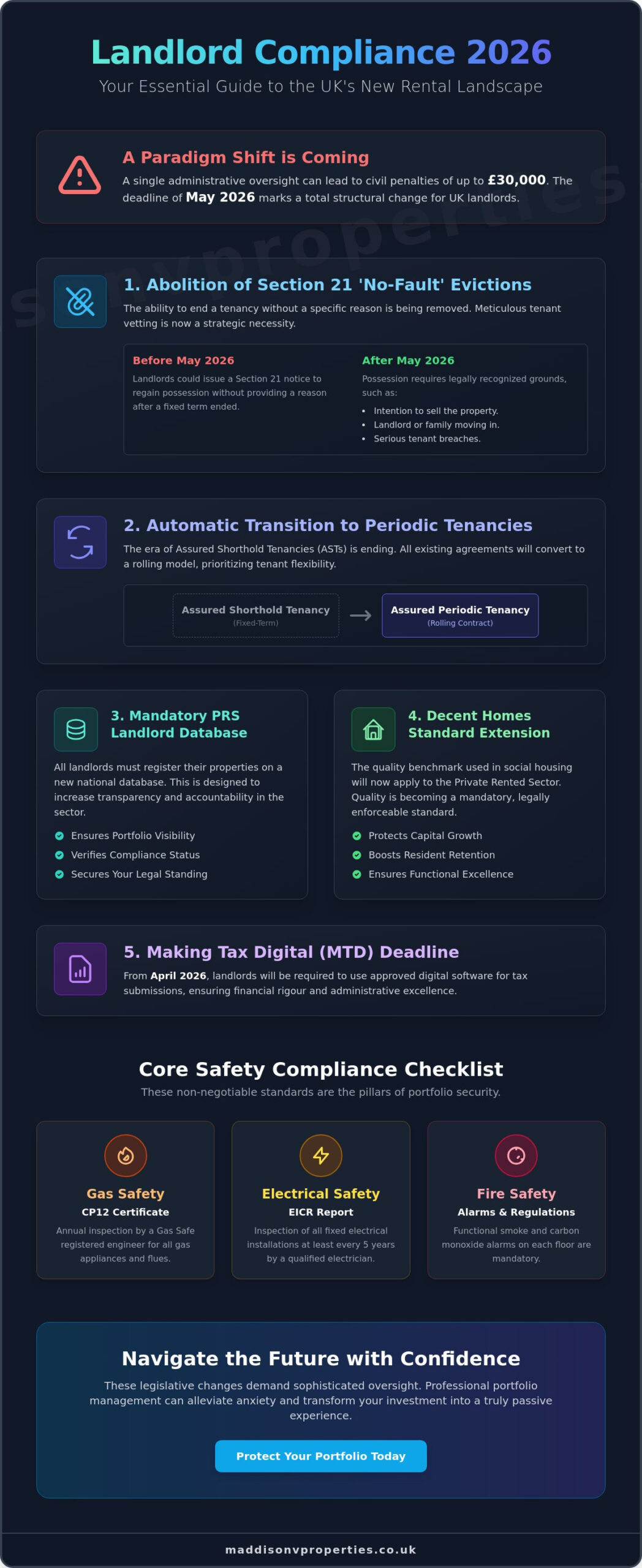
A single administrative oversight in the new rental era can now result in civil penalties of up to £30,000. For many property owners, the arrival of...

A single administrative oversight in the new rental era can now result in civil penalties of up to £30,000. For many property owners, the arrival of May 2026 feels less like a calendar update and more like a total structural shift in how they must operate. It’s completely understandable if you feel a sense of fatigue from the constant stream of policy changes, especially with the definitive abolition of Section 21. You’ve likely spent years building a portfolio for security, yet the complexity of this comprehensive landlord compliance checklist 2026 uk can make that hard-earned stability feel fragile.
We believe that sophisticated property ownership should offer mental tranquility, not a mounting pile of digital tax requirements and regulatory hurdles. This guide provides the expert-led framework you need to master the Renters’ Rights Act, transition smoothly to periodic tenancies, and embrace the new Making Tax Digital standards. You’ll find a clear, chronological, and comprehensive roadmap designed to protect your property value while ensuring your investments remain a source of prestige. We’ll explore everything from mandatory information sheets to the new national PRS database, giving you the professional oversight required to thrive with quiet confidence.
Key Takeaways
- Understand the transition to rolling periodic agreements and how this fundamental shift redefines the relationship between property owners and residents.
- Navigate the mandatory registration requirements for the new PRS Landlord Database to ensure your portfolio remains visible, compliant, and secure.
- Implement the essential landlord compliance checklist 2026 uk to verify that your safety certifications meet the most rigorous industry standards.
- Prepare for the April 2026 Making Tax Digital (MTD) deadline to maintain financial rigour and administrative excellence through approved digital software.
- Discover how professional portfolio management can alleviate legislative anxiety, offering you mental tranquility and a truly passive investment experience.
The 2026 Compliance Landscape: Why This Year Changes Everything
The date 1 May 2026 isn’t just another calendar entry; it’s a fundamental pivot for the UK rental market. This marks the official implementation of the Renters’ Rights Act, effectively ending the era of Assured Shorthold Tenancies as we’ve known them for decades. All existing agreements will automatically convert to Assured Periodic Tenancies on this day. This shift creates a rolling model that prioritizes resident flexibility, moving away from fixed terms that previously provided a predictable, if sometimes rigid, structure for property owners. For the discerning landlord, this new era demands a more sophisticated approach to portfolio oversight.
Success in this evolving environment requires a proactive mindset and a commitment to high-tier standards. Your landlord compliance checklist 2026 uk must now account for these structural changes, ensuring every property meets the updated legal framework while protecting your investment’s long-term yield. While these updates represent a significant overhaul, they’re built upon the foundations of the Landlord and Tenant Act 1985, which has long governed our core responsibilities regarding property maintenance and repair. By embracing these changes early, you can maintain the prestige of your portfolio and ensure a fluid, stress-free experience for your tenants.
To help you prepare for these significant shifts, watch this expert overview of the upcoming changes:
The End of Section 21: A Strategic Shift
The abolition of “no-fault” evictions represents the most substantial change to the sector in a generation. From May 2026, you’ll no longer be able to terminate a tenancy without a specific, legally recognized reason. Instead, regaining possession will rely on robust grounds, such as the intention to sell the asset or a requirement for the owner to move back into the property. This change makes meticulous tenant vetting your most powerful tool for risk mitigation. Selecting high-quality residents who appreciate the aesthetic and functional standards of your property is no longer just a preference; it’s a strategic necessity for financial security.
The Decent Homes Standard Extension
Quality is becoming a mandatory benchmark rather than an aspirational goal. The extension of the Decent Homes Standard to the private sector means properties must now mirror the rigorous quality levels found in social housing. This isn’t merely about avoiding local authority inspections or potential penalties. High-end maintenance and functional excellence are directly linked to capital growth and resident retention. By ensuring your properties exceed these new benchmarks, you protect the value of your assets while providing the premium living experience that high-tier tenants expect in 2026.
Core Safety Standards: Gas, Electrical, and Fire Requirements
Maintaining a property’s allure requires more than aesthetic refinement; it demands absolute adherence to safety protocols that protect both the resident and the asset. In the 2026 rental era, the Gas Safety Certificate (CP12) and the Electrical Installation Condition Report (EICR) remain the non-negotiable pillars of your portfolio. These aren’t merely administrative hurdles but are essential components of a landlord compliance checklist 2026 uk designed to ensure every home is seamless, secure, and sophisticated. Understanding your landlord’s safety responsibilities ensures that your reputation remains as impeccable as your property’s finish.
Fire safety standards have become increasingly rigorous, particularly for high-end residential blocks and luxury apartments. Each floor must be equipped with functional smoke and carbon monoxide alarms, which must be tested on the first day of every new tenancy. In a move toward total transparency, 2026 regulations require that all safety certificates are stored digitally and made accessible to tenants within 28 days of an inspection. This digital-first approach provides a clear audit trail, offering you the mental tranquility that comes from knowing every detail is documented and every risk is mitigated. Professional facilities management can streamline these processes, ensuring your certificates are always current and correctly filed.
Electrical Safety (EICR) and 5-Year Cycles
The EICR operates on a strict five-year cycle, requiring inspections by qualified, accredited electricians who understand the complexities of modern, high-tier installations. For luxury developments and new-builds, validating these reports early is vital to maintaining a fluid management process. When remedial works are necessary, they must be handled with a level of professionalism that respects the resident’s lifestyle. A well-coordinated approach ensures that safety upgrades are completed swiftly, quietly, and effectively, preserving the high-quality experience you’ve promised to your tenants.
Energy Performance Certificate (EPC) Evolution
While the current minimum standard remains at an E rating, the trajectory toward a mandatory C rating is clear. Proactive property owners are already upgrading their real estate in england london to meet the expectations of the eco-conscious tenant. There’s a direct, measurable link between energy efficiency and premium rental yields, as modern residents increasingly value sustainability and reduced utility costs. Future-proofing your property today through high-tier insulation or advanced heating systems isn’t just about compliance; it’s a strategic investment in the prestige and longevity of your portfolio.
Mastering the Renters’ Rights Act: The PRS Landlord Database
The digital transformation of the rental sector culminates in the Private Rented Sector (PRS) Landlord Database. It’s a centralized platform designed to bring transparency and order to the market. For those following a landlord compliance checklist 2026 uk, registration is a mandatory first step before any property can be marketed or let. This database acts as a digital “Property Passport,” linking your identity and your assets with the essential safety certificates discussed earlier. It ensures that every home in your portfolio meets the high-tier standards expected by modern residents.
For international investors managing diverse UK holdings, this requirement is particularly significant. You’ll need to provide a UK address for service to complete your registration, a detail that ensures legal accountability across borders. This centralized system simplifies oversight for multi-property owners, but it also means that administrative errors are more visible to regulators. According to the Official Guide to the Renters’ Rights Act, failing to register can lead to substantial financial penalties and even bans on marketing your properties. It’s a move toward a more professionalized sector where nothing is left to chance.
The New Ombudsman for Private Landlords
Membership in the new PRS Landlord Ombudsman scheme is now a legal requirement for all landlords. This body provides a streamlined, cost-effective alternative to the court system for resolving resident disputes. By maintaining a meticulous approach to management and focusing on superior user experiences, you significantly reduce the likelihood of an Ombudsman intervention. The modest cost of membership is a small price to pay for the protection it offers against the unpredictable expenses of legal litigation and the associated mental fatigue.
Abolishing Rent Bidding Wars
The 2026 legislation introduces strict rules against rent bidding wars, requiring you to advertise a clear asking price and prohibiting the acceptance of offers above that figure. This shift encourages a more transparent and regulated market. You don’t need to rely on bidding to achieve healthy growth. Instead, sophisticated pricing strategies based on high-end aesthetics and premium facilities management ensure your investment remains competitive. A well-positioned property in a prime location will always attract high-quality tenants who value reliability and prestige over the frantic energy of an auction.
Administrative and Financial Rigour: Right to Rent and MTD
Administrative precision is the cornerstone of a successful portfolio. As we move into 2026, the margin for error has vanished, replaced by a requirement for digital accuracy and financial rigour. A robust landlord compliance checklist 2026 uk must prioritize these administrative benchmarks to ensure your investments remain secure, profitable, and compliant. This level of meticulous detail-oriented management is what separates a casual landlord from a sophisticated property professional.
The implementation of Making Tax Digital (MTD) on April 6, 2026, marks a significant shift for property owners with a gross income exceeding £50,000. You’ll need to transition from annual filings to quarterly digital updates using HMRC-approved software. This move toward real-time reporting demands a level of organization that can feel daunting without professional support. Integrating these requirements into your broader management strategy ensures that your financial health is always visible and protected, allowing you to enjoy the rewards of your investment without the administrative weight.
Right to Rent checks have also evolved. Utilizing certified Identity Service Providers (IDSPs) for digital document verification is now the standard for high-end tenancies. This process doesn’t just ensure legal compliance; it also reflects the modern, tech-forward experience that premium tenants expect. Similarly, the 30-day rule for deposit protection and the mandatory provision of the latest “How to Rent” guide remain critical. Failing to serve the 2026 version of this guide at the start of a tenancy can jeopardize your ability to regain possession later, making it a non-negotiable step in your onboarding process.
To ensure your portfolio meets these exacting standards, consider our comprehensive portfolio management services.
Digital Tax Compliance for the Modern Investor
Quarterly updates are more than just a regulatory hurdle; they’re an opportunity for deeper financial oversight. For high-yield portfolios, real-time data allows for more agile decision-making and better tax planning. Our approach simplifies these complex reporting requirements, handling the operational minutiae so you can focus on your long-term goals. It’s about replacing administrative anxiety with a fluid, automated process that guarantees mental tranquility and financial security.
Tenant Vetting in a Post-Section 21 World
With the abolition of no-fault evictions, the onboarding process has become your primary defensive layer. Advanced credit checks, detailed employment verification, and professional referencing are essential for securing premium tenants in competitive markets. We meticulously vet every resident to ensure they align with the functional and aesthetic standards of your property. This detail-oriented approach mitigates risk and fosters long-term, stable relationships within a highly regulated market where nothing is left to chance.
Beyond the Checklist: Protecting Your Investment Through Professional Management
In the new era of UK rental law, compliance has evolved from a simple administrative task into a sophisticated value-preservation strategy. The sheer weight of the 2026 legislative shift transforms property ownership from a passive income stream into a complex operational challenge. Attempting to navigate this landscape through self-management is now a high-risk strategy, where a single administrative error can lead to substantial fines, marketing bans, or the inability to regain possession of your asset. True investment protection requires more than just a landlord compliance checklist 2026 uk; it demands the steady, rhythmic oversight of a professional partner who understands that your peace of mind is as valuable as your rental yield.
At MaddisonV Properties, we bridge the gap between clinical management and a genuine appreciation for high-quality environments. We believe that the complexities of the Renters’ Rights Act and the nuances of digital tax reporting should never compromise your lifestyle. Our approach is defined by a meticulous attention to detail, ensuring that every safety certificate is current, every tenant is thoroughly vetted, and every digital filing is precise. By positioning ourselves as your premium partner, we handle the operational minutiae so you can enjoy the rewards of an aspirational property portfolio. We don’t just manage buildings; we curate experiences that ensure long-term desirability and capital growth.
The Passive Investor’s Advantage
The greatest luxury for any property owner is the gift of time. Outsourcing the anxiety of legislative deadlines and quarterly HMRC updates allows you to focus on your broader investment strategy while we handle the technicalities. Our bespoke property management model ensures 24/7 compliance through fluid processes and high-tier standards. This partnership offers you financial security, effortless oversight, and total mental tranquility, knowing that your portfolio is being managed by sophisticated experts who leave nothing to chance.
Facilities Management for Premium Developments
Maintaining the prestige of your Chelsea or Marylebone assets requires a proactive approach to building health. Our facilities management services ensure that communal areas, building security, and functional standards meet the rigorous 2026 benchmarks. We coordinate routine maintenance and safety audits with a rhythmic precision that minimizes disruption for your residents. By upholding the visual and functional integrity of your properties, we secure their long-term value and ensure they remain a source of pride in London’s most competitive markets. This detail-oriented care is the hallmark of a professionalized sector that rewards quality, reliability, and prestige.
Embracing the Future of UK Property Investment
The 2026 rental era represents a definitive evolution in property management. Success now requires a seamless integration of the national PRS database, quarterly digital tax reporting, and a sophisticated approach to rolling periodic tenancies. By viewing this comprehensive landlord compliance checklist 2026 uk as a framework for value preservation, you can transform regulatory shifts into a competitive advantage. It’s a move toward a professionalized sector that rewards quality, reliability, and meticulous oversight.
Navigating these legislative changes shouldn’t compromise your lifestyle or your mental tranquility. As specialists in prime London luxury developments, we provide expert advisory for international and domestic investors who value a truly passive partnership. Our team offers comprehensive end-to-end facilities management to ensure your portfolio remains secure, compliant, and prestigious. We handle the operational minutiae so you can focus on the rewards of your investment with absolute confidence.
Secure your portfolio with MaddisonV Properties’ bespoke management services today. Let’s work together to protect the longevity and distinction of your assets in this new era.
Frequently Asked Questions
Is Section 21 officially abolished for all UK landlords in 2026?
Yes, Section 21 “no-fault” evictions are officially abolished as of 1 May 2026. This pivotal change marks the end of Assured Shorthold Tenancies, with all existing agreements automatically converting to rolling periodic tenancies. Landlords must now utilize specific, evidence-based grounds, such as the intention to sell the asset or move back into the property, to regain possession. This shift prioritizes resident security while demanding a more strategic approach to property oversight.
What is the new PRS Landlord Database and do I have to register?
The PRS Landlord Database is a mandatory national registry for all private landlords and their properties in the UK. You must register yourself and your assets to legally market or let a home. This digital system links your identity with valid safety certificates, creating a transparent record for regulators and tenants alike. It is a vital component of the landlord compliance checklist 2026 uk, ensuring every asset meets high-tier functional standards.
How does Making Tax Digital (MTD) affect landlords with rental income in 2026?
From 6 April 2026, Making Tax Digital requires landlords with a gross rental income exceeding £50,000 to submit quarterly digital updates to HMRC. You’ll need to use approved software to maintain real-time financial records rather than relying on a single annual tax return. This move toward digital rigour ensures greater financial transparency and helps sophisticated investors maintain a clear, continuous view of their portfolio’s performance without the stress of year-end administrative rushes.
Can I still increase the rent on my London property under the new 2026 laws?
You can still increase rent, but the process is now more regulated and transparent to protect residents. Rent bidding wars are prohibited, meaning you must advertise a clear asking price and cannot accept offers above that stated figure. Annual increases are typically managed through a formal Section 13 notice. Focusing on premium aesthetics and superior facilities management remains the most effective way to justify and maintain high-end rental yields in competitive markets.
What happens if I fail to provide a Gas Safety Certificate or EICR in 2026?
Failing to provide these critical documents can result in civil penalties of up to £30,000 for serious administrative errors. Additionally, you may face marketing bans or find yourself unable to serve possession notices if your safety records are not current. For specific oversights, such as missing proof of smoke alarm testing, fines of £5,000 apply. Professional oversight ensures these critical deadlines are never missed, protecting both your residents and your investment’s reputation.
Do the 2026 rental reforms apply to luxury or high-rent tenancies?
Yes, the 2026 rental reforms apply to all tenancies within the private rented sector, including luxury and high-rent properties. The Renters’ Rights Act does not exempt high-value assets from the new standards for security of tenure or property condition benchmarks. Maintaining a prestigious portfolio now requires a deep understanding of these universal regulations to ensure your high-end investments remain fully compliant, secure, and attractive to discerning residents who value reliability.
Is the “How to Rent” guide still a mandatory requirement for new tenancies?
Providing the “How to Rent” guide remains a mandatory legal requirement at the start of every new tenancy. You must ensure you serve the specific 2026 version of this government document to your residents at the appropriate time. Failing to do so can jeopardize your legal standing and prevent you from utilizing legitimate grounds for possession in the future. It’s a small but critical step in the onboarding process that requires meticulous attention to detail.
How can a property management firm help with 2026 compliance?
A professional management firm alleviates the legislative fatigue of 2026 by handling all operational and technical requirements on your behalf. We manage the transition to periodic tenancies, coordinate digital tax filings, and ensure every safety certificate is meticulously updated. This partnership offers you a truly passive investment experience, providing mental tranquility while ensuring your portfolio adheres to the highest standards of the landlord compliance checklist 2026 uk through expert, detail-oriented care.

Sign Up Now
Want to read more great articles and blogs subscribe to our newsletter