
The most expensive mistake you'll make in 2026 isn't buying at the wrong time; it's buying with the wrong information. While market sentiment...

The most expensive mistake you’ll make in 2026 isn’t buying at the wrong time; it’s buying with the wrong information. While market sentiment fluctuates, the elite 5% of global investors secure their portfolios by treating every acquisition as a forensic investigation. To achieve this level of precision, you need a comprehensive property investment due diligence checklist that accounts for the shifting legal landscapes of London and the tax-efficient complexities of Dubai. It’s the essential difference between a legacy-building asset and a costly, long-term liability.
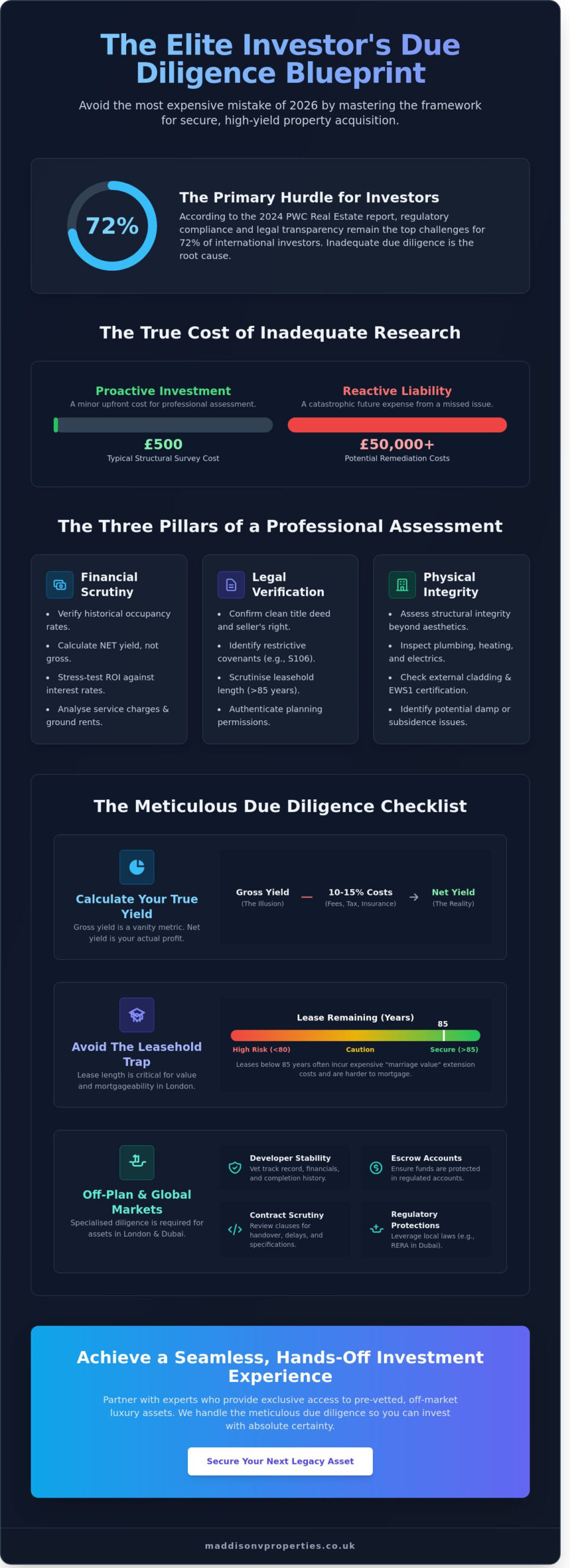
You likely recognize that the allure of a high-yield asset is often clouded by the fear of hidden structural defects or the labyrinth of cross-border regulations. It’s a valid concern. According to the 2024 PWC Emerging Trends in Real Estate report, regulatory compliance and legal transparency remain primary hurdles for 72% of international investors. I’ll share the meticulous, bespoke framework used by professional firms to mitigate risk and ensure every acquisition is positioned for peak performance. We’ll examine the seamless process for verifying legal titles, assessing structural integrity, and mastering the specific 2026 regulatory updates that define the current global market.
Key Takeaways
- Master the meticulous framework used by elite investors to verify financial yields and legal titles, ensuring every acquisition is built on a foundation of absolute certainty.
- Discover why surface-level viewings are insufficient and how a comprehensive property investment due diligence checklist protects your capital from hidden structural and mechanical liabilities.
- Navigate the complexities of off-plan and global markets by vetting developer stability and leveraging regulatory protections for a secure, high-yield portfolio.
- Learn how to achieve a seamless, hands-off investment experience by partnering with experts who provide exclusive access to pre-vetted and off-market luxury assets.
What is Property Investment Due Diligence and Why is it Critical?
Successful property acquisition in 2026 demands more than just an eye for aesthetics or a prime postcode. Property investment due diligence is the meticulous, non-negotiable process of verifying every financial, legal, and physical aspect of an asset before committing capital. It’s the bridge between a speculative gamble and a professional, evidence-based acquisition. While a novice might be swayed by a polished brochure in Mayfair or a gleaming tower in Dubai, the sophisticated investor looks deeper. They understand that a property’s true value isn’t found on the surface but within its history, its structural integrity, and its legal constraints. Professionalism in this sector means leaving nothing to chance, ensuring every pound or dirham invested is anchored in verified data rather than optimistic projections. This is why a comprehensive property investment due diligence checklist is your most valuable asset.
To better understand the foundational elements of this process, watch this helpful video:
The Cost of Inadequate Research
Skipping steps in your property investment due diligence checklist often results in expensive, long-term consequences. According to 2024 industry data from the UK’s Leasehold Advisory Service, unexpected service charge increases and hidden restrictive covenants remain primary reasons for investor friction. You don’t want to discover a Section 106 agreement that limits your rental strategy or an outdated EWS1 certification after you’ve already transferred funds. These red flags can decimate your projected 5% rental yield or stall your capital growth for years. A structural issue identified early might cost £500 for a survey but save you £50,000 in remediation costs later. The due diligence window is the most profitable period in the investment lifecycle because it’s where you mitigate risk to ensure future rewards.
The Three Pillars of a Professional Assessment
A truly premium investment strategy relies on the seamless integration of three core pillars: financial, legal, and physical. Financial due diligence involves stress-testing your ROI against shifting interest rates and verifying historical occupancy rates for serviced accommodation. Legal assessment ensures the title is clean, planning permissions are authentic, and any restrictive clauses in the leasehold are identified. Physical inspections reveal the true state of the asset beyond the fresh paint, focusing on plumbing, electrics, and external cladding. At MaddisonV Properties, we approach this trifecta with a bespoke level of care for our private clients, ensuring each area informs the other. This rigorous methodology transforms a complex transaction into a secure, hands-off experience for the discerning landlord who values peace of mind above all else.
The Financial & Legal Due Diligence Checklist
A successful acquisition rests on more than just aesthetic appeal; it requires a meticulous, detail-oriented approach to the numbers and the fine print. Your property investment due diligence checklist must begin with a cold, analytical look at the “Real” yield. Gross yield is often a vanity metric that masks the true performance of an asset. To find the net yield, you should deduct the standard 10% to 15% management fees, service charges, insurance, and the relevant tax obligations for the 2025/26 tax year. This calculation provides the clarity needed to ensure the investment aligns with your long-term wealth goals.
Title deed verification is the next non-negotiable step. You must confirm the seller holds the absolute right to sell and that the property is free from undisclosed liens or restrictive charges. In the London market, leasehold analysis is a critical component of this process. Leases with fewer than 85 years remaining often require expensive extensions due to marriage value calculations. You should also scrutinize ground rent escalation clauses. Clauses that double every 10 or 25 years can significantly diminish the property’s resale value and attract unwanted attention from lenders.
Regulatory compliance has become increasingly rigorous. Anti-Money Laundering (AML) checks and ‘Know Your Customer’ (KYC) requirements are now standard for every premium transaction. These protocols protect the integrity of your portfolio and ensure a seamless, professional transfer of ownership without the risk of legal delays.
Financial Audit: Beyond the Asking Price
Investors often overlook the significant impact of “hidden” entry costs. In the UK, the Stamp Duty Land Tax (SDLT) surcharge for additional properties adds a 3% premium to standard rates. Similarly, Dubai Land Department (DLD) fees stand at a fixed 4% of the purchase price. Meticulous planning involves analyzing historical capital growth in specific postcodes. For instance, Land Registry data indicates that Marylebone outperformed Chelsea by 1.2% in capital appreciation during the 2024 market cycle. Assessing tenant demand is equally vital; prime London vacancy rates remained below 2.8% in early 2025, suggesting a stable environment for consistent rental income.
Legal Safeguards and Covenants
The legal landscape for high-end properties is complex and requires bespoke scrutiny. You must check for “Change of Use” restrictions or Article 4 directions that might limit your ability to pivot to serviced accommodation. Properties intended for multiple occupants may also require specific HMO licensing, which varies by local authority. Aligning your financing with these legal structures is essential for a stress-free experience. Professional mortgage consultations provide a reliable way to ensure your lending terms are perfectly synchronized with the property’s legal status. This level of preparation ensures your investment remains a source of prestige rather than a logistical burden.
Physical & Structural Assessment: Protecting Your Asset
A comprehensive property investment due diligence checklist demands a rigorous inspection of the physical asset. For investors targeting London’s historic districts, a RICS Home Survey Level 3 is a mandatory investment rather than an optional expense. This detailed report uncovers the hidden realities of Victorian or Georgian foundations that a standard valuation misses. Beyond the masonry, you must scrutinize the Mechanical and Electrical (M&E) systems. In premium luxury blocks, the remaining lifespan of communal boilers, wiring, and bespoke lift systems dictates your future cash flow. A communal boiler typically requires replacement every 10 to 15 years. Failing to account for these cycles results in unexpected five-figure levies that erode your annual yield.
Aesthetic standards directly influence the caliber of your residents. Premium corporate tenants expect a finish that mirrors high-end hospitality. They look for seamless design, meticulous joinery, and modern appliances. If the interior finish feels dated, you’ll struggle to command the rental premiums necessary for a strong ROI. Energy efficiency is equally critical. By 2028, UK rental properties are expected to require an EPC rating of C or higher. Investing in a property with a current D or E rating creates an immediate financial liability that you must factor into your initial purchase price.
The Inspector’s Eye: Common Red Flags
Damp and subsidence remain the traditional enemies of the London landlord. However, modern investors must also prioritize the EWS1 form to confirm cladding safety in buildings exceeding 11 meters. Don’t overlook the communal areas. The lobby, hallways, and gardens serve as the first handshake with a potential tenant. A neglected communal space often signals a fractured right-to-manage company or a negligent freeholder. Meticulous attention to physical detail ensures a hassle-free tenancy.
- Structural Integrity: Check for fresh cracks or bowing walls in older stock.
- Safety Compliance: Verify the presence of valid Gas Safety and EICR certificates.
- External Assets: Assess the condition of the roof and guttering to prevent water ingress.
Facilities Management and Upkeep
Review the sinking fund with a critical eye. A healthy reserve fund prevents sudden, heavy capital calls for major works like roof repairs or lift modernizations. Effective facilities management acts as the guardian of your capital growth. It ensures the building’s prestige remains intact while you enjoy a seamless, hands-off ownership experience. When evaluating the building management’s performance, look at the speed of previous repairs and the transparency of their service charge accounts. Future maintenance liabilities shouldn’t be a surprise; they should be a calculated part of your property investment due diligence checklist.
Specialised Due Diligence for Off-Plan and Global Markets
Investing across international borders requires a more sophisticated layer of scrutiny than local acquisitions. Your property investment due diligence checklist must evolve to address the unique risks inherent in off-plan developments. We begin by dissecting the developer’s history with a meticulous eye. A firm that delivered 1,200 units across three projects in 2024 with zero litigation carries more weight than a newcomer with flashy renders but no completed sites. You should verify their financial liquidity ratios to ensure they aren’t relying solely on investor deposits to break ground on your specific unit.
The legal framework surrounding your capital is just as vital as the physical structure. In 2026, savvy investors look for projects with ironclad sunset clauses. These clauses provide a definitive date, such as June 30, 2028, by which the property must be finished. If the developer fails to meet this deadline, the contract allows you to reclaim your initial deposit in full. This protection is a cornerstone of a bespoke investment strategy, ensuring your capital isn’t held hostage by construction delays or supply chain disruptions.
Navigating the Dubai Market
Dubai’s regulatory environment has matured into a global gold standard for investor protection. You must verify that every project is registered with the Dubai Land Department (DLD) and that your funds are directed into a project-specific escrow account. This ensures your money is only released as construction milestones are verified by government inspectors. The Oqood process is another essential check; it’s a centralised registration system that issues a certificate of ownership for properties under construction. Finally, distinguish between the Master Developer, who manages the entire district’s infrastructure, and the Sub-developer, who builds your specific tower. The reputation of the Master Developer often dictates the long-term appreciation of the neighborhood.
London New-Build Nuances
The London market demands a different analytical lens focused on structural integrity and local regeneration. It’s non-negotiable to confirm the presence of an NHBC or Premier Guarantee, which provides a 10-year structural warranty for premium new-builds. We also look for “Planning Gain” in areas like the Old Oak and Park Royal development zone. This specific region is currently seeing a £26 billion investment aimed at creating 65,000 new jobs by 2030, which directly impacts future rental demand. You can explore our latest Off-Plan Investment Opportunities to see how we apply these rigorous standards to our own selections.
Comparing these markets reveals a clear choice for the modern investor. While London offers the prestige of a legacy legal system and steady capital growth, Dubai provides aggressive 60/40 payment plans and tax-free rental yields that often exceed 8% net. Both markets require a robust property investment due diligence checklist to separate speculative gambles from strategic, high-performing assets. We handle these gritty details so you don’t have to, maintaining our commitment to a seamless, hands-off experience for every client.
Secure your financial future with a partner who understands the complexities of global property. Discover our premium investment management services and start building your portfolio with confidence.
The Hands-Off Solution: Professional Property Sourcing
The property investment due diligence checklist we’ve outlined is a rigorous framework designed for precision. For the sophisticated investor, executing every step personally isn’t always the most efficient use of time or capital. Elite investors recognize that while the checklist is essential, their focus is better spent on high-level strategy rather than the granular mechanics of site visits and local authority searches. This is where professional sourcing becomes a vital component of a modern investment strategy. Understanding what is a property sourcing agent and how these specialists operate is the first step toward securing the kind of bespoke, off-market access that defines elite portfolio building in 2026.
The Power of Professional Sourcing
Local expertise is irreplaceable in a market as nuanced as the UK capital. When you partner with property sourcing agents London, you’re securing a dedicated gatekeeper for your capital who ensures you gain access to the most sought-after acquisitions before they ever reach a public portal. We perform every meticulous check on your behalf, from structural integrity audits to granular yield projections. Our model relies on success-based fees; this ensures our interests remain perfectly aligned with yours. Before committing to any professional partnership, understanding the full breakdown of property sourcing fees in 2026 ensures complete transparency and helps you evaluate whether the service delivers genuine value against your acquisition costs. We only thrive when your portfolio performs. This partnership provides a sense of quiet confidence. You’ll know that every detail is managed by professionals who value integrity and long-term relationships as much as you do.
- Access to the Invisible Market: We provide entry to off-market deals that never reach public portals.
- Pre-Vetted Luxury: Every asset undergoes a preliminary property investment due diligence checklist before it’s even presented to you.
- Risk Mitigation: We identify potential pitfalls in leasehold agreements or local planning changes before they impact your ROI.
Moving to Portfolio Management
True wealth isn’t built through a single transaction; it’s cultivated through strategic portfolio management. MaddisonV moves beyond the initial acquisition phase to bridge the gap between finding a property and maintaining a high-yield asset. In 2024, data from high-end London agencies indicated that roughly 22% of prime transactions occurred off-market. By 2026, we expect this trend to intensify as privacy and speed become even more valuable to sellers. By accessing these silent listings, you bypass the noise of the open market and secure assets with built-in equity. We handle the complex, gritty details of management so you can enjoy the rewards of a premium, design-conscious portfolio.
Next Steps: Your Bespoke Consultation
Transitioning to a hands-off investment model starts with a single, focused conversation. We invite you to book a bespoke consultation to discuss your specific financial goals and risk appetite. Our team creates a seamless path from the initial property investment due diligence checklist to long-term management and guaranteed rent solutions. We take pride in our aesthetic standards and our ability to deliver a hassle-free experience for our clients. It’s time to elevate your approach to wealth creation. Secure your high-yield property with MaddisonV Properties today and experience the difference that meticulous, expert representation makes for your future.
Securing Your Legacy in a Shifting Global Market
Navigating the 2026 landscape demands a blend of analytical rigor and local intuition. Success hinges on a meticulous review of financial yields and the physical integrity of every asset you consider. This property investment due diligence checklist serves as your foundation for identifying high-performing opportunities while mitigating the hidden risks of global expansion. Whether you’re targeting the historic streets of London or the skyline of the Middle East, precision remains your greatest asset.
At MaddisonV Properties, we bridge the gap between complex data and effortless ownership. Our team specializes in the luxury enclaves of Chelsea and Marylebone, where we’ve built a reputation for securing exclusive, off-market opportunities. We also provide direct access to the world’s most ambitious developments through our partnerships with elite Dubai developers. Our comprehensive, hands-off management service ensures your portfolio grows without the daily burden of administration. We handle the intricate details so you can enjoy the rewards of a premium, well-considered investment strategy.
Book a Bespoke Investment Consultation with MaddisonV Properties
Your next great investment is waiting.
Frequently Asked Questions
What is the most important part of property due diligence?
The most critical element of your property investment due diligence checklist is the verification of the legal title and financial viability. You must ensure the seller has the legal right to sell and that the projected yields align with current market data. In 2024, Land Registry data showed that title fraud remains a persistent risk; meticulous document verification is essential for a secure, premium investment. It provides the peace of mind required for long term success.
How long does the due diligence process usually take for a UK property?
A standard due diligence process for a UK property typically spans between 4 and 12 weeks. This timeframe accounts for local authority searches, which the Law Society notes can take up to 40 days depending on the specific council’s efficiency. Meticulous planning ensures every survey and legal check is completed without rushing. This deliberate pace protects your capital. It guarantees a seamless transition into property ownership while maintaining your high standards.
Is due diligence different for off-plan properties in Dubai?
Due diligence for off-plan properties in Dubai differs significantly by focusing on developer track records and RERA compliance. You must verify that the project is registered with the Dubai Land Department and that payments are made into a certified escrow account. According to 2023 RERA regulations, developers must reach specific construction milestones before accessing certain funds. This bespoke approach ensures your international investment remains secure, high quality, and entirely hassle-free.
Can I perform property investment due diligence myself?
You can perform property investment due diligence yourself, though it requires a sophisticated understanding of legal and structural nuances. While investors can review local planning portals or check the EPC register, missing a single detail in a property investment due diligence checklist leads to costly errors. Many professional investors choose a hands off approach by partnering with experts. This strategy ensures every meticulous detail is handled with precision, reliability, and care.
What are the hidden costs I should look for in a property’s financial records?
Hidden costs often include Section 106 community infrastructure levies or escalating service charges found in the management pack. In 2023, some leasehold service charges in London increased by 15 percent, which directly impacts your net yields. You should also scrutinize the sinking fund to ensure it covers future major works. Identifying these expenses early allows for a transparent financial journey. It maintains the prestige and profitability of your bespoke portfolio.
What happens if I find a problem during the due diligence period?
Finding a structural or legal issue allows you to renegotiate the purchase price or withdraw from the contract entirely. If a RICS Level 3 survey reveals 10,000 pounds of necessary roof repairs, you’ll likely request a corresponding price reduction. This period serves as your vital safety net. It ensures you only acquire premium assets that meet your exacting standards for quality, safety, and long term reliability.
Why should I use a property sourcing agent for due diligence?
A property sourcing agent provides bespoke expertise and access to off-market data that isn’t available to the general public. They handle the complex, gritty details of site inspections and local market analysis, offering a truly hands off experience for the investor. Understanding the structure of property sourcing fees upfront allows you to assess the true cost-to-value ratio of professional representation before you commit. By leveraging their professional network, you secure a seamless acquisition process. This partnership transforms a stressful task into a prestigious, efficient, and highly successful investment move.
What is an EWS1 form and why does it matter for London apartments?
An EWS1 form is a certificate that assesses the fire safety of a building’s external wall system. Since the 2020 government guidance update, most lenders require this form for apartments in buildings over 11 meters tall before approving a mortgage. Without a satisfactory rating, a property might be valued at zero pounds. Ensuring this document is present is a vital step for any meticulous London investor seeking a secure, premium asset.

Sign Up Now
Want to read more great articles and blogs subscribe to our newsletter